ioGlutamatergic Neurons APOE 4/4
io1114-glutamatergic-neurons-apoe-4-4-dapi-map2
bitbio-ioGlutamatergic-Neurons-media-kits
bit.bio-io1114-glutamatergic-neurons-apoe-4-4-map2-tubb3-vglut2
bit.bio-io1114-glutamatergic-neurons-apoe-4-4-morphology
bit.bio-io1114-glutamatergic-neurons-apoe-4-4-gene-expression-RT-qPCR
Phenotypic analysis of a tri-culture for CNS modelling using ioGlutamatergic Neurons, ioAstrocytes, and ioMicroglia
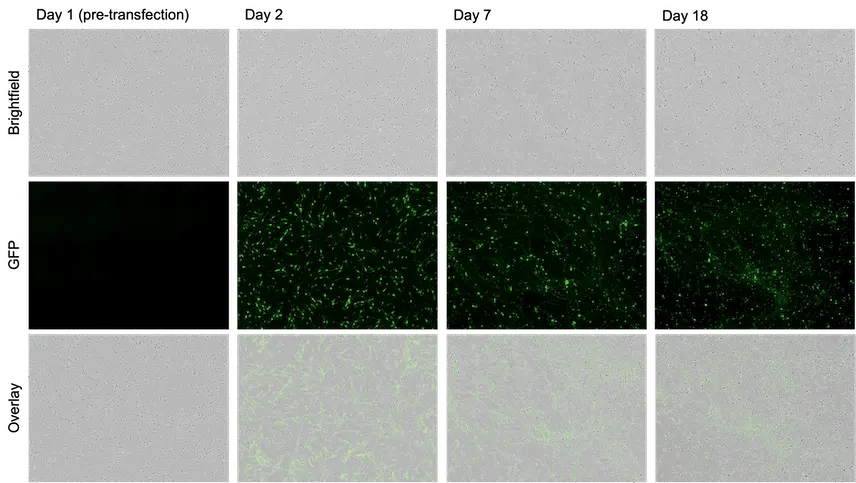
mRNA transfection of human iPSC-derived neurons with GFP.
io1114-glutamatergic-neurons-apoe-4-4-dapi-map2
bitbio-ioGlutamatergic-Neurons-media-kits
bit.bio-io1114-glutamatergic-neurons-apoe-4-4-map2-tubb3-vglut2
bit.bio-io1114-glutamatergic-neurons-apoe-4-4-morphology
bit.bio-io1114-glutamatergic-neurons-apoe-4-4-gene-expression-RT-qPCR
Phenotypic analysis of a tri-culture for CNS modelling using ioGlutamatergic Neurons, ioAstrocytes, and ioMicroglia
mRNA transfection of human iPSC-derived neurons with GFP.

cat no | io1114

ioGlutamatergic Neurons APOE 4/4

Human iPSC-derived Alzheimer's disease risk model

  • Cryopreserved human iPSC-derived cells powered by opti-ox that are ready for experiments in days

  • In vitro cell model engineered with an APOE 4/4 genotype for Alzheimer's disease research

  • Consistent, functional excitatory neurons that form neuronal networks within days

Place your order

Due to high demand, media kits are temporarily available for delivery within the UK only. We are working to restore availability in the EU and US as soon as possible and apologise for any inconvenience.
io1114-glutamatergic-neurons-apoe-4-4-dapi-map2

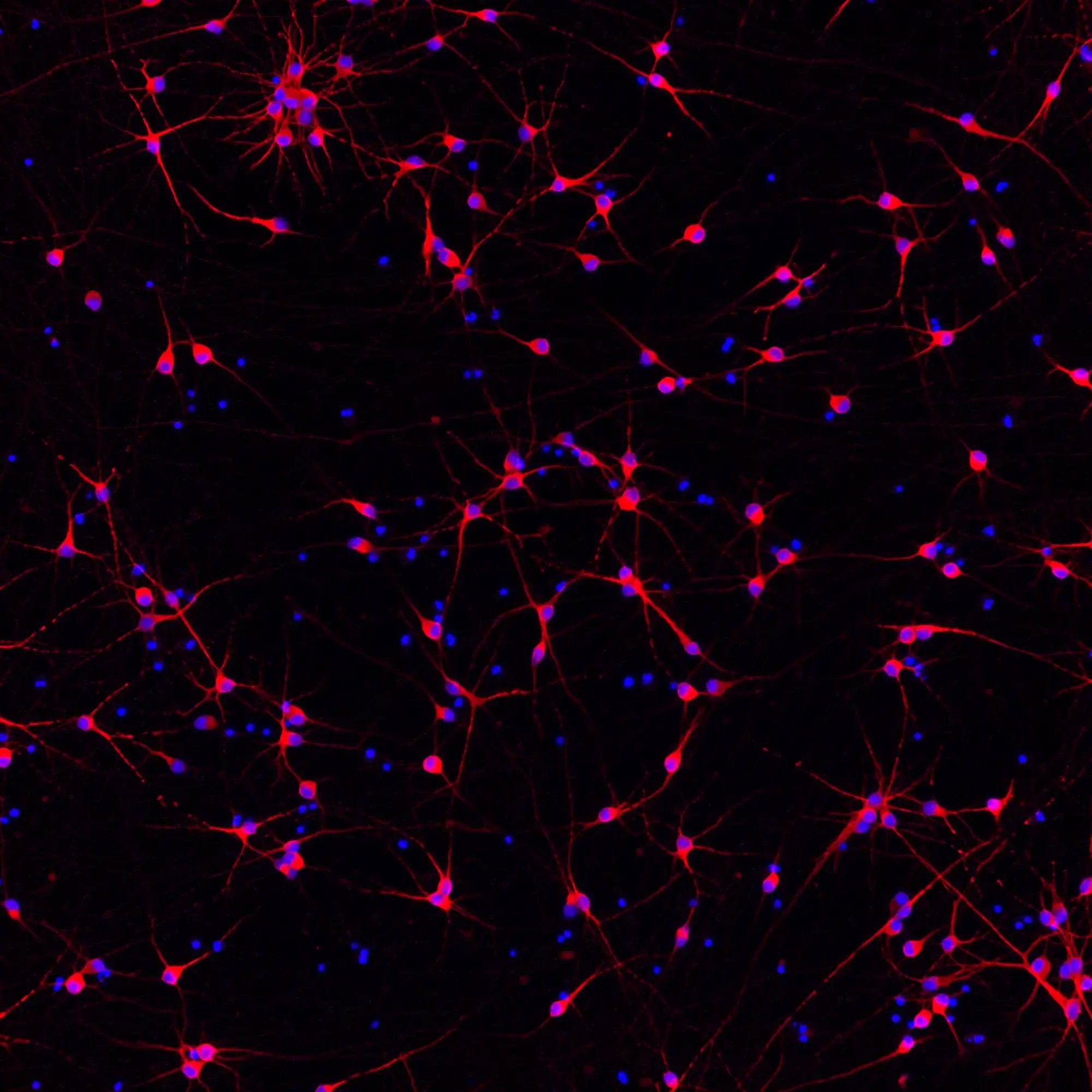
Human iPSC-derived neuronal APOE 4/4 model

Expression of DAPI and MAP2 in glutamatergic neurons with APOE 4/4 genotype.
bitbio-ioGlutamatergic-Neurons-media-kits

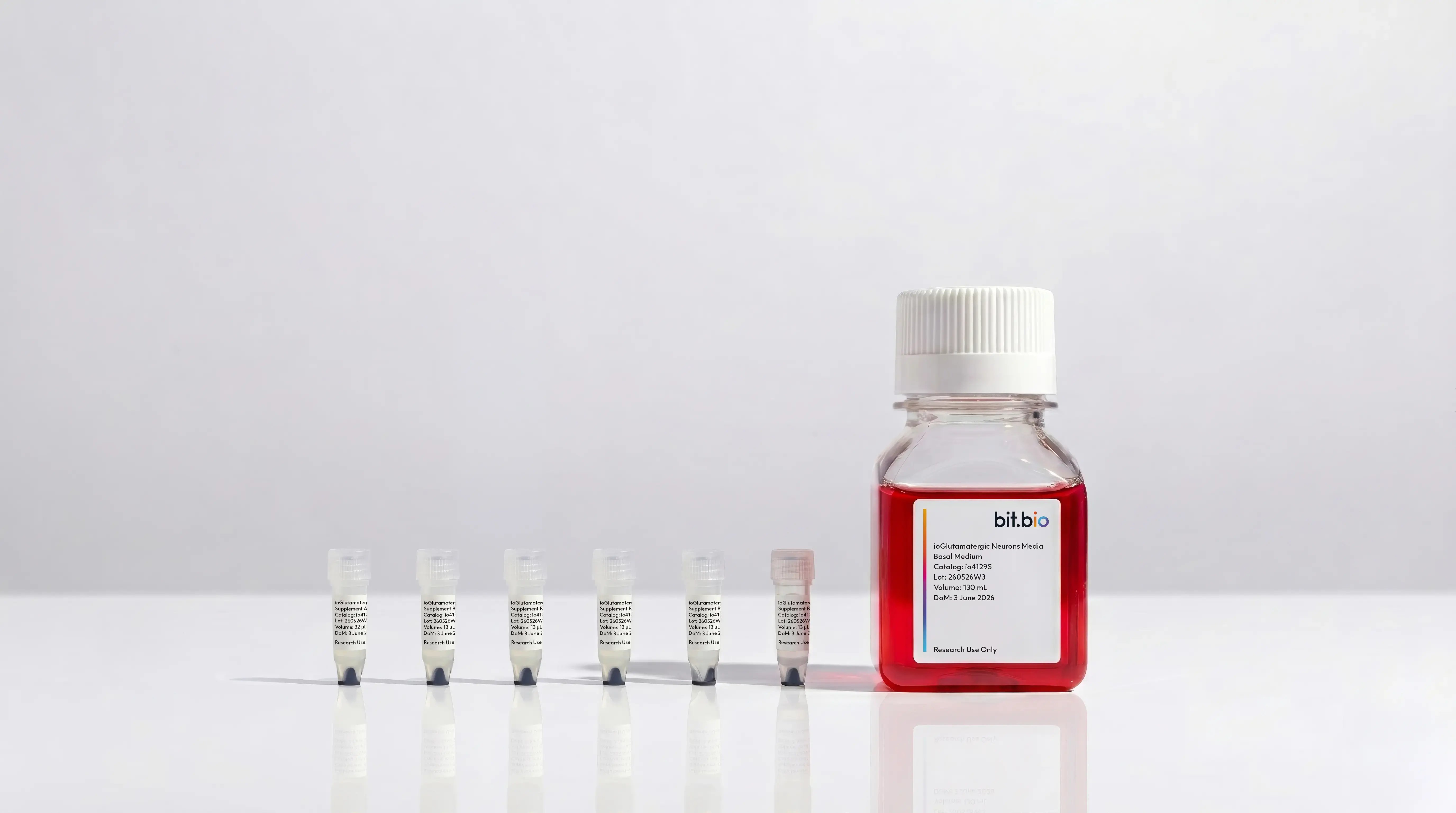
ioGlutamatergic Neurons Media Kit

Cell culture media kit for the culture of ioGlutamatergic Neurons up to 14 days post-thaw
Learn more about the product >

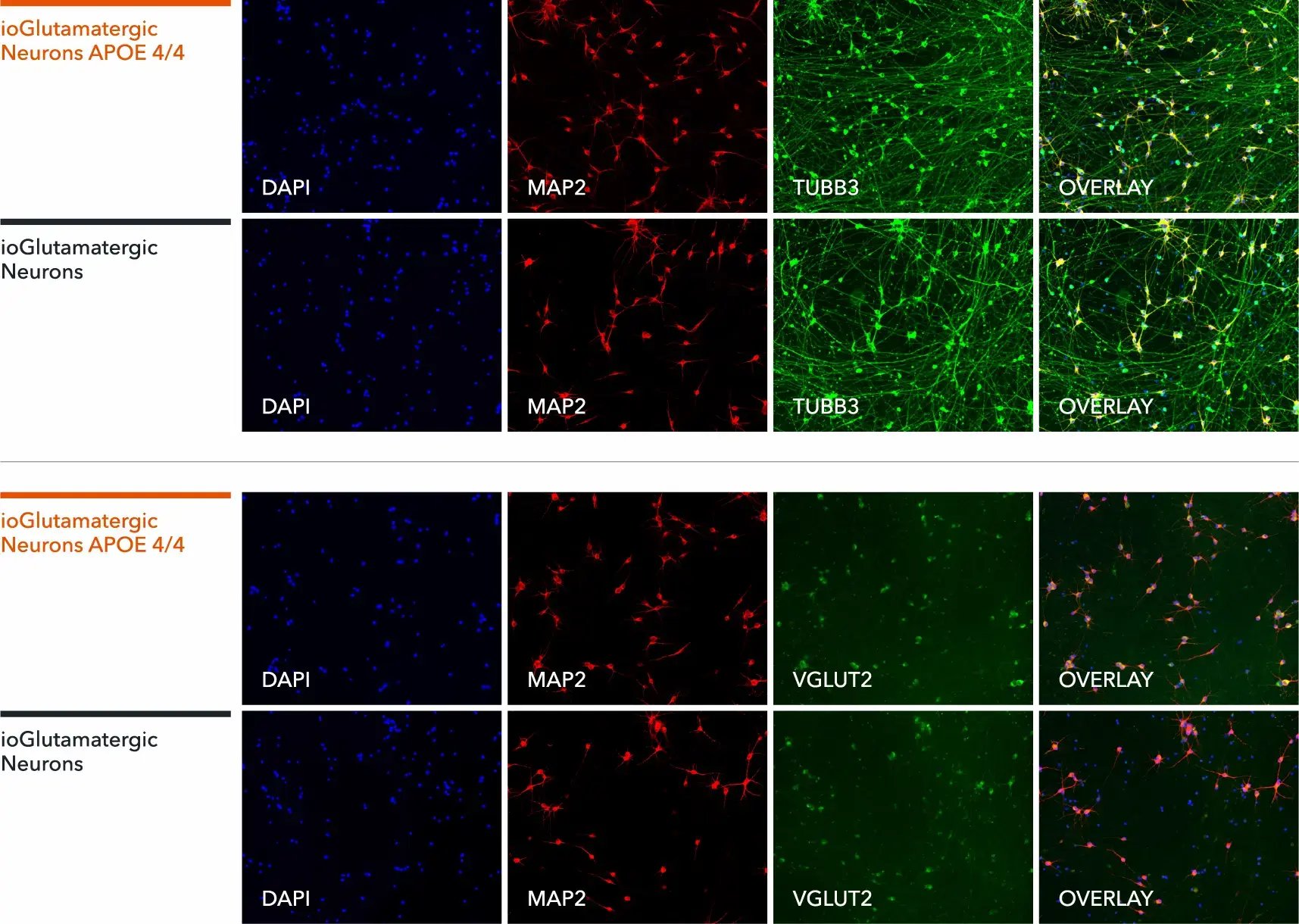
bit.bio-io1114-glutamatergic-neurons-apoe-4-4-map2-tubb3-vglut2

ioGlutamatergic Neurons APOE 4/4 express neuron-specific markers comparably to the wild type control

Immunofluorescent staining on day 11 post-revival demonstrates similar homogeneous expression of pan-neuronal proteins MAP2 and TUBB3 (upper panel) and glutamatergic neuron-specific transporter VGLUT2 (lower panel) in ioGlutamatergic Neurons APOE 4/4 compared to the genetically matched control (10x objective). 

bit.bio-io1114-glutamatergic-neurons-apoe-4-4-morphology

ioGlutamatergic Neurons APOE 4/4 form structural neuronal networks by day 11

ioGlutamatergic Neurons APOE 4/4 mature rapidly, show glutamatergic neuron morphology and form structural neuronal networks over 11 days, highly similar to the genetically matched control. Day 1 to 11 post thaw; (10x objective). 

bit.bio-io1114-glutamatergic-neurons-apoe-4-4-gene-expression-RT-qPCR

ioGlutamatergic Neurons APOE 4/4 demonstrate gene expression of neuronal-specific and glutamatergic-specific markers following deterministic cell programming

Gene expression analysis demonstrates that ioGlutamatergic Neurons APOE 4/4 and wild type ioGlutamatergic Neurons (WT Control) lack the expression of pluripotency marker POU5F1 (OCT4) at day 11, while robustly expressing pan-neuronal (TUBB3 and SYP) and glutamatergic-specific (VGLUT1 and VGLUT2) markers. Gene expression levels were assessed by RT-qPCR (data normalised to HMBS; cDNA samples of the parental human iPSC line (hiPSC) were included as reference). Data represents day 11 post-revival samples, n=2 replicates.

View the step-by-step RNA extraction and RT-qPCR protocol used to generate this data

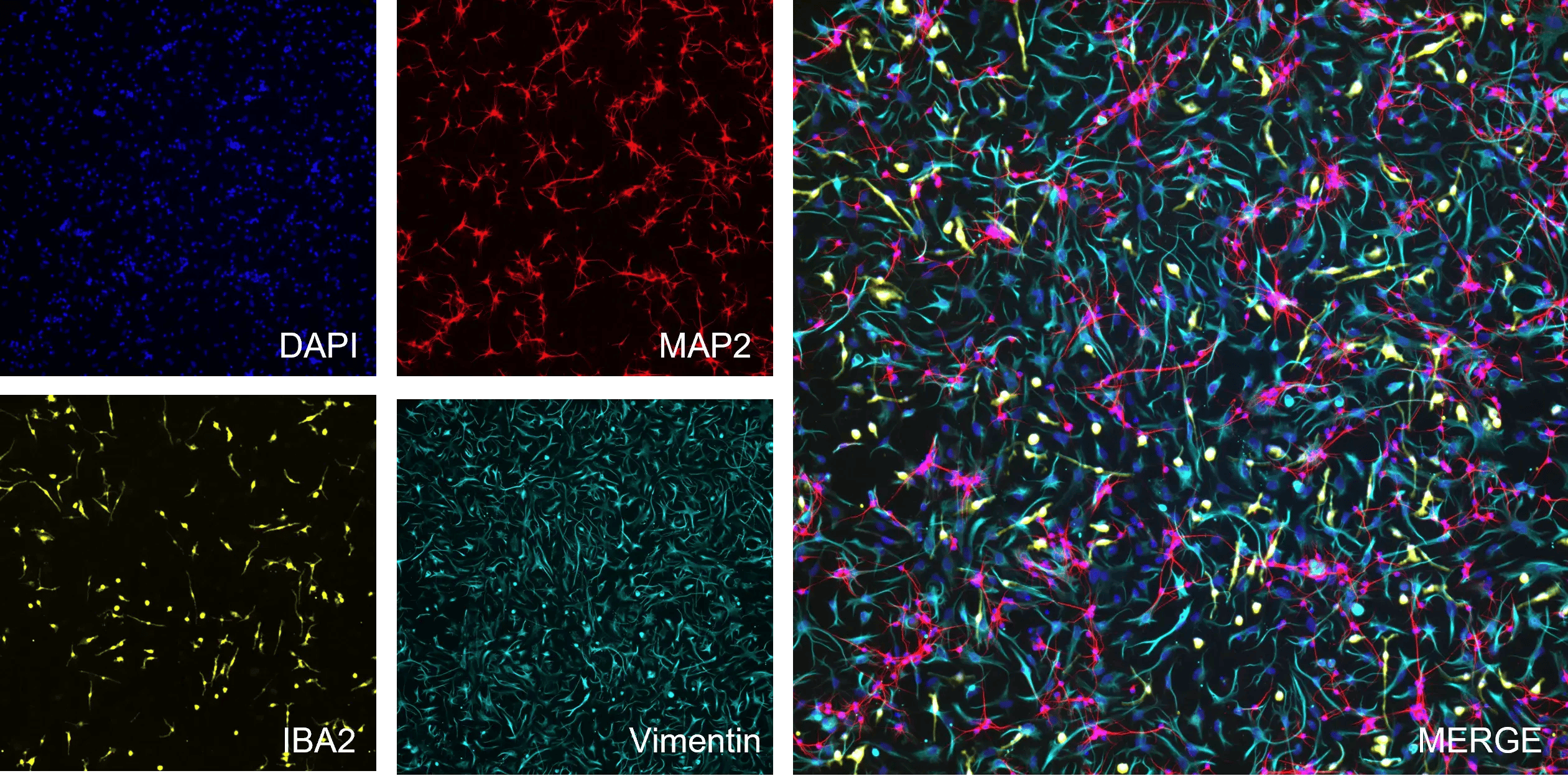
Phenotypic analysis of a tri-culture for CNS modelling using ioGlutamatergic Neurons, ioAstrocytes, and ioMicroglia

Phenotypic characterisation of a human iPSC-derived tri-culture using ioGlutamatergic Neurons, ioAstrocytes, and ioMicroglia

Using our fully optimised protocol, ioGlutamatergic Neurons (MAP2, red), ioMicroglia (IBA1, yellow) and ioAstrocytes (vimentin, cyan) were co-cultured to create a highly defined CNS model. High-resolution ICC analysis confirms the successful co-localisation and morphological health of three distinct cell types within a unified environment. By day 7, the protocol yields a highly consistent, integrated network suitable for complex cell modelling. DAPI (blue) highlights the total cell density and integrity of the culture. This protocol is compatible with derivative products of the three cell types, ensuring straightforward implementation across experimental workflows.

Download the optimised tri-culture protocol

mRNA transfection of human iPSC-derived neurons with GFP.

Efficient mRNA transfection into ioGlutamatergic Neurons

ioGlutamatergic Neurons are efficiently transfected and show sustained long-term expression of mRNA encoding GFP. ioGlutamatergic Neurons were imaged from day 1 post-thaw and throughout the experiment to assess transfection efficiency and evaluate potential cytotoxic effects of the transfection protocol. Day 1 images were captured prior to transfection on the same day.

Download the step-by-step protocol for lipid-based delivery of synthetic mRNA into ioGlutamatergic Neurons.

Human iPSC-derived Alzheimer’s disease risk model

A rapidly maturing, physiologically relevant, functional disease model for late-onset Alzheimer's disease (AD) research and drug screening.

ioGlutamatergic Neurons APOE 4/4 are opti‑ox deterministically programmed excitatory neurons engineered to carry the homozygous APOE4 genotype, the most significant genetic risk factor for late-onset AD. To generate this model, a targeted C112R amino acid substitution was introduced into the APOE E3 allele of the parental E3/E4 iPSC line, establishing a homozygous APOE 4/4 genotype.

This model forms a genetically matched set alongside our wild-type ioGlutamatergic Neurons (io1001), which naturally express the APOE 3/4 genotype, and our healthy baseline ioGlutamatergic Neurons APOE 3/3 (io1113).

Interpreting APOE-specific disease mechanisms has been complicated by genetic donor background variability and the heterogeneous nature of traditional iPSC differentiation. Offering these three genotypes in a unified background, powered by opti-ox deterministic cell programming, eliminates genetic ‘noise’. This delivers the consistent, functional and rapidly maturing glutamatergic neurons needed to accurately observe APOE-driven phenotypic shifts. The panel offers a tool for high-throughput screening to identify compounds that rescue phenotypes towards the E3/3 baseline, as well as for investigating tau phosphorylation, synaptic integrity, and the interplay between APOE and other AD targets like TREM2 or MAPT.

Benchtop benefits

comparison_0

Make true comparisons

Pair with APOE 3/3 and APOE 3/4 glutamatergic neurons to observe APOE-driven phenotypic shifts.

Glutamatergic neurons are quick to culture

Quick

Cells are experiment ready as early as 2 days post revival, and form structural neuronal networks at 11 days.

easy_0

Easy to use

Cells arrive programmed to mature rapidly upon revival. One medium is required in a two-step protocol.

Cells arrive ready to plate


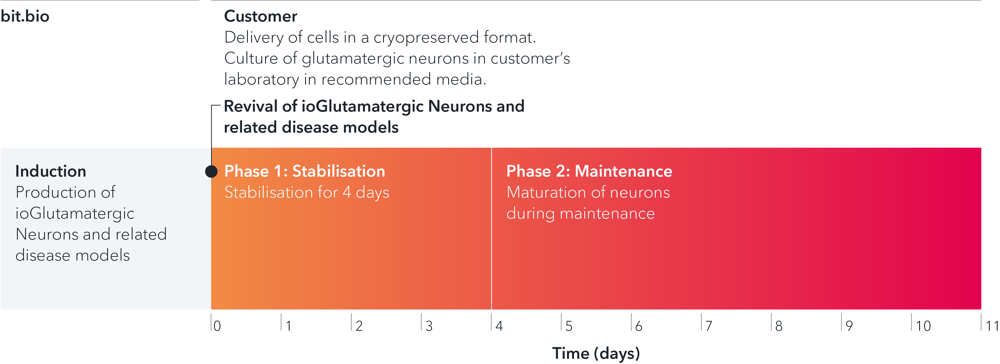
ioGlutamatergic_Neurons_and_disease_models_timeline

ioGlutamatergic Neurons APOE 4/4 are delivered in a cryopreserved format and are programmed to mature rapidly upon revival in the recommended media. The protocol for the generation of these cells is a two-phase process: Phase 1, Stabilisation for 4 days; Phase 2, Maintenance, during which the neurons mature. Phases 1 and 2 after revival of cells are carried out by the customer.

Product specifications

Starting material

Human iPSC line

Karyotype

Normal (46, XY)

Seeding compatibility

6, 12, 24, 96 & 384 well plates

Shipping info

Dry ice

Donor

Caucasian adult male, age 55-60 years old (skin fibroblast),
Genotype APOE 3/4

Vial size

Small: >1 x 10⁶ viable cells

Quality control

Sterility, protein expression (ICC), gene expression (RT-qPCR) and genotype validation (Sanger sequencing)

Differentiation method

opti-ox deterministic cell programming

Recommended seeding density

30,000 cells/cm²

User storage

LN2 or -150°C

Format

Cryopreserved cells

Genetic modification

Targeted C112R substitution in the APOE E3 allele of the parental E3/E4 iPSC line

Applications

Alzheimer's disease research
Drug discovery
Disease modelling
High throughput screening

Product use

ioCells are for research use only


Scale your study with volume pricing

Enabling scientists to use human cells in their research, running additional experiments without rationing cells or limiting experimental scale


Order quantity Total vials received Pricing tier 
1 - 9 packs 3 - 27 vials Standard price
10 - 33 packs 30 - 99 vials Automatic 10% discount
> 34 packs > 100 vials > Contact us for a quote


Academic pricing: Academic users can purchase any ioCells in 3-vial packs ($/€/£ 999 per pack), available year-round with any cell type combination.
Technical data

Highly characterised and defined

ioGlutamatergic Neurons APOE 4/4 express neuron-specific markers comparably to the wild type control

io1114-glutamatergic-neurons-apoe-4-4-map2-tubb3-vglut2

Immunofluorescent staining on day 11 post-revival demonstrates similar homogeneous expression of pan-neuronal proteins MAP2 and TUBB3 (upper panel) and glutamatergic neuron-specific transporter VGLUT2 (lower panel) in ioGlutamatergic Neurons APOE 4/4 compared to the genetically matched control (10x objective).
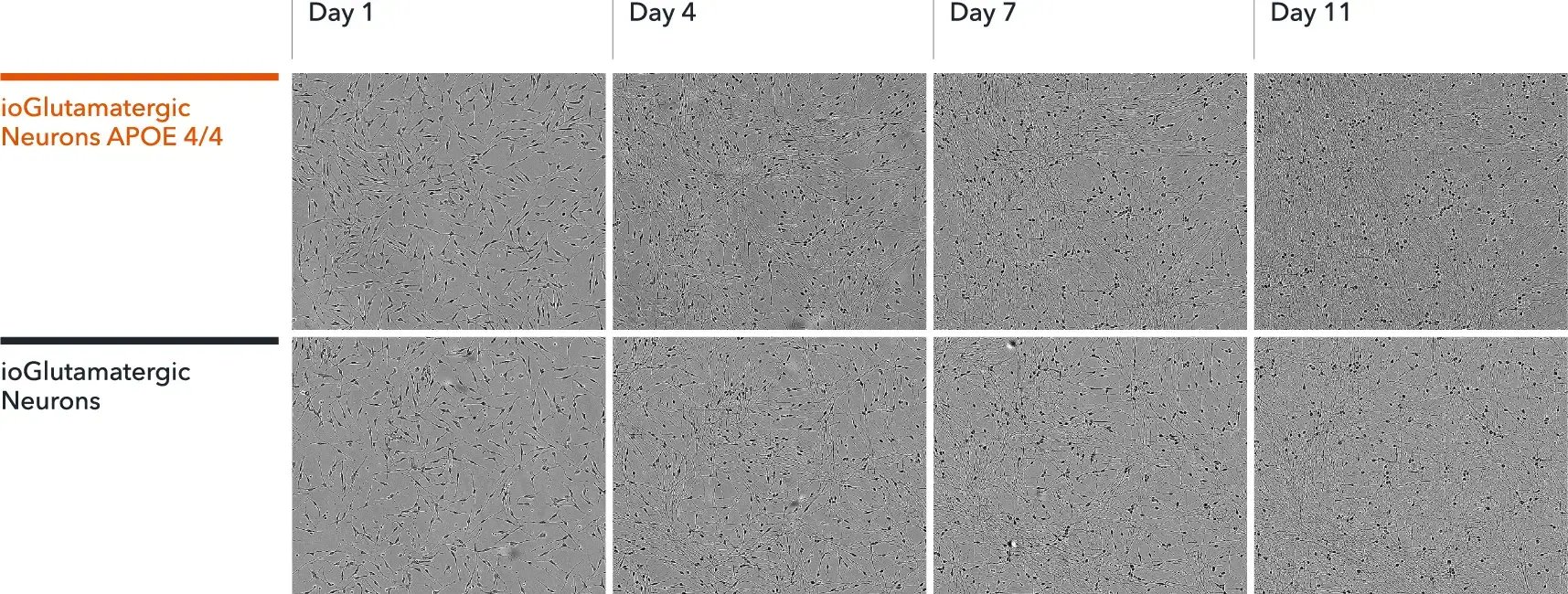
ioGlutamatergic Neurons APOE 4/4 form structural neuronal networks by day 11

io1114-glutamatergic-neurons-apoe-4-4-morphology

ioGlutamatergic Neurons APOE 4/4 mature rapidly, show glutamatergic neuron morphology and form structural neuronal networks over 11 days, highly similar to the genetically matched control. Day 1 to 11 post thaw; (10x objective).
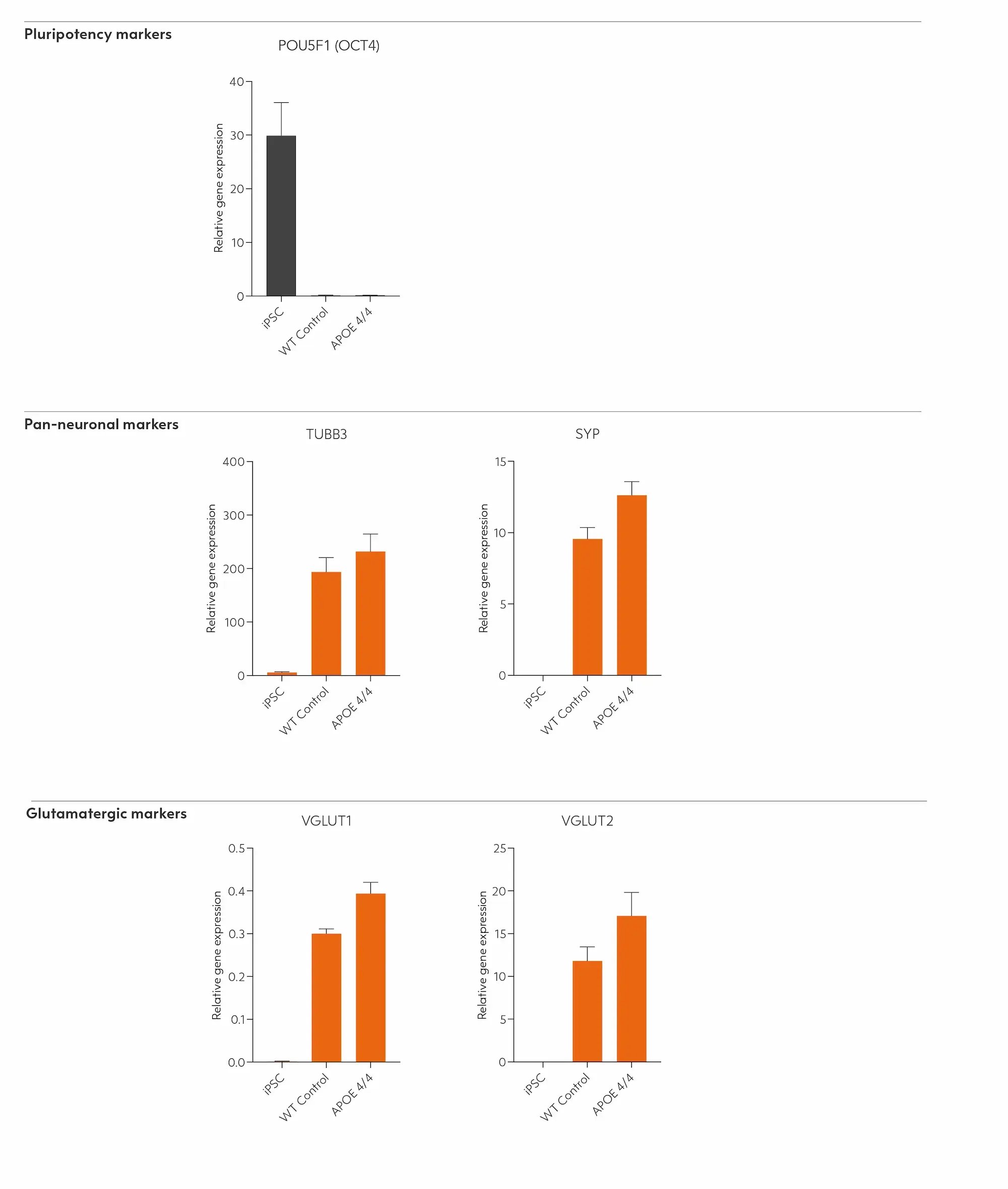
ioGlutamatergic Neurons APOE 4/4 demonstrate gene expression of neuronal-specific and glutamatergic-specific markers following deterministic cell programming

bit.bio-io1114-glutamatergic-neurons-apoe-4-4-gene-expression-RT-qPCR

Gene expression analysis demonstrates that ioGlutamatergic Neurons APOE 4/4 and wild type ioGlutamatergic Neurons (WT Control) lack the expression of pluripotency marker POU5F1 (OCT4) at day 11, while robustly expressing pan-neuronal (TUBB3 and SYP) and glutamatergic-specific (VGLUT1 and VGLUT2) markers. Gene expression levels were assessed by RT-qPCR (data normalised to HMBS; cDNA samples of the parental human iPSC line (hiPSC) were included as reference). Data represents day 11 post-revival samples, n=2 replicates.

View the step-by-step RNA extraction and RT-qPCR protocol used to generate this data 
Industry leading seeding density

bit.bio Glutamatergic neurons APP V717I hom are suitable for culture in 96-well and 384-well plates for screening applications

The recommended minimum seeding density is 30,000 cells/cm2, compared to up to 250,000 cells/cm2 for other similar products on the market. One small vial can plate a minimum of 0.7 x 24-well plate, 1 x 96-well plate, or 1.5 x 384-well plates. This means every vial goes further, enabling more experimental conditions and more repeats, resulting in more confidence in the data.

How to culture ioGlutamatergic Neurons

In this video, our scientist will take you through the step-by-step process of how to thaw, seed and culture ioGlutamatergic Neurons.

How to prepare tissue culture vessels with PDL-Geltrex for culture

Dr Kaiser Karim will take you through the step-by-step process of coating your culture plate with PDL-Geltrex before the revival of ioGlutamatergic Neurons.

Since recording this video Geltrex has been replaced by Geltrex Flex; refer to the user manual for full details. 

Frequently Asked Questions (FAQs)

Why are ioGlutamatergic Neurons with the APOE 4/4 genotype relevant for disease modelling?

Glutamatergic neurons are highly vulnerable to early synaptic loss in Alzheimer’s disease (AD). Because stressed neurons synthesise their own neurotoxic APOE4, modelling this genotype isolates intrinsic, cell-autonomous disease mechanisms. For a more complex system, these neurons can also be co-cultured with ioAstrocytes or tri-cultured with ioMicroglia. This provides a highly versatile platform for screening neuroprotective compounds targeting tau pathology, lipid metabolism, and synaptic integrity.


What models are available from bit.bio to study the effects different APOE genotypes?

bit.bio’s ioGlutamatergic Neurons are available in APOE 3/3 (io1113), APOE 4/4 (io1114), and wild-type APOE 3/4 (io1001) genotypes. This panel delivers the functional, rapidly maturing and consistent cells required to accurately capture APOE-driven phenotypic shifts. To complement these neuronal products, ioMicroglia are also available with the same three APOE genotypes.


Is there a genetically matched wild-type control available for the APOE 4/4 iPSC-derived neuronal model?

The ioGlutamatergic Neurons APOE 4/4 Alzheimer's disease risk model was generated by introducing a targeted C112R amino acid substitution into the APOE E3 allele of the parental E3/E4 iPSC line, establishing a homozygous APOE 4/4 genotype. ioGlutamatergic Neurons (io1001), which naturally express the APOE 3/4 genotype, are the genetically matched, parental wild-type control for the AD risk model.


Cell culture hacks | human iPSC-derived glutamatergic neurons

Read this blog on glutamatergic neuron cell culture for our top tips on careful handling, cell plating and media changes to achieve success from the outset.

bit.bio_3x2_ioGlutamatergic Neurons_MAP2_Hoescht_x20_hi.res (1)

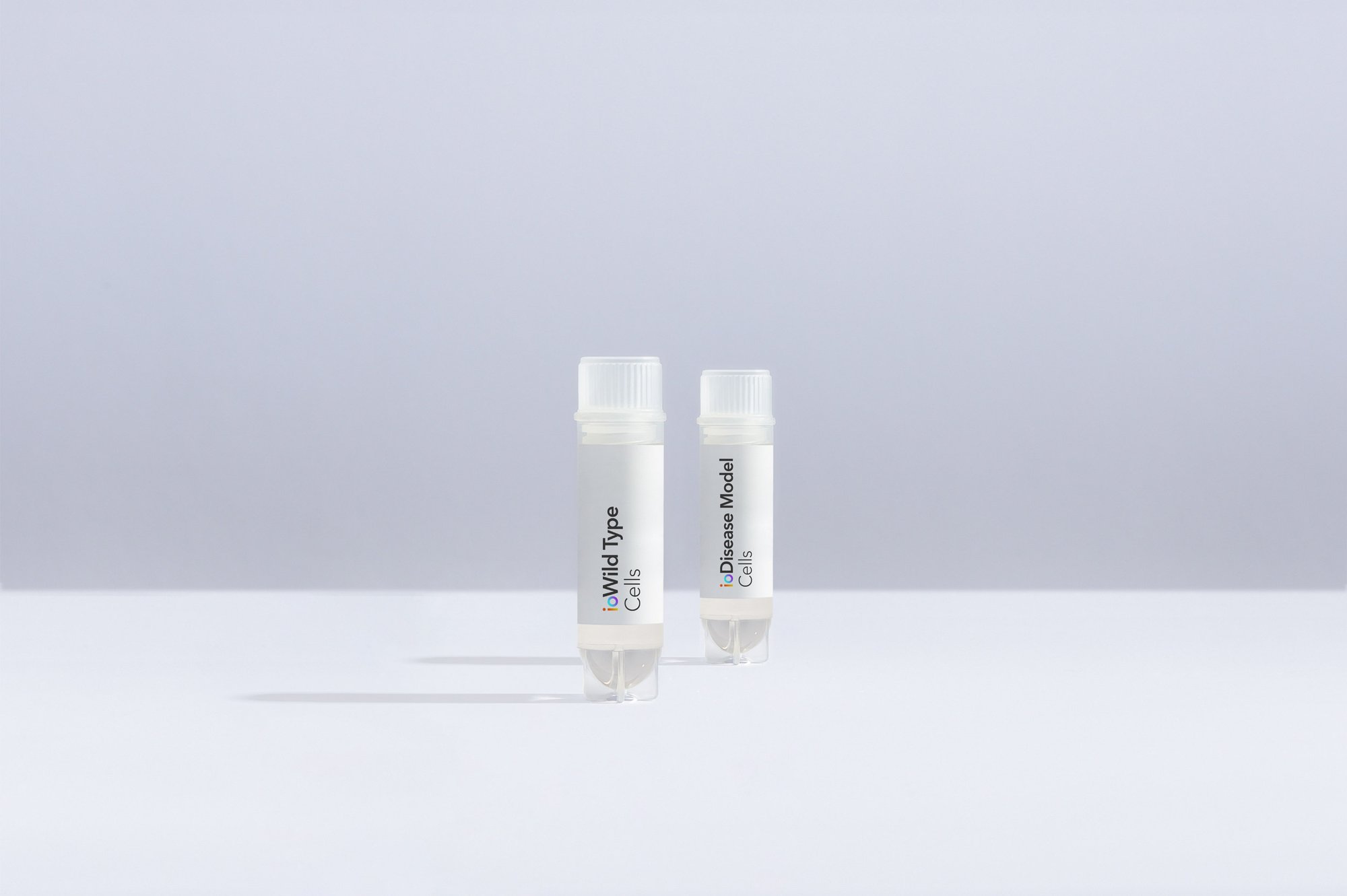
Wild Type and Isogenic Disease Model cells: A true comparison

Further your disease research by pairing our wild type cells with isogenic disease models.
bitbio-vials-Wild_and_Disease-staggered-2500px_wide

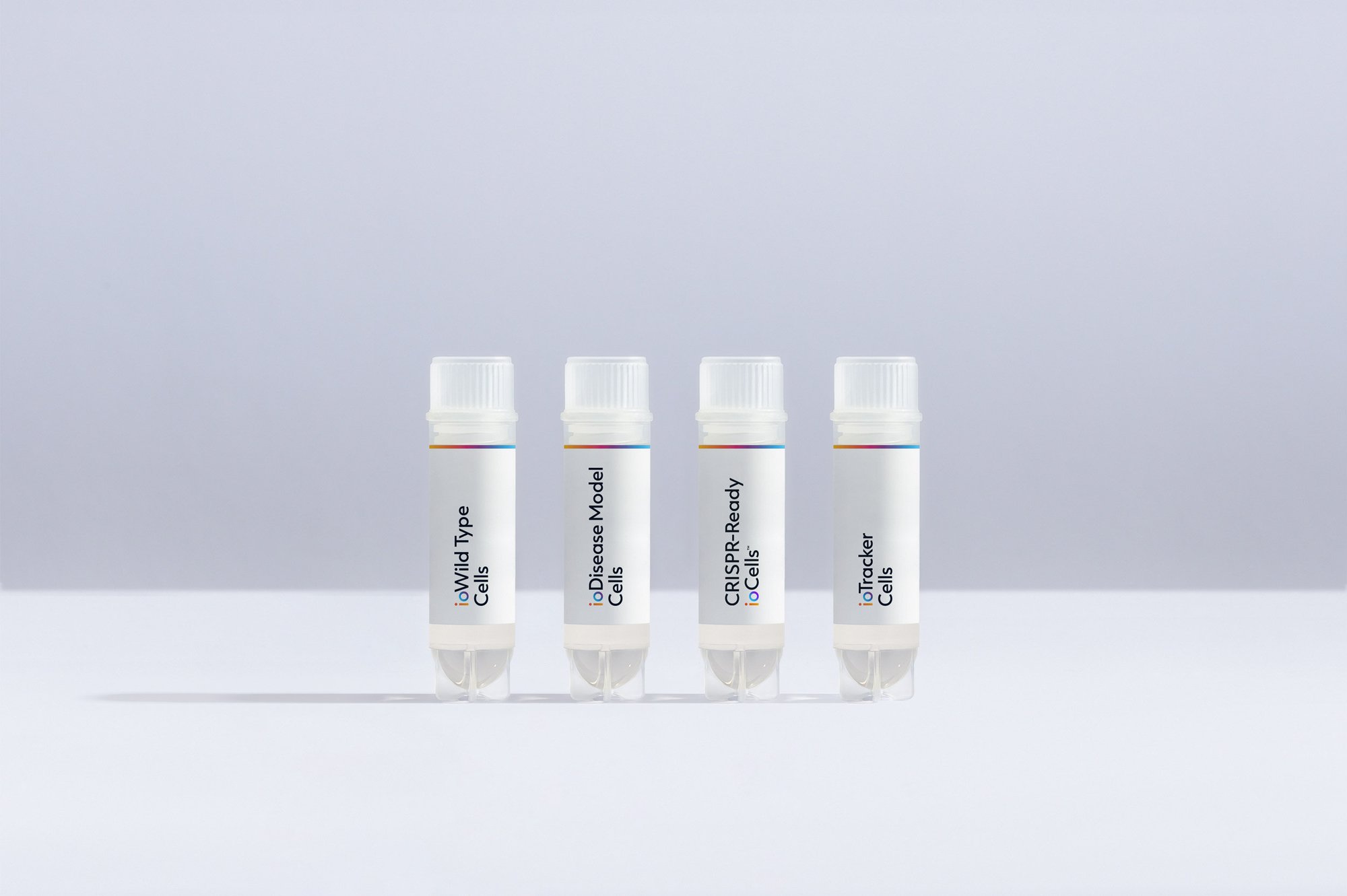
ioCells catalogue

Human iPSC-derived cells

powered by opti-ox

Consistent. Defined. Scalable.
bitbio-cell_catalogue_header-with-tracker-Desktop-2500x1664