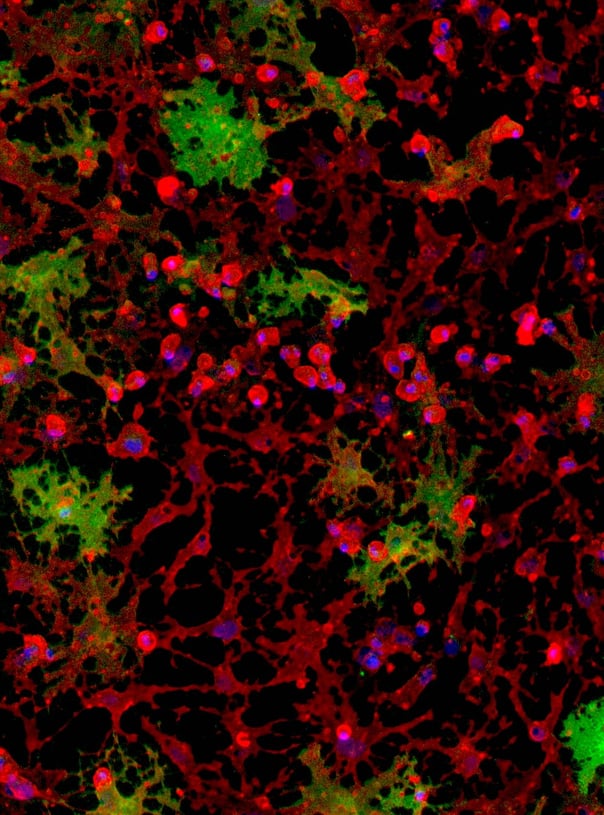
Human iPSC-derived OPC- and oligodendrocyte-like cells

Study mechanisms of demyelinating disease with human-relevant, consistent in vitro models

Powered by opti-ox 

Oligodendrocyte precursor cells (OPCs) are proliferative progenitor cells that differentiate into myelinating oligodendrocytes (OLs) during CNS development, and in response to injury during adulthood. The primary function of OLs is the ensheathment of axons with myelin to enable action potential conduction1,2. Impaired OPC differentiation, OL loss, and disrupted myelination are pathological features of demyelinating diseases3,4.

Remyelination research is hampered by the poor translatability of animal models and a lack of robust, human-relevant in vitro models. Although human induced pluripotent stem cells (hiPSC) offer a promising tool to study oligodendroglial cells, widespread adoption is hindered by lengthy, complex protocols with poor reproducibility4.

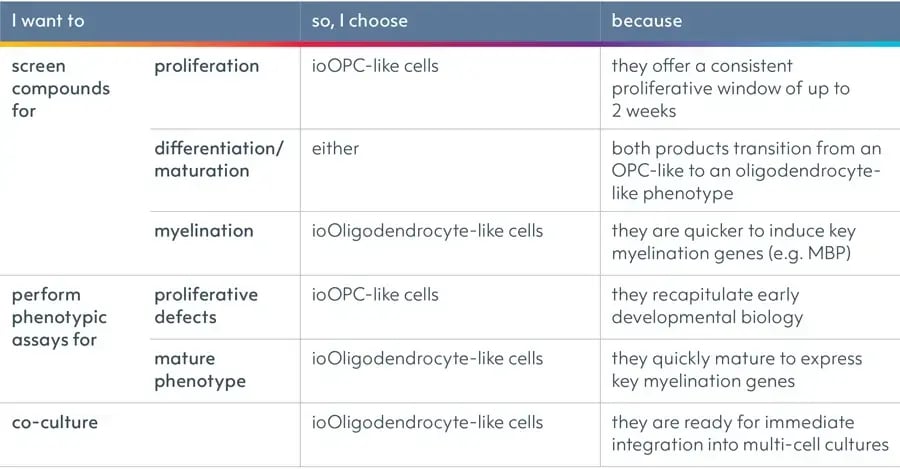
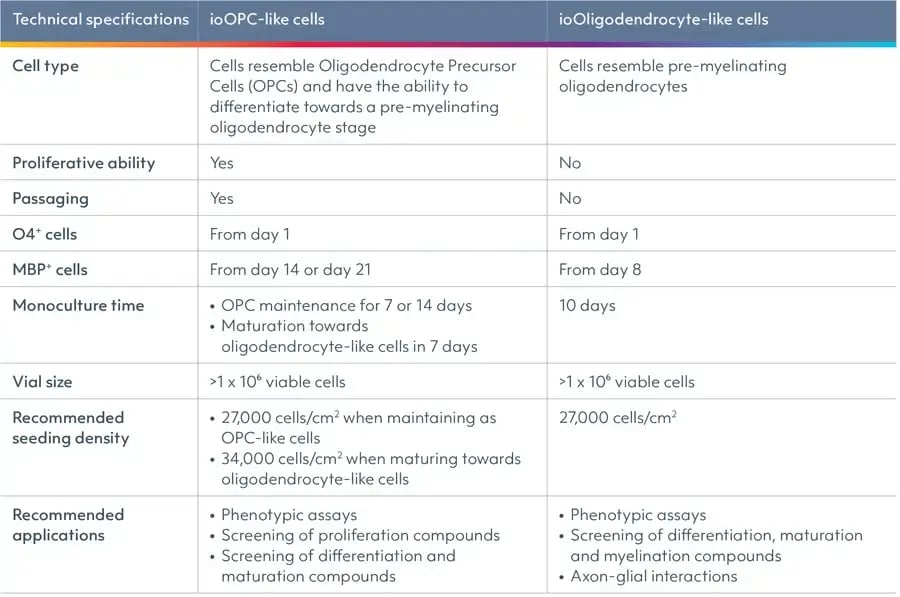
ioOPC-like cells and ioOligodendrocyte-like cells provide scientists easy access to human, physiologically relevant oligodendroglial cell models, ideal for studying demyelinating and neurodegenerative diseases.

Learn about glial cells and explore the data

Learn about glial cells and explore the data

Rapidly screen compounds that modulate myelination in a human-relevant model

bitbio_iooligodendrocyte-workflow_diagram-V4 (1)


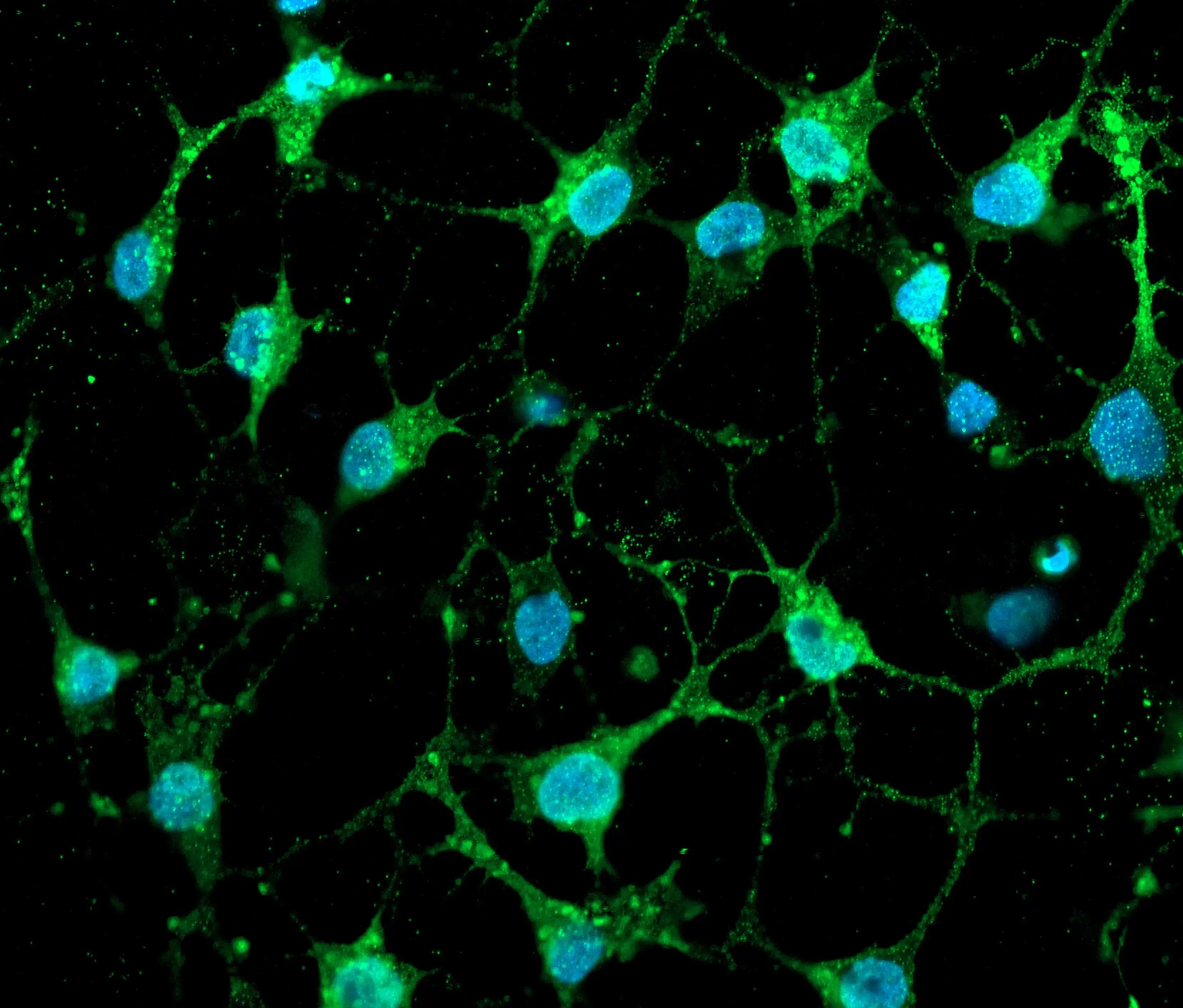
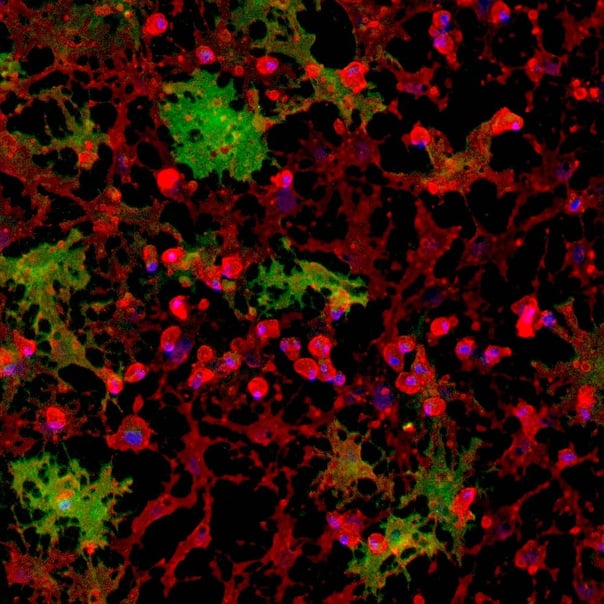
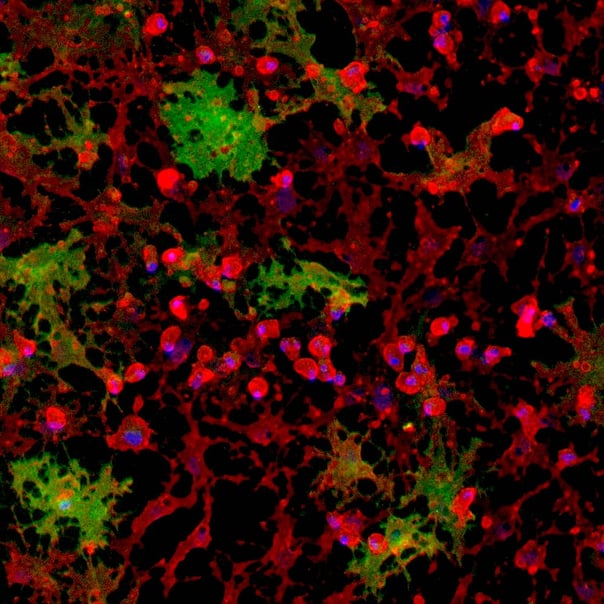
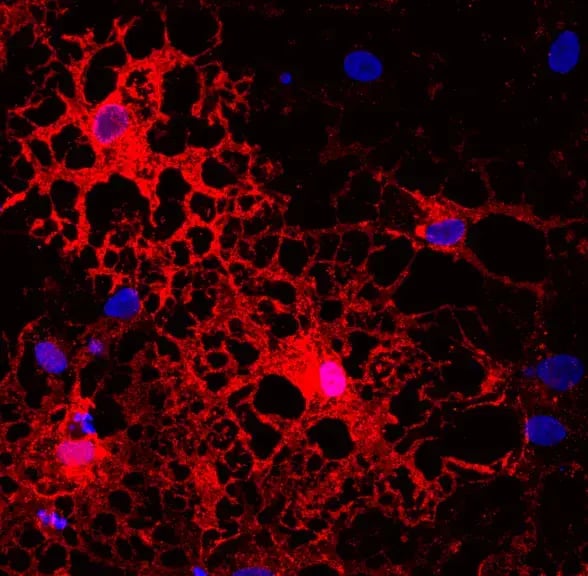
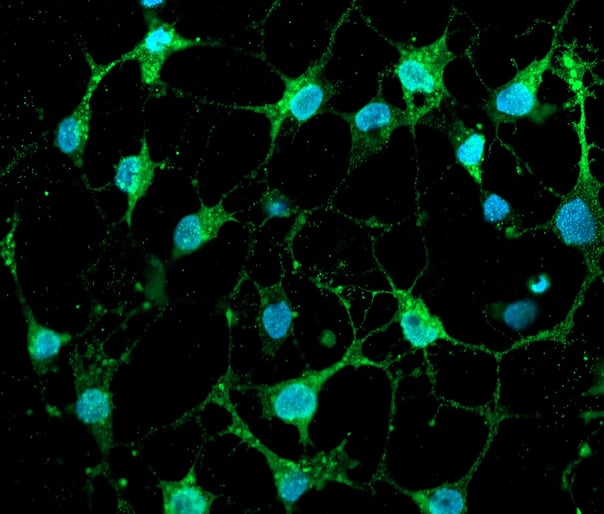
ioOligodendrocyte-like cells rapidly mature, transitioning into an oligodendrocyte-like morphology within 8 days.

Read the complete blog to further understand the need and relevance of ioOligodendrocyte-like cells.

Ready for experimentation as early as day 1 post-revival


Time-lapse video capturing the rapid and homogeneous acquisition of an OPC-like morphology and maturation towards an oligodendrocyte-like morphology with multiple branched processes, upon thawing of cryopreserved cells. 8 day time course; scale bar: 500 μm.

Glial dysfunction drives neurodegenerative disease progression

As neurodegenerative diseases continue to impact millions, researchers are increasingly exploring the role of glial cells in CNS health and disease. 

In this webinar, Dr Valentina Fossati, Senior Research Investigator at the New York Stem Cell Foundation explains how incorporating glial cells into human iPSC-derived models contributes to our understanding of disease mechanisms. Her work shows that investigating the crosstalk between neurons and glia allows for the identification and targeting of glial-driven pathogenic mechanisms linked to neuroinflammation and neurodegeneration.
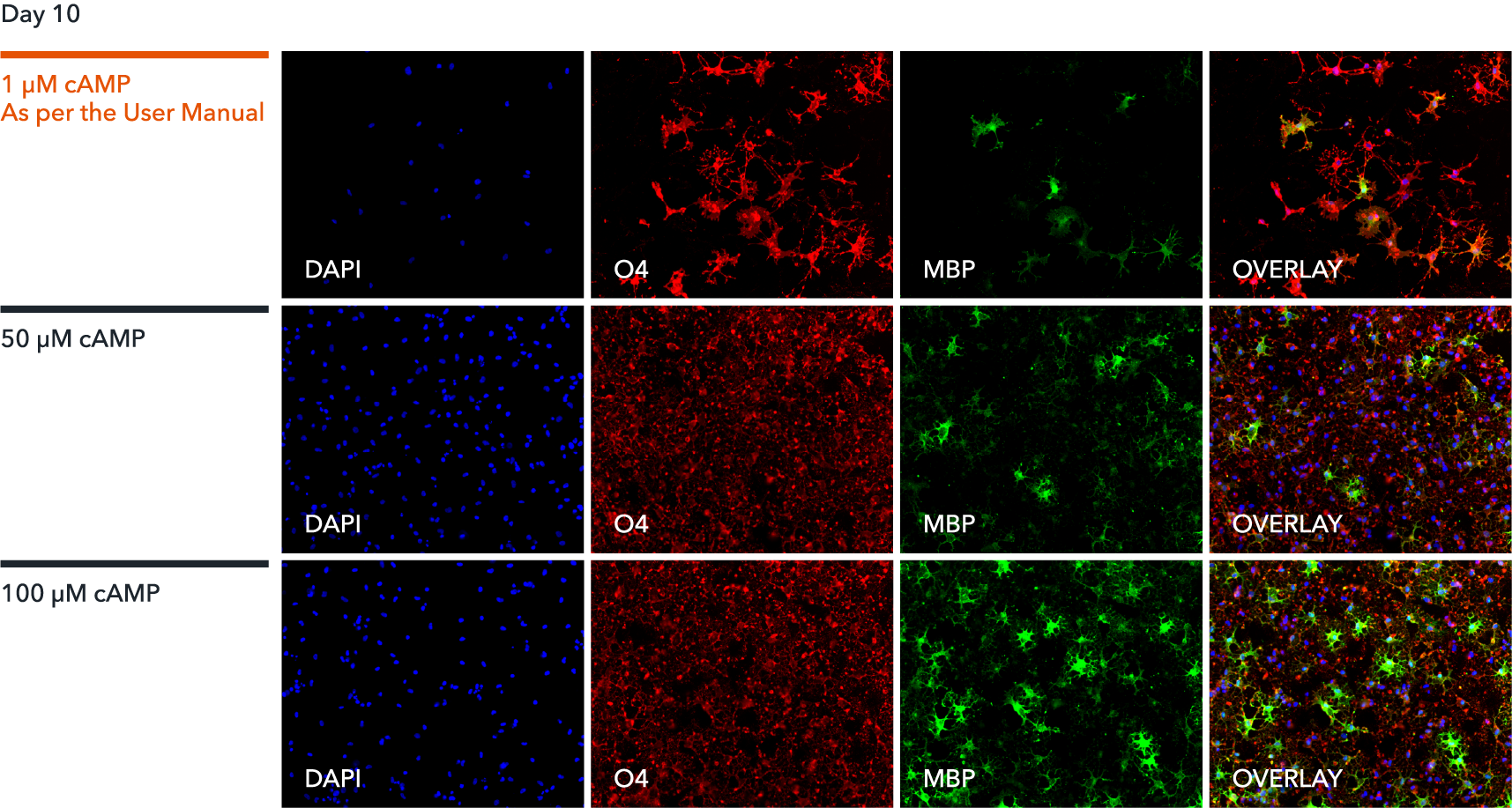
MBP expression can be enhanced by optimising cAMP concentration in media

Enhanced MBP expression in human iPSC-derived oligodendroglial cells with cAMP


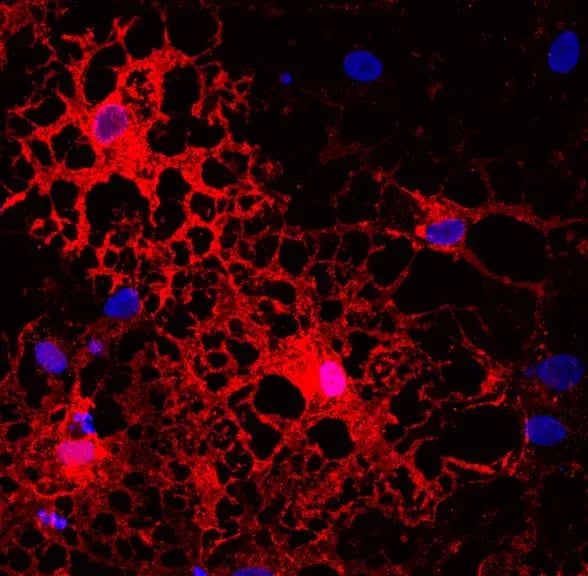
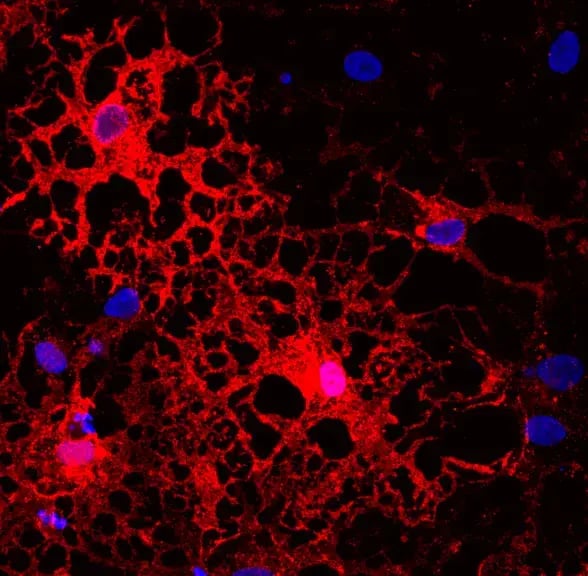
In this technical note, our scientists demonstrated that increasing the cAMP levels in the culture media of ioOligodendrocyte-like cells leads to an enhancement in cellular morphology and MBP expression. At 100 µM cAMP, 25% of the cells in culture are MBP-positive, by day 10.

ioOligodendrocyte-like cells show increased MBP expression when in co-culture with ioGlutamatergic Neurons

bit.bio-co-culture-of-oligodendrocyte-like-cells-and-glutamatergic-neurons-show-increased-MBP-expression

MBP is essential for myelin sheath formation, and enhancing its expression improves the relevance of a cellular model for scientists studying neurons and oligodendrocytes interactions in myelination research.

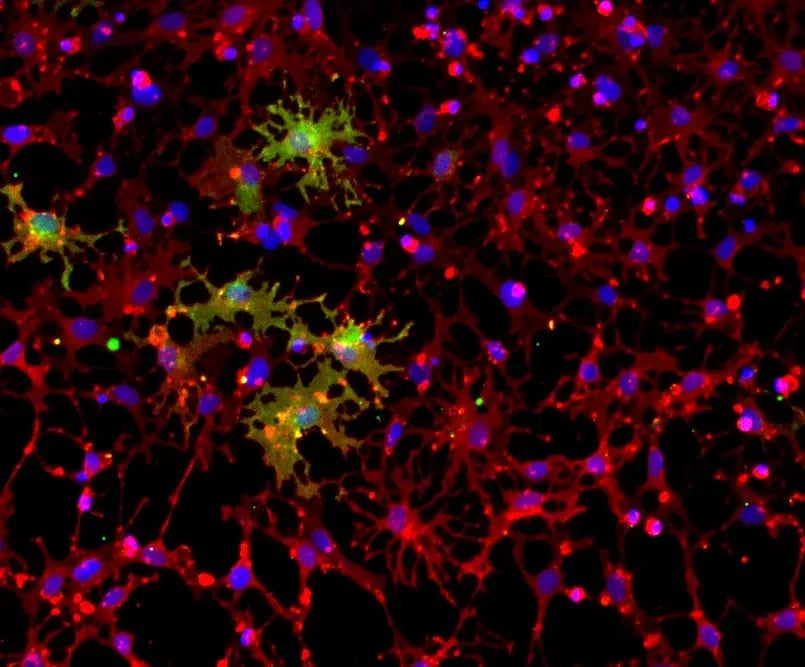
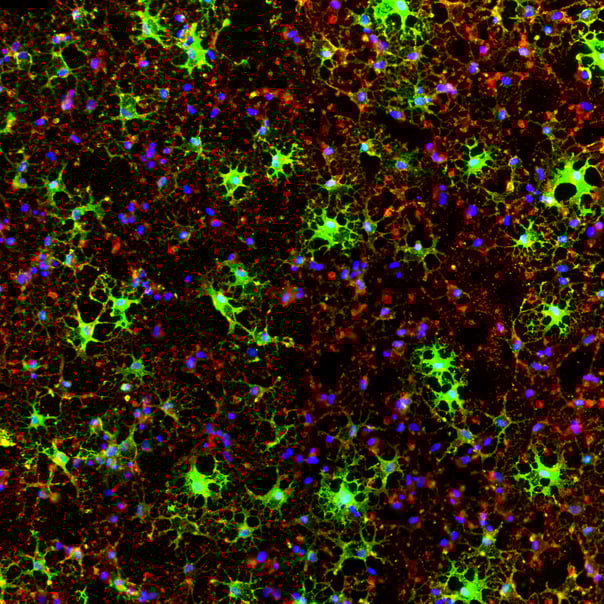
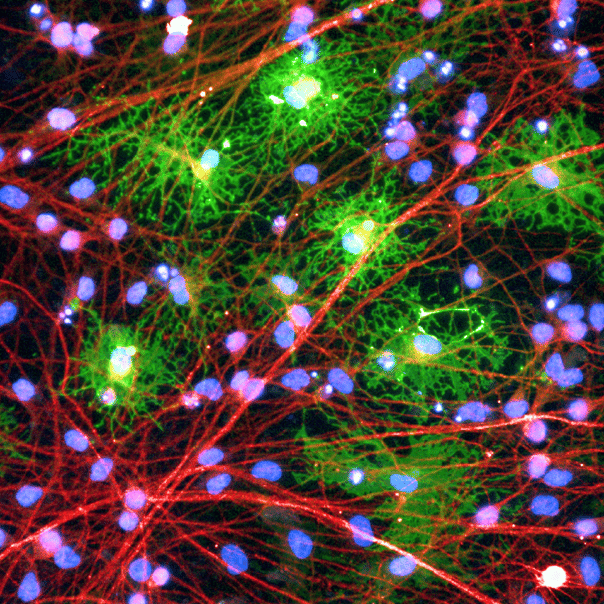
The presence of hiPSC-derived ioGlutamatergic Neurons in co-culture experiments increases MBP expression in ioOligodendrocyte-like cells, suggesting a biologically relevant interaction between both cell types.

Rapidly screen pro-myelinating compounds in human oligodendroglial cells

bit.bio-co-culture-of-oligodendrocyte-like-cells-and-glutamatergic-neurons-respond-to-treatment-with-Tasin1


Enhanced MBP expression in response to reference compounds confirms the utility of ioOligodendrocyte-like cells for early-stage drug discovery. Treatment with Tasin-1, a small molecule inhibitor of cholesterol biosynthesis previously characterized as pro-myelinating (Hubler et al., 2018), resulted in a statistically significant increase in MBP-positive cells.

Delivered cryopreserved, the cells are ready for experimentation from day 1


In this video, our scientist takes you through the step-by-step process of how to thaw, seed and culture ioOligodendrocyte-like cells.

What scientists say about ioOligodendrocyte-like cells

An image of Dr Alessandra Pagliaro

Dr Alessandra Pagliaro

Research scientist | In Vitro Biology | Evotec
"With our solid iPSC expertise, we were thrilled to find a cellular model that aligns seamlessly with our drug screening efforts. ioOligodendrocyte-like cells performed reliably and met all expectations. We especially appreciated bit.bio's detailed protocols and excellent scientific support, which made integration into our workflow both smooth and productive."

Expand your research

Click on the icons to find out more

Oligodendrocyte-like cells in co-culture with neurons for an in vitro myelination model
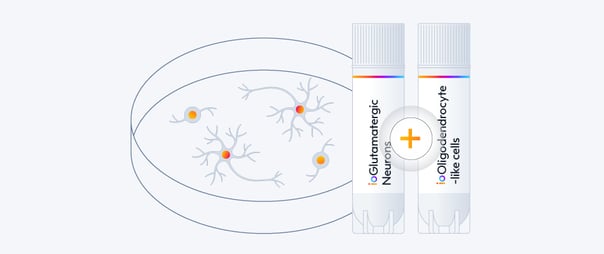
Build a co-culture model
Study MBP expression in co-culture with ioGlutamatergic Neurons
Expand your research
Build a co-culture model
Study MBP expression in co-culture with ioGlutamatergic Neurons
Oligodendrocyte-like cells in co-culture with neurons for an in vitro myelination model
Developing a myelination model in vitro?
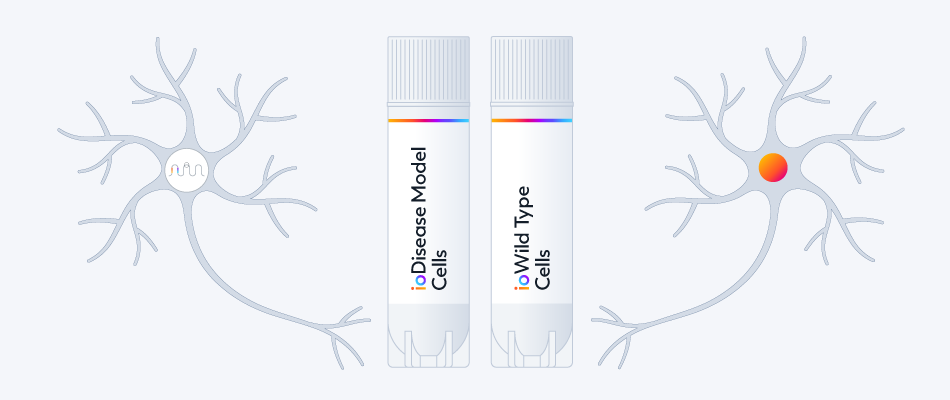
Include ioGlutamatergic Neurons wild type or tailor experimental conditions to answer your scientific question by including ioDisease Model Cells with disease-related mutations, for example,

ioGlutamatergic Neurons APP V717I/V717I
ioGlutamatergic Neurons PSEN1 M146L/M146L
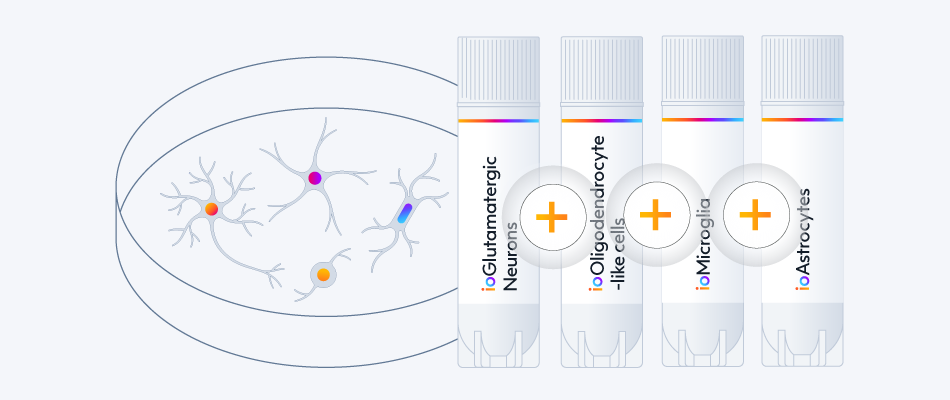
Multi cellular model for neuroinflammation studies with neurons and glia.
Study neuroinflammation in complex models
Assess cell damage, microglia activation and cytokine release
Expand your research
Study neuroinflammation in complex models
Assess cell damage, microglia activation and cytokine release
Multi cellular model for neuroinflammation studies with neurons and glia.
Interested in optimising your neuroinflammation studies?
Move into a multi-cellular model using different cell types:

ioMicroglia Male
ioGlutamatergic Neurons
ioAstrocytes

Tailor experimental conditions to answer your scientific question by including ioDisease Model Cells with disease-related mutations.
Modeling disease with your mutation of interest in comparison with isogenic control in oligodendrocyte-like cells
Study disease-related phenotypes
Make true comparisons with a genetically-matched control
Expand your research
Study disease-related phenotypes
Make true comparisons with a genetically-matched control
Modeling disease with your mutation of interest in comparison with isogenic control in oligodendrocyte-like cells
Build your custom disease model into the ioOligodendrocyte-like cells wild type. Use the genetically matched control in your experiments to make true comparisons in your data, being confident that even subtle variances in your data are attributable to your mutation of interest.

Start the conversation today
CRISPR-ready hiPSC-derived cells for efficient knockouts and CRISPR screens.
Simplify gene knockouts
Use CRISPRko-Ready ioOligodendrocyte-like cells to study your gene of interest
Expand your research
Simplify gene knockouts
Use CRISPRko-Ready ioOligodendrocyte-like cells to study your gene of interest
CRISPR-ready hiPSC-derived cells for efficient knockouts and CRISPR screens.
Interested in gene knockouts and CRISPR screens? 
CRISPRko-Ready ioOligodendrocyte-like cells are engineered to constitutively express Cas9 nuclease for the quick and easy generation of gene knockouts and CRISPR screens.

Start effortlessly with our library of protocols

ioOligodendrocyte-like cells user manual | bit.bio User manual
ioOligodendrocyte-like cells user manual | bit.bio

bit.bio

2026

Download
CRISPRko-Ready ioOligodendrocyte-like cells user manual | bit.bio User manual
CRISPRko-Ready ioOligodendrocyte-like cells user manual | bit.bio
V1
2025
bit.bio
Download
How to culture ioOligodendrocyte-like cells Video tutorial
How to culture ioOligodendrocyte-like cells
Prachi Bhagwatwar​​​​ | ​Research Assistant | bit.bio
Watch now
Compound treatment in ioOligodendrocyte-like cells | bit.bio Protocol
Compound treatment in ioOligodendrocyte-like cells | bit.bio
Download protocol
Co-culturing ioOligodendrocyte-like cells and ioGlutamatergic Neurons | bit.bio Protocol
Co-culturing ioOligodendrocyte-like cells and ioGlutamatergic Neurons | bit.bio
Download protocol

Product resources

Enhancement of MBP expression in human iPSC-derived oligodendrocyte-like cells by optimising db-cAMP concentration in media Technical note
Enhancement of MBP expression in human iPSC-derived oligodendrocyte-like cells by optimising db-cAMP concentration in media
Download technical note
ioOligodendrocyte-like cells Brochure
ioOligodendrocyte-like cells
bit.bio
Download
An iPSC-derived neuroinflammation/neurotoxicity in vitro model of neurons and glial cells Poster
An iPSC-derived neuroinflammation/neurotoxicity in vitro model of neurons and glial cells

Bsibsi et al.

Courtesy of Charles River Laboratories

2024

View poster
Driving experimental reproducibility and lot-to-lot biological consistency in human iPSC-derived cells enabled by opti-ox technology Poster
Driving experimental reproducibility and lot-to-lot biological consistency in human iPSC-derived cells enabled by opti-ox technology

Newman et al.

bit.bio

2024

View poster
Rapid and consistent generation of human iPSC-derived oligodendrocyte-like cells using opti-ox technology Poster
Rapid and consistent generation of human iPSC-derived oligodendrocyte-like cells using opti-ox technology

Herrera-Vaquero et al.

bit.bio

2024

View poster
Establishment and validation of an in vitro co-culture model to study myelination using human iPSC-derived glutamatergic neurons and oligodendrocytes Poster
Establishment and validation of an in vitro co-culture model to study myelination using human iPSC-derived glutamatergic neurons and oligodendrocytes

Bsibsi et al.

Courtesy of Charles River Laboratories

2024

View poster
In vitro model to study demyelinating disease using human OPC- and oligodendrocyte-like cells generated by deterministic cell programming Poster
In vitro model to study demyelinating disease using human OPC- and oligodendrocyte-like cells generated by deterministic cell programming

Veteleanu et al.

bit.bio

2025

Download poster
Cellular reprogramming to enable the precise and scalable manufacturing of human cells for therapeutic applications Talk
Cellular reprogramming to enable the precise and scalable manufacturing of human cells for therapeutic applications

Dr Alex Davenport | Senior Scientist | bit.bio

Talk at ELRIG Cell & Gene Therapy

2021

Watch now
Alzheimer’s Disease Pathogenesis: Emerging Role of Microglia | bit.bio Webinar
Alzheimer’s Disease Pathogenesis: Emerging Role of Microglia | bit.bio

Dr Matthias Pawlowski | Head, Dementia-Sensitive Hospital | University of Münster

Dr Malathi Raman | Senior Product Manager | bit.bio

Watch now
Rethinking Developmental Biology With Cellular Reprogramming | bit.bio Webinar
Rethinking Developmental Biology With Cellular Reprogramming | bit.bio

Mark Kotter | CEO and founder | bit.bio

Marius Wernig | Professor Departments of Pathology and Chemical and Systems Biology |  Stanford University

Watch now
Human iPSC-Based Models of Glial Cells for Studying Neurodegenerative Disease | bit.bio Webinar
Human iPSC-Based Models of Glial Cells for Studying Neurodegenerative Disease | bit.bio
Valentina Fossati, PhD | Senior Research Investigator | The New York Stem Cell Foundation

Inês Ferreira | Senior Product Manager | bit.bio
Watch now

Frequently Asked Questions (FAQs)

  • What is the difference between oligodendrocyte precursor cells (OPCs) and oligodendrocytes?

Oligodendrocyte precursor cells (OPCs) are proliferative progenitor cells that differentiate into mature, myelinating oligodendrocytes (OLs) during CNS development and in response to injury. While OPCs are responsible for populating the brain with new myelinating cells, the primary function of mature oligodendrocytes is the ensheathment of axons with myelin to enable rapid action potential conduction.


  • How do human iPSC-derived cells address the limitations of current remyelination research?

Remyelination research is often hampered by the poor translatability of animal models and the lack of robust human in vitro systems. Human iPSC-derived oligodendrocytes address these challenges by providing a consistent, physiologically relevant source of cells that bypasses the variability and lengthy protocols associated with traditional differentiation methods.


  • How quickly are ioOligodendrocyte-like cells ready for experimentation?

ioOligodendrocyte-like cells, human iPSC-derived oligodendrocyte-like cells, are ready for experimentation as early as day 1 post-thaw, bypassing the typical months-long traditional differentiation protocols. Within just 8 days, these cells transition into a complex, branched morphology, significantly accelerating experimental workflows for high-throughput screening.


  • How does co-culture with neurons support the study of myelination mechanisms?

Human iPSC-derived oligodendrocyte-like cells are fully compatible with co-culture workflows, allowing scientists to model complex neuron-glial interactions in vitro. By combining these cells with neurons, scientists can recreate the multicellular environment necessary to investigate the specific mechanisms of myelination and the crosstalk that drives myelin sheath formation.


  • How can these cells be used to screen for remyelination therapies?

Human iPSC-derived oligodendrocyte-like cells provide a robust, human-relevant platform for screening de-, pro-, and remyelination drugs. By quantifying Myelin Basic Protein (MBP) expression, scientists can effectively validate therapeutic candidates, as demonstrated by the cells' sensitivity to known pro-myelinating agents like Tasin-1.

References

  1. Goldman, S. A., and N. J. Kuypers. “How to Make an Oligodendrocyte.” Development, vol. 142, no. 23, 1 Dec. 2015, pp. 3983–3995,  https://doi.org/10.1242/dev.126409.  
  2. Douvaras, Panagiotis, and Valentina Fossati. “Generation and Isolation of Oligodendrocyte Progenitor Cells from Human Pluripotent Stem Cells.” Nature Protocols, vol. 10, no. 8, 2 July 2015, pp. 1143–1154, https://doi.org/10.1038/nprot.2015.075.
  3. Amaral, Ana I, et al. “Oligodendrocytes: Development, Physiology and Glucose Metabolism.” Advances in Neurobiology, 1 Jan. 2016, pp. 275–294, https://doi.org/10.1007/978-3-319-45096-4_10.  
  4. Balestri, Sonia, et al. “The Current Challenges for Drug Discovery in CNS Remyelination.” International Journal of Molecular Sciences, vol. 22, no. 6, 12 Mar. 2021, p. 2891, https://doi.org/10.3390/ijms22062891