Reproducible, scalable hepatotoxicity assays
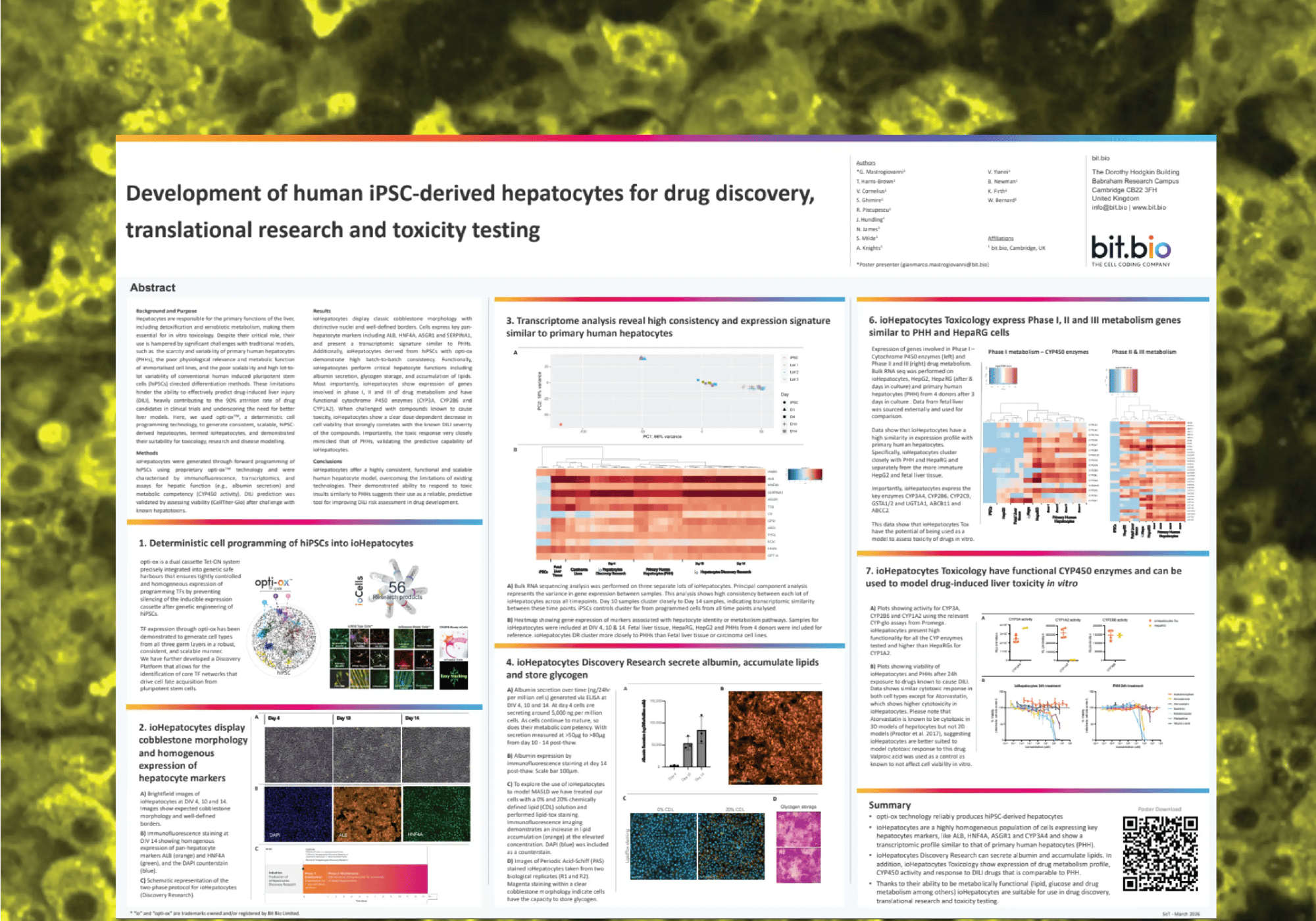
Drug-induced liver injury (DILI) remains a leading cause of late-stage drug attrition, making in vitro hepatotoxicity studies essential for early de-risking. Existing hepatocyte models, however, have notable limitations: primary human hepatocytes (PHH) rapidly de-differentiate in 2D and exhibit donor variability, while many iPSC-derived models lack the maturity required for toxicology applications.
Our human iPSC-derived ioHepatocytes address the gaps. These defined, consistent cells recapitulate characteristic liver functions and maintain maturity for weeks in 2D culture, providing a scalable, reproducible platform for drug metabolism and hepatotoxicity assessment.

Reliable, reproducible outcomes
Eliminate donor variability and generate reproducible screening assay data with defined, characterised ioHepatocytes that offer lot-to-lot consistency.

Perform long-term safety studies
Evaluate chronic toxicity and delayed drug effects using ioHepatocytes that maintain robust albumin secretion and CYP450 activity for over two weeks in vitro.

Predictive hepatotoxicity testing
Confidently assess compound risk using iPSC-derived hepatocytes that reproduce PHH-like toxicity curves and respond to clinical DILI reference compounds.
ioCells in action
ioCells in action
Albumin secretion increases with time
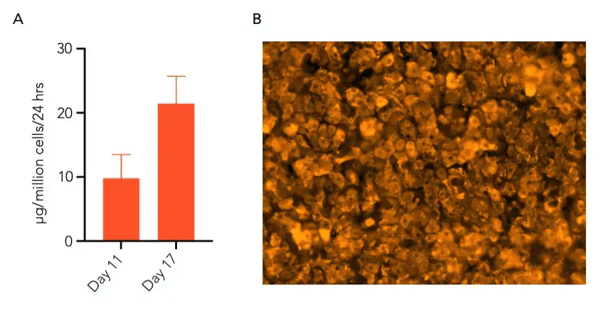
Fig 1. Albumin production in ioHepatocytes. (A) Albumin secretion in cultured ioHepatocytes, measured by ELISA at days 11 and 17 post-thaw, increased over time, reaching >10 µg and >20 µg on days 11 and 17, respectively. (B) Immunofluorescence staining confirms albumin expression at day 17 and displays typical cobble-stone morphology.
With characteristic hepatocyte structure and function, including albumin secretion, ioHepatocytes show increasing metabolic competency over time. Continued albumin production for two weeks supports extended or chronic metabolic and hepatotoxicity studies.
Expression of key metabolic enzymes
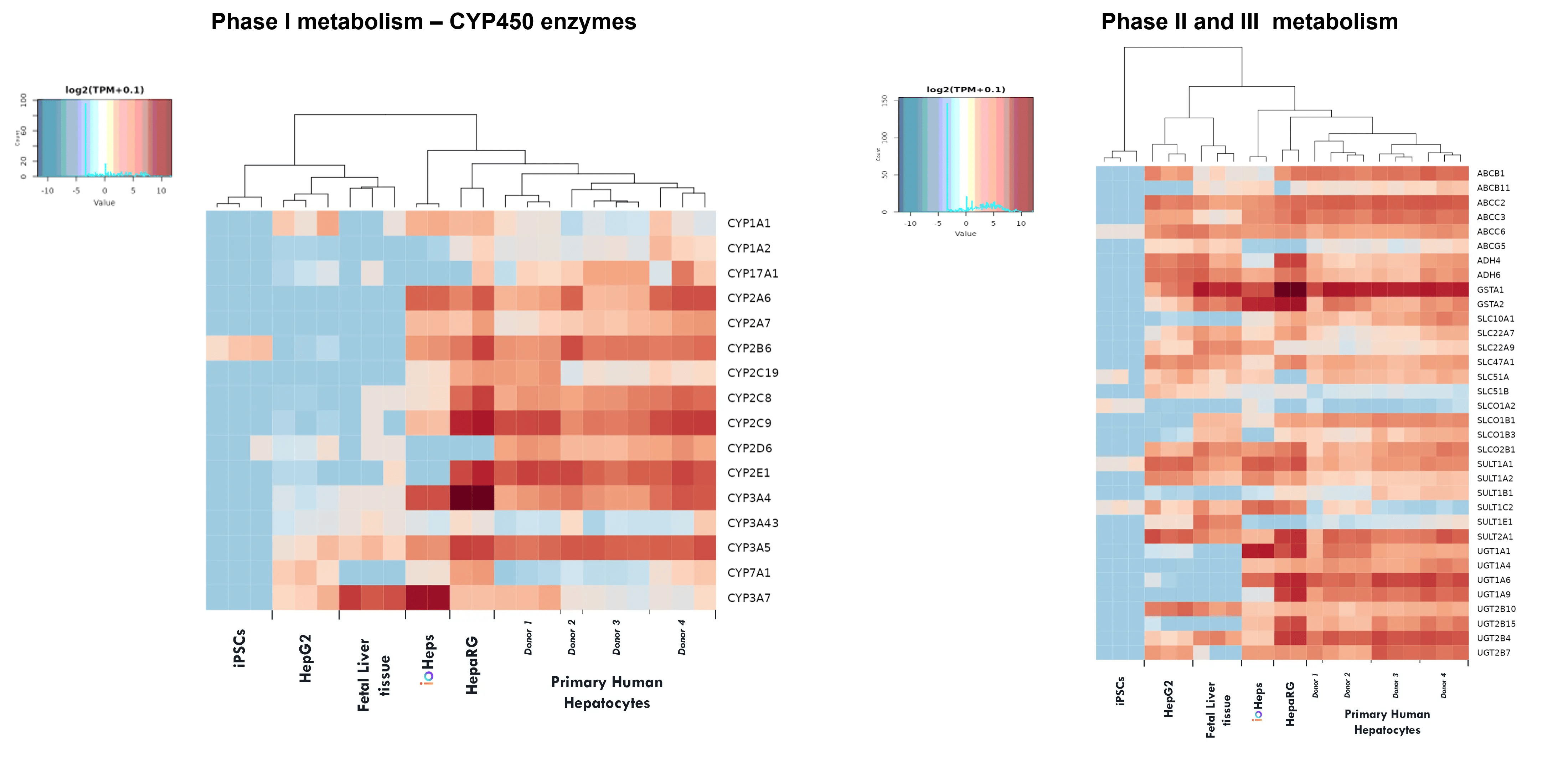
Fig 2. RNA-seq profiling of drug metabolism gene expression in ioHepatocytes. Bulk RNA-seq was performed on ioHepatocytes, HepG2, HepaRG, and PHH, with data from fetal liver samples used for comparison. Genes are divided into phase I (Cytochrome P450 enzymes, left) and phases II and III (right) of drug metabolism. Data show that ioHepatocytes cluster closely with PHH and HepaRG, and are distinct from the more immature HepG2 and fetal liver tissue.
Expression of key phase I, II and III drug metabolism genes in ioHepatocytes closely mirrors PHH, providing a metabolically active model for drug response studies. The similarity to PHH presents a physiologically relevant foundation for studying liver function and drug metabolism in vitro.
ioHepatocytes model DILI response
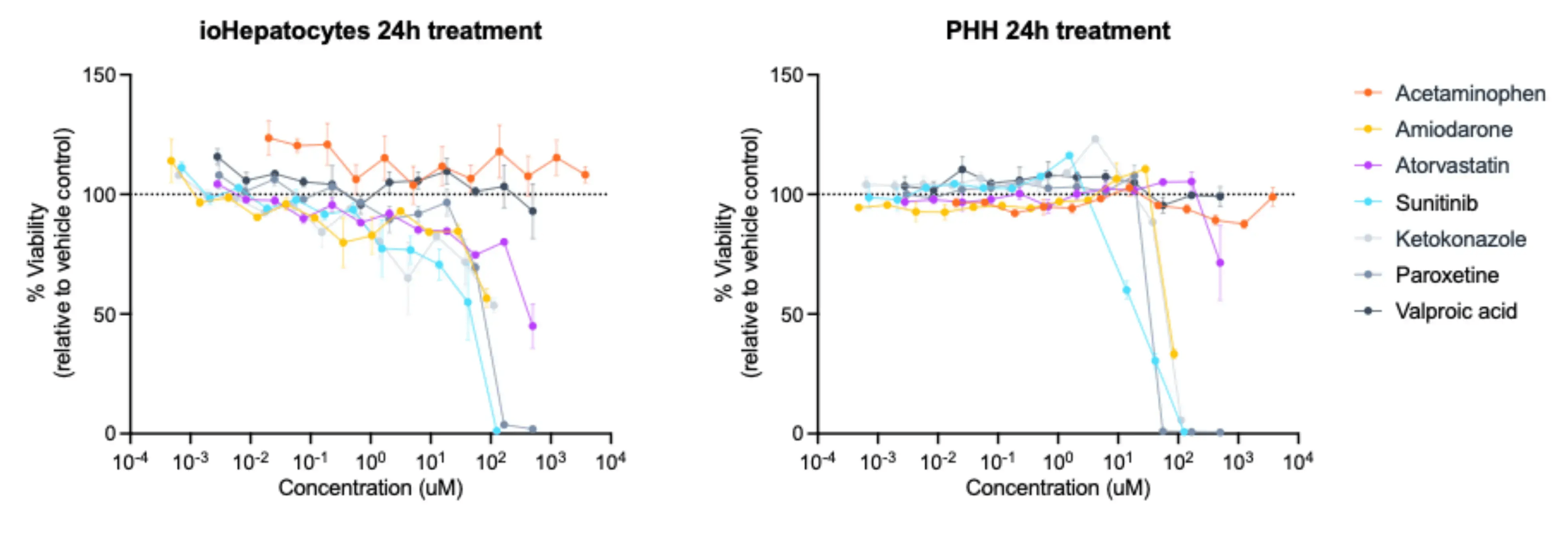
Fig 3. Modelling cytotoxic responses in ioHepatocytes. Cell viability data measured after 24 hours of exposure to DILI-inducing drugs (valproic acid as the control) show similar cytotoxicity responses in both ioHepatocytes and PHH.
ioHepatocytes demonstrate clinically relevant drug sensitivity, equivalent to PHH responses. This supports more predictive assessment of metabolism and hepatotoxicity, enabling robust early-stage DILI screening.
ioHepatocytes accumulate lipid droplets
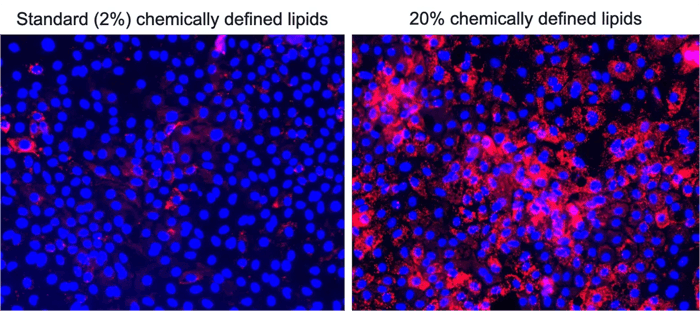
Fig 4. Chemically defined lipid uptake in ioHepatocytes. When treated with chemically defined lipids at standard (2%) and 20% concentrations, ioHepatocytes show lipid accumulation, visualised through LipidTox stainings, suggesting a dose-responsive uptake.
Active lipid uptake, its processing, and packaging into intracellular lipid droplets suggest that ioHepatocytes are both metabolically functional and sensitive to perturbation. As such, this facilitates the study of early Metabolic Dysfunction-Associated Steatotic Liver Disease (MASLD) and lipid-related liver dysfunction.
Functional CYP activity in ioHepatocytes
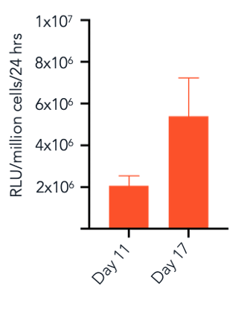
Fig 5. CYP enzyme activity in ioHepatocytes. CYP-glo assays indicate high activity of CYP3A, CYP1A2, and CYP2B6 enzymes in ioHepatocytes, benchmarked against HepaRG cells.
ioHepatocytes exhibit robust activity of key CYP450 enzymes, with CYP1A2 activity significantly exceeding that of HepaRG cells, demonstrating functional drug-metabolising capacity. In hepatotoxicity studies, such activity is critical for modelling hepatic drug processing in vitro and ultimately, examining relevant toxic responses.
What scientists say about ioHepatocytes

Stuart Rushworth
Scientific Group Leader, Molecular Haematology | University of East Anglia
"We used bit.bio ioHepatocytes to validate our murine models in a human cellular context, defining a metabolic pathway in cancer. The ioHepatocytes were straightforward to use and responded to external stimuli as expected."
Recommended resources
.webp)
bit.bio is proud to be part of The 3Rs Collaborative’s (@NA3RsC) Microphysiological Systems (MPS) initiative. The MPS initiative aims to increase industry adoption and regulatory acceptance of MPS technologies, to refine, reduce, and replace the use of research animals.
bit.bio participated in the 3RsC Liver MPS Models workshop, highlighting our liver models through a rapid 15-minute presentation.
Ready to browse?
Explore our full portfolio of consistent, defined human iPSC-derived ioCells™. From neurons and glia to skeletal cells and hepatocytes, our wild-type and disease model cells support both basic research and disease-focused applications.