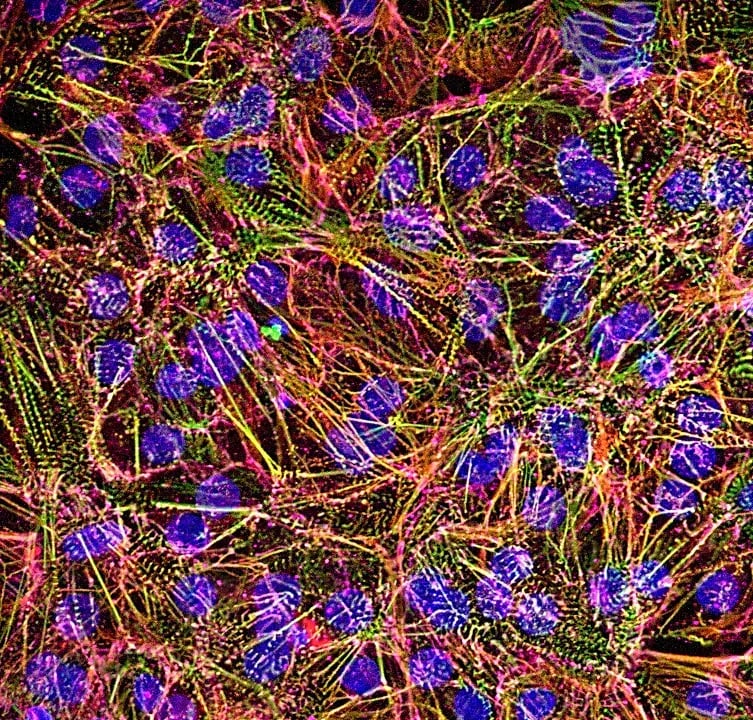
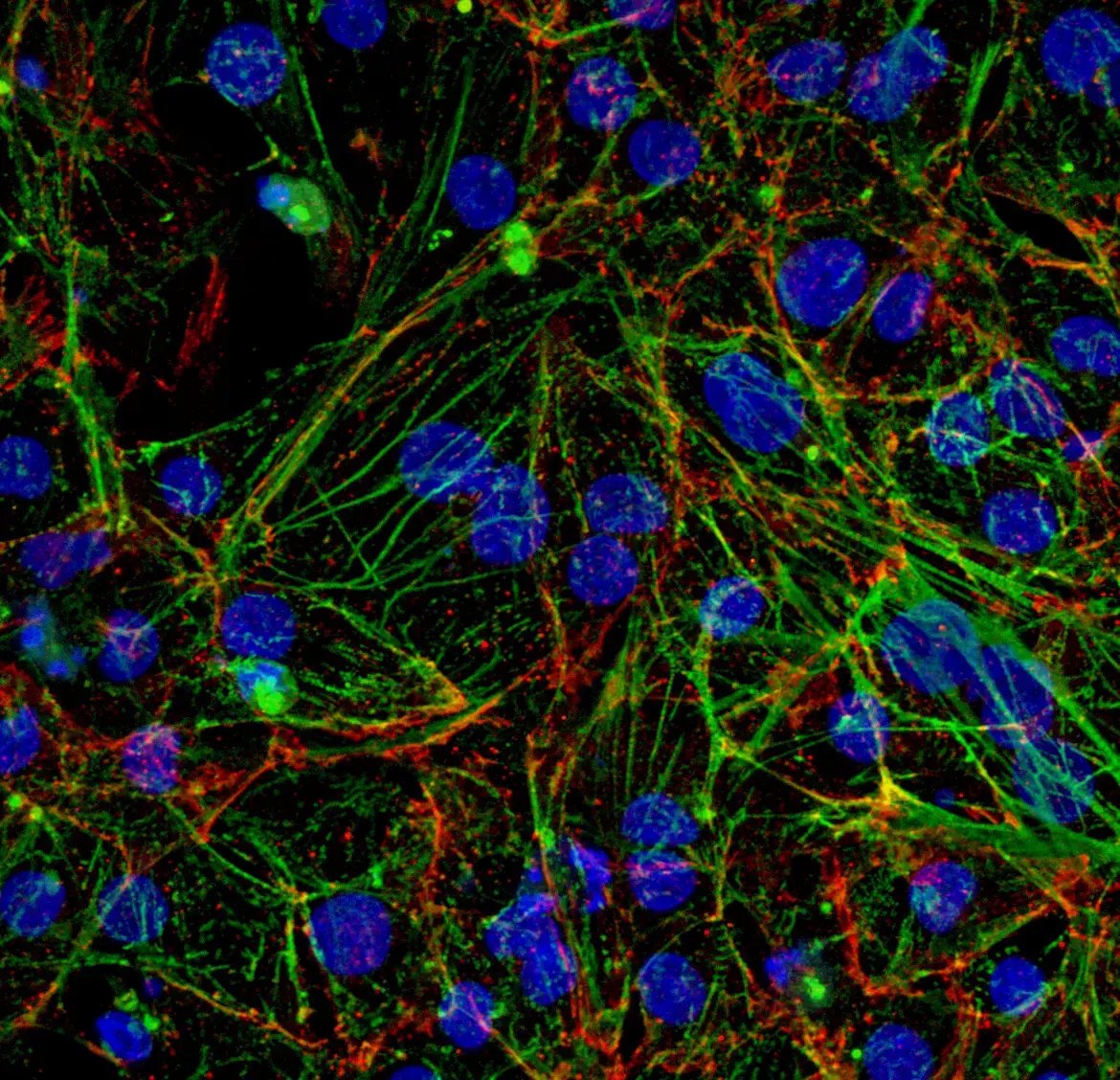
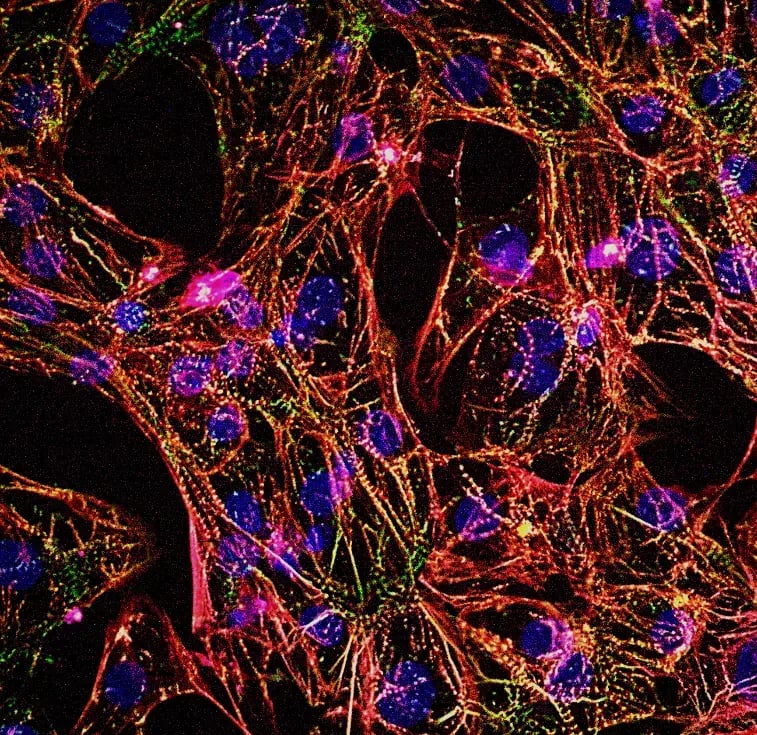
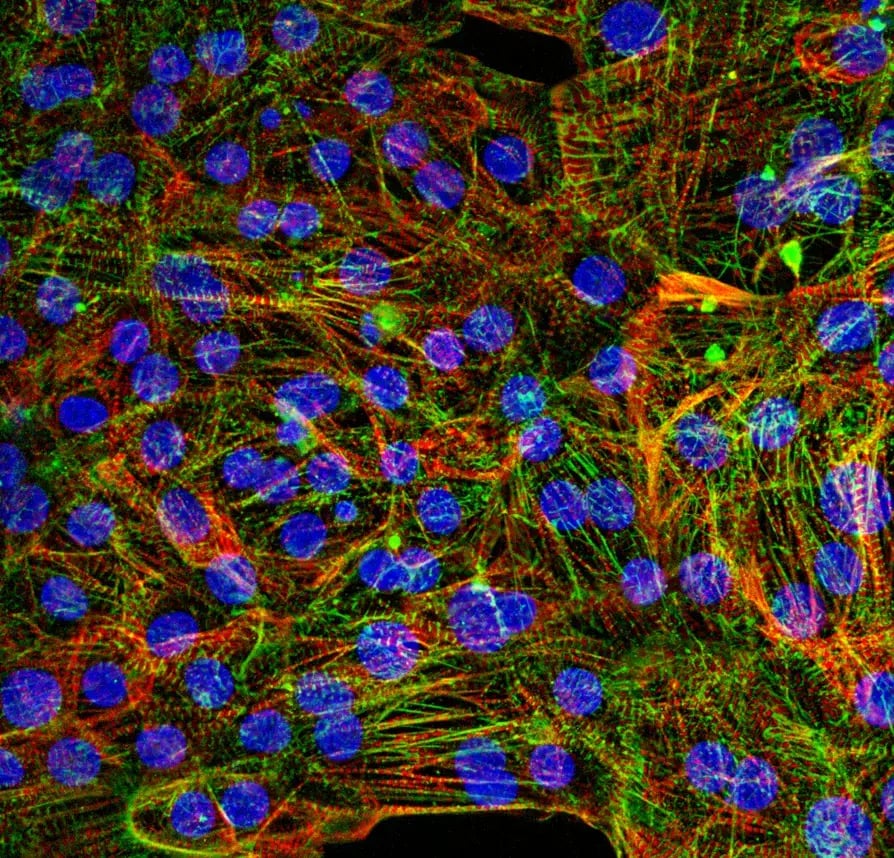
The heart is a complex organ composed of a diverse population of cardiac cells, primarily comprising cardiomyocytes, cardiac fibroblasts, and vascular endothelial cells. The highly coordinated activity of these cells is critical for healthy cardiovascular function. As the functional core of the heart, they are the primary focus for modelling intrinsic genetic disorders, such as cardiomyopathies, studying the cellular damage caused by ischemic injury, and screening for drug-induced cardiotoxicity, which is a major cause of late-stage drug attrition.
Historically, efforts to model cardiovascular biology and screen for cardiotoxic compounds have relied heavily on animal models. However, non-human models exhibit physiological differences in baseline heart rate, repolarisation currents, and ion channel expression, frequently failing to reliably predict human-specific cardiac responses. Transitioning to in vitro human models using primary cells has been equally challenging due to severe limitations, as scientists typically source them from surgical discards or organ donors whose hearts are deemed non-transplantable.
Human iPSC-derived cardiac cells provide an in vitro, physiologically relevant model to overcome these limitations, constituting a reliable source of human cells for early-stage cardiotoxicity assessment and modelling cardiovascular disease.
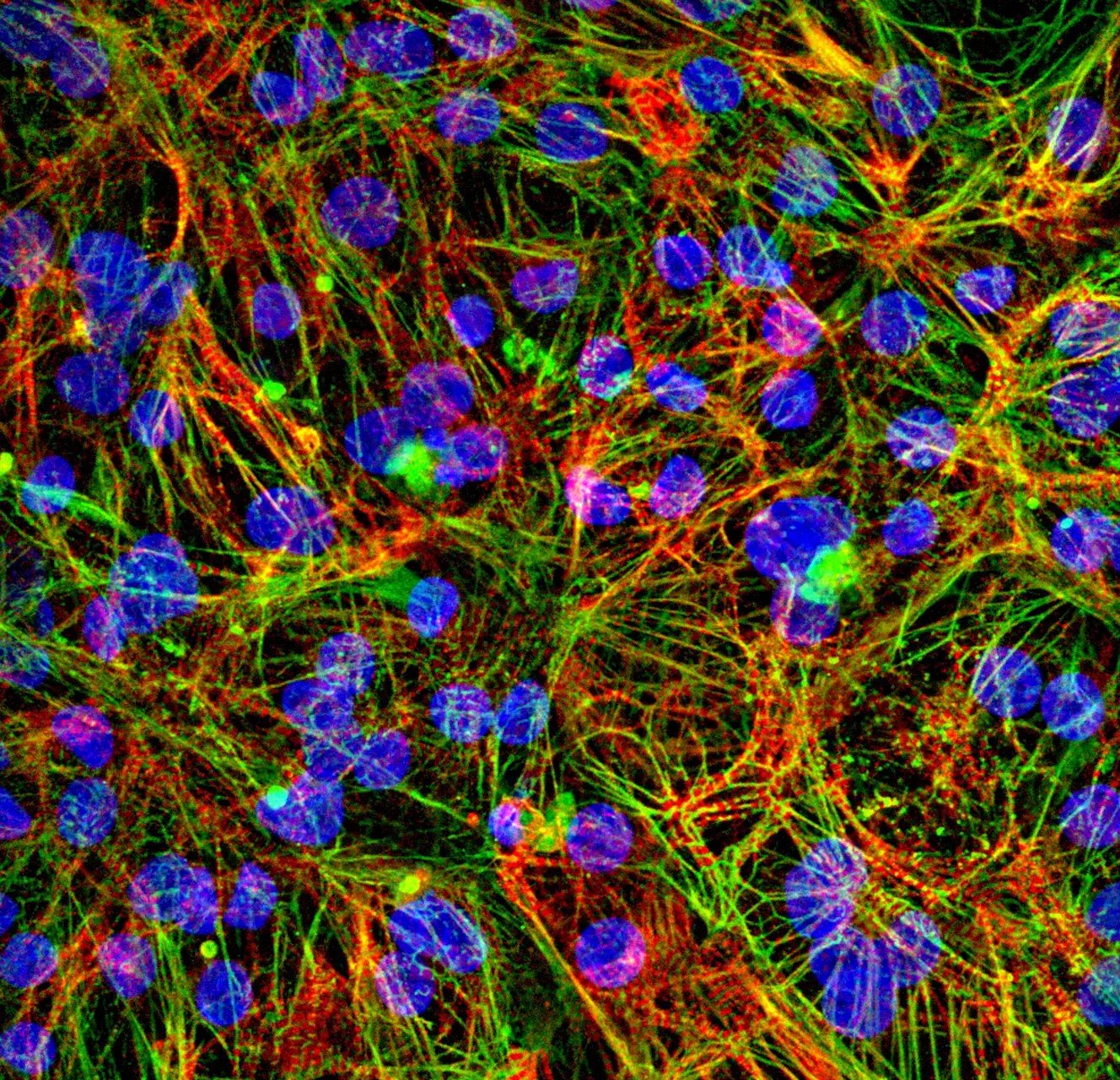
Drug-induced cardiotoxicity remains a leading cause of late-stage drug attrition. Historically, efforts to screen for these liabilities have heavily relied on animal models. However, non-human tissues display profound physiological differences in baseline heart rate, repolarisation currents, and ion channel expression. Because they frequently fail to reliably predict human-specific cardiac responses, transitioning to physiologically relevant human cardiac cells is essential for identifying toxic compounds early in the preclinical drug discovery pipeline.
Human iPSC-derived cardiac cells provide a physiologically relevant human model that directly bypasses the species-specific physiological mismatches of animal models. By exhibiting key cardiac characteristics that align with human cardiac cells, these in vitro models provide a robust and highly reliable foundation for early-stage drug discovery and complex disease modelling.
Although primary human cells are traditionally considered the gold standard for physiological relevance, their widespread use in research is severely hampered by accessibility and limited supply. In contrast, human iPSC-derived cardiac cells overcome this scarcity, being available at a larger scale, and are a physiologically relevant in vitro model that readily supports large-scale research demands.
Denning C, et al. "Cardiomyocytes from human pluripotent stem cells: From laboratory curiosity to industrial biomedical platform" Biochim Biophys Acta. 2016; 1863(7 Pt B):1728-48. doi: 10.1016/j.bbamcr.2015.10.014. https://pubmed.ncbi.nlm.nih.gov/26524115/
Doorn E, et al. "Preclinical Models of Cardiac Disease: A Comprehensive Overview for Clinical Scientists." Cardiovasc Eng Technol, 2024; 15(2):232–249. doi: 10.1007/s13239-023-00707-w. https://pmc.ncbi.nlm.nih.gov/articles/PMC11116217/
Muniyandi P, et al. "Biotechnological advances and applications of human pluripotent stem cell-derived heart models" Front Bioeng Biotechnol. 2023; 11:1214431. doi: 10.3389/fbioe.2023.1214431. https://pmc.ncbi.nlm.nih.gov/articles/PMC10407810/
Sala L, et al. "Integrating cardiomyocytes from human pluripotent stem cells in safety pharmacology: has the time come?" British Journal of Pharmacology. 2016; 174(21):3749–3765. doi: 10.1111/bph.13577. https://pmc.ncbi.nlm.nih.gov/articles/PMC5647193/