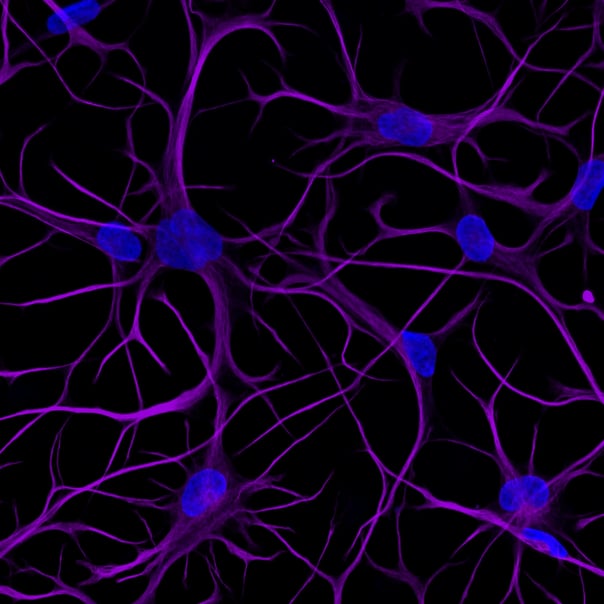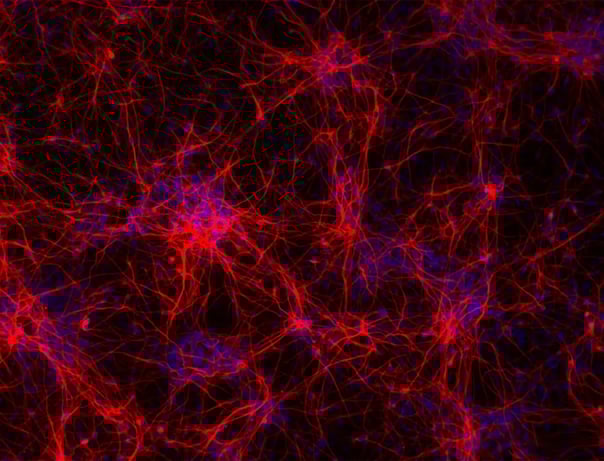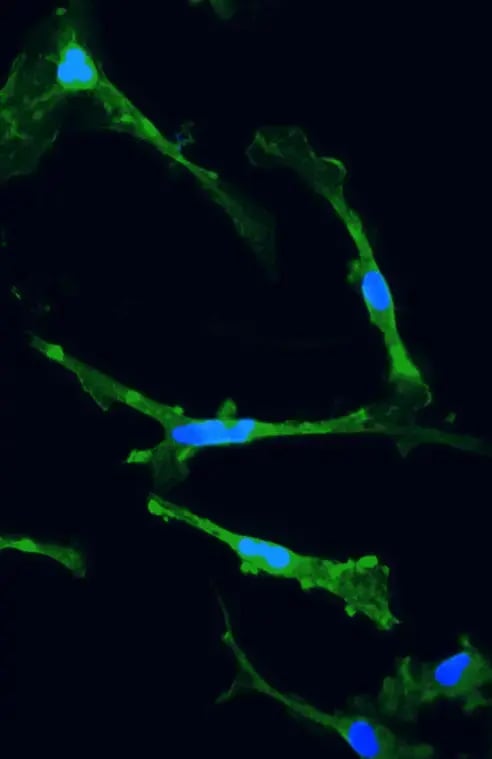
Human iPSC-derived glutamatergic neurons for pre-clinical research
bit.bio HD-MEA shows an increase in axon length and firing rate as excitatory neurons mature
bit.bio Raster plots demonstrate spontaneous activity and synchronised bursting of glutamatergic neurons
bit.bio Assessment of ASO delivery and gene knockdown in iPSC-derived excitatory neurons
bit.bio induced excitatory neurons in high throughput screening assays in 384-well plate format
bit.bio Bulk RNA-sequencing data demonstrates consistency across manufacturing lots of glutamatergic neurons
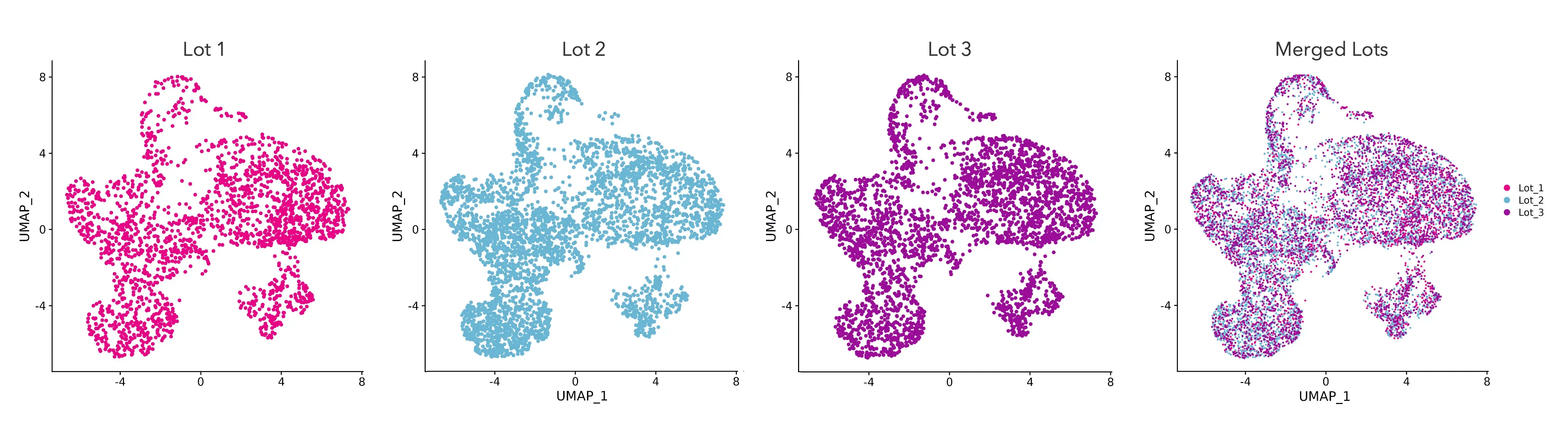
bit.bio scRNA-seq data represented in UMAP plots demonstrates lot-to-lot consistency of iPSC-derived glutamatergic neurons
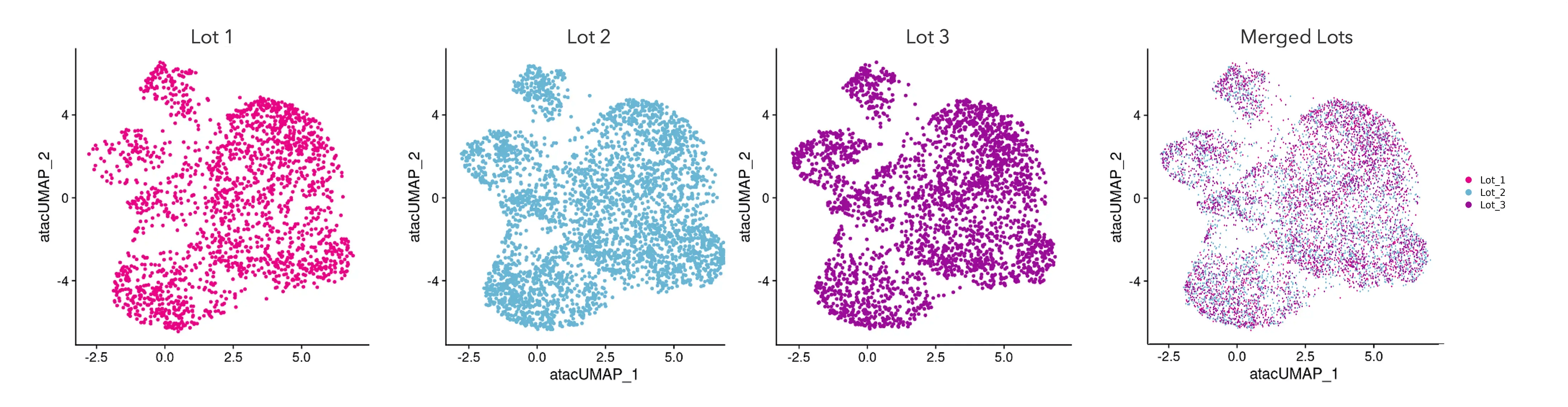
bit.bio scATAC-seq data represented in UMAP plots demonstrates lot-to-lot consistency of glutamatergic neurons
Time-lapse video capturing the rapid and homogeneous neuronal phenotype acquisition in cryopreserved neurons
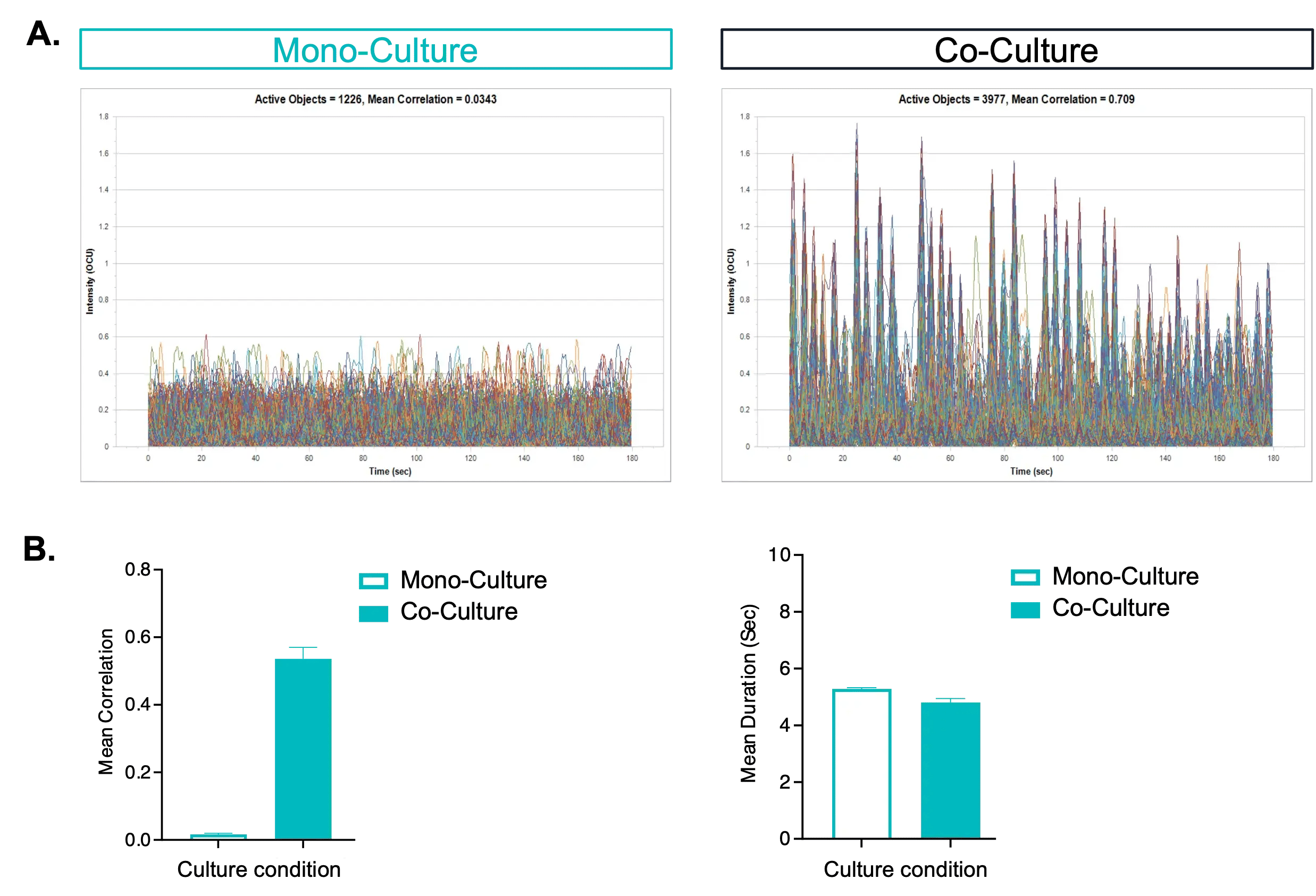
calcium-imaging-microglia-and-glutamatergic-neuron-co-culture
MEA raster plots showing ioGABAergic Neurons exert an inhibitory effect and modulate network activity within tri-cultures leading to a higher network burst rate
GFP-quantification-lipid-based-delivery-synthetic-mRNA-glutamatergic-neurons
Increased ratio of A𝛽42:40 seen in ioGlutamatergic Neurons APP V717I (London), as observed in Alzheimer’s disease, vs wild-type control
gfp-microglia-live-cell-imaging-overlay NO ZOOM
ioGlutamatergic-Neurons-CRISPR-Ready-Pooled-Screen-scRNA-seq2
Human iPSC-derived glutamatergic neurons for pre-clinical research
bit.bio HD-MEA shows an increase in axon length and firing rate as excitatory neurons mature
bit.bio Raster plots demonstrate spontaneous activity and synchronised bursting of glutamatergic neurons
bit.bio Assessment of ASO delivery and gene knockdown in iPSC-derived excitatory neurons
bit.bio induced excitatory neurons in high throughput screening assays in 384-well plate format
bit.bio Bulk RNA-sequencing data demonstrates consistency across manufacturing lots of glutamatergic neurons
bit.bio scRNA-seq data represented in UMAP plots demonstrates lot-to-lot consistency of iPSC-derived glutamatergic neurons
bit.bio scATAC-seq data represented in UMAP plots demonstrates lot-to-lot consistency of glutamatergic neurons
Time-lapse video capturing the rapid and homogeneous neuronal phenotype acquisition in cryopreserved neurons
calcium-imaging-microglia-and-glutamatergic-neuron-co-culture
MEA raster plots showing ioGABAergic Neurons exert an inhibitory effect and modulate network activity within tri-cultures leading to a higher network burst rate
GFP-quantification-lipid-based-delivery-synthetic-mRNA-glutamatergic-neurons
Increased ratio of A𝛽42:40 seen in ioGlutamatergic Neurons APP V717I (London), as observed in Alzheimer’s disease, vs wild-type control
gfp-microglia-live-cell-imaging-overlay NO ZOOM
ioGlutamatergic-Neurons-CRISPR-Ready-Pooled-Screen-scRNA-seq2

cat no | io1001

ioGlutamatergic Neurons

Human iPSC-derived glutamatergic neurons

  • Cryopreserved human iPSC-derived cells powered by opti-ox, that are ready for experiments in days

  • Ideal for studying excitatory signalling pathways, neurodegenerative diseases and neurotoxicology

  • Consistent, functional excitatory neurons, with no inhibitory neurons

Place your order

Human iPSC-derived glutamatergic neurons for pre-clinical research

Human iPSC-derived glutamatergic neurons

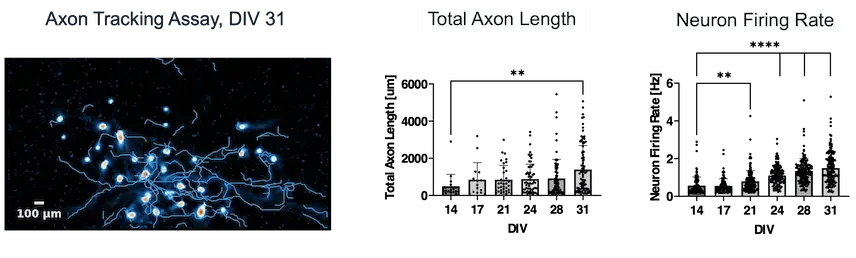
bit.bio HD-MEA shows an increase in axon length and firing rate as excitatory neurons mature

ioGlutamatergic Neurons display neuronal activity that matures over time

The function of ioGlutamatergic Neurons was investigated using the MaxTwo HD-MEA System.

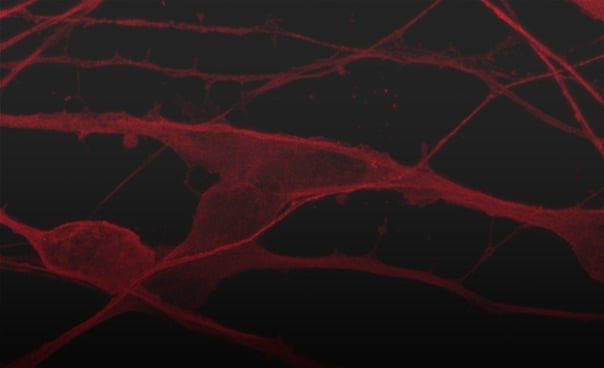
The Axon Tracking Assay (left) shows examples of reconstructed axonal paths of travelling action potentials of individual iPSC-derived glutamatergic neurons. The assay reveals the spatial propagation of the neuronal action potential from the soma to distant axonal branches.

Total axon length (middle) and firing rate (right) increase over time, indicating that the cells are maturing. ioGlutamatergic Neurons were cultured with human iPSC-derived astrocytes.

Data courtesy of Charles River Laboratories and MaxWell Biosystems.

bit.bio Raster plots demonstrate spontaneous activity and synchronised bursting of glutamatergic neurons

Rapid maturation of ioGlutamatergic Neurons leads to synchronised network activity by day 31

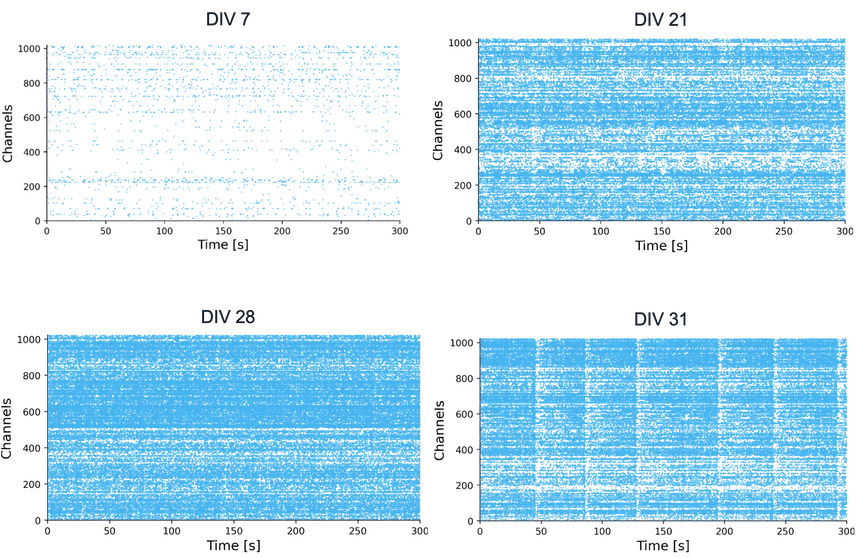
Raster plots generated using the MaxTwo HD-MEA System show the development of the neuronal network over time.

The plots show the dynamics of the network activity using 1,024 active electrodes. Each row represents an individual electrode and each blue dot indicates a spike detected at that electrode over a period of 300 seconds.

Spontaneous activity is observed at DIV 7. Clear synchronised bursting activity is observed by DIV 31, represented by blue vertical lines, followed by an overall drop in activity, seen as white lines. ioGlutamatergic Neurons were cultured with human iPSC-derived astrocytes.

Download our poster to see additional data that shows how ioGABAergic Neurons form functional neuronal networks with ioGlutamatergic Neurons in the presence of astrocytes, and how the tri-culture responds to bicuculline and diazepam. 

ioGlutamatergic Neurons offer a rapidly maturing functional system that can be used to assess neuronal networks and the impact of a drug treatment or intervention. 

Data courtesy of Charles River Laboratories and MaxWell Biosystems.

bit.bio Assessment of ASO delivery and gene knockdown in iPSC-derived excitatory neurons

ioGlutamatergic Neurons offer a robust, physiologically-relevant model for efficacy screening of candidate ASOs

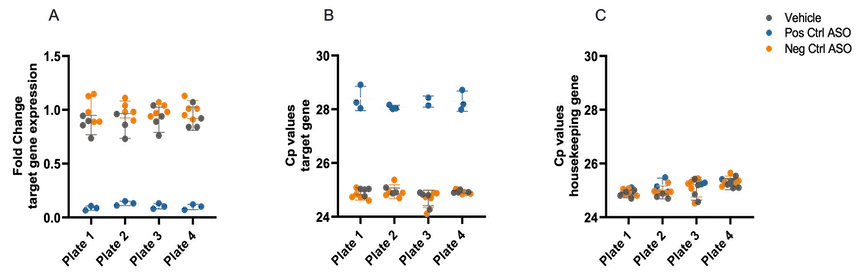
Positive and negative control antisense oligonucleotides (ASOs) with gapmer chemistry were introduced into glutamatergic neurons by gymnosis. RT-qPCR was used to measure ASO-induced gene knockdown.

  • Strong separation of the assay signal for positive control (blue) and negative control (orange) ASOs was observed for all plates tested (A).
  • The positive control ASO induced ~90% knockdown of the target gene, shown by a decrease in the target gene expression (A) and higher Cp (or Ct) values for the target gene, indicating lower initial amount of the target sequence (B).
  • There was no effect of the control ASOs on housekeeping gene expression as compared to vehicle-transfected controls (C).
  • No marked intra- or inter-plate variability was observed between positive and negative control ASOs (A-C).

Data courtesy of Charles River Laboratories.

bit.bio induced excitatory neurons in high throughput screening assays in 384-well plate format

ioGlutamatergic Neurons show good suitability for high-throughput screening in 384-well format plates

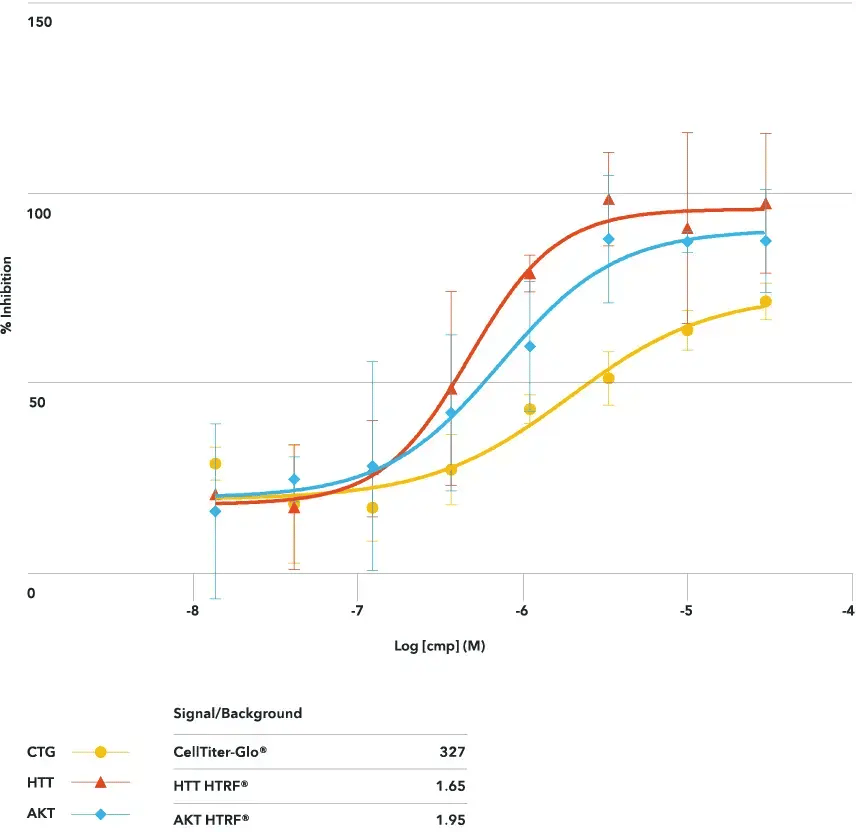
Cytotoxicity CellTiter-Glo®️ (CTG) and TR-FRET (HTRF®️) assays for AKT serine/threonine kinase 1 (AKT) and Huntingtin (HTT) proteins were performed on ioGlutamatergic Neurons in 384-well plates treated with tool compound (cmp) at day 9 post-revival. Compound titration results in a concentration response curve for all three assays (mean±sd of 2 replicates). CTG assay on ioGlutamatergic Neurons shows an excellent average signal-to-background ratio and high suitability for HTS. HTRF assays on ioGlutamatergic Neurons show lower signals but with low variability, and could therefore also provide a suitable platform for HTS.

Data courtesy of Charles River Laboratories.

bit.bio Bulk RNA-sequencing data demonstrates consistency across manufacturing lots of glutamatergic neurons

Whole transcriptome analysis demonstrates high lot-to-lot consistency across three manufactured lots of ioGlutamatergic Neurons

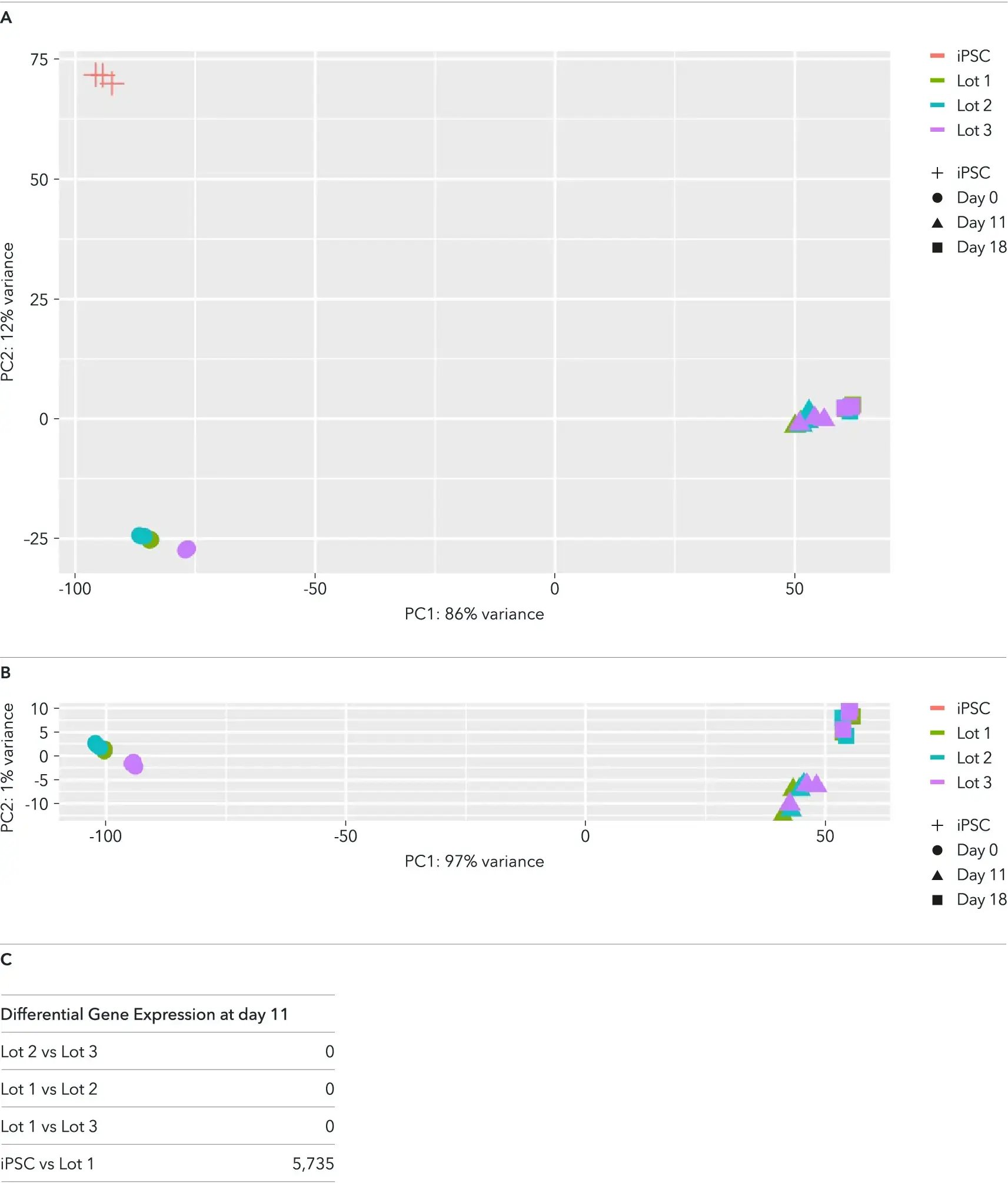
Bulk RNA-sequencing analysis was performed on three different lots of ioGlutamatergic Neurons on day 0, day 11 and day 18 post-revival. (A) A principal component analysis (PCA) to assess gene expression variance between three different manufactured lots showed a tight clustering of the samples at each timepoint, demonstrating high consistency between these lots. This lot-to-lot consistency of ioGlutamatergic Neurons will help reduce experimental variation and increase the reproducibility of experiments. (B) PCA without the parental non-induced hiPSC samples, highlighting the tight clustering of the day 11 as well as day 18 samples of the three different lots. (C) Differential expression test reveals no statistically significant differentially expressed (DE) genes across the three lots at day 11 (|logFC| > 0.5 and FDR < 0.01).

Colours represent the three lots of products; shapes represent the parental non-induced hiPSC line and different timepoints.

Expression levels for specific genes of interest can be requested by contacting our team at technical@bit.bio.

bit.bio scRNA-seq data represented in UMAP plots demonstrates lot-to-lot consistency of iPSC-derived glutamatergic neurons

High lot-to-lot consistency is demonstrated by a consistent transcriptomic fingerprint across manufactured lots of ioGlutamatergic Neurons

Single cell RNA-sequencing analysis was performed on three different lots of ioGlutamatergic Neurons on day 11. UMAP plots represent the cell-to-cell variation in gene expression profiles of cells, each dot representing an individual cell. Cells from each of the three lots are equally distributed across the body of the plot. Merging the UMAP plots creates a tight overlay, showing a strong transcriptional relationship between cells from three independently manufactured lots of ioGlutamatergic Neurons. Gene expression was assessed by 10x Genomics scRNA-sequencing.

bit.bio scATAC-seq data represented in UMAP plots demonstrates lot-to-lot consistency of glutamatergic neurons

Single cell ATAC-sequencing shows a consistent transcriptomic fingerprint demonstrating high lot-to-lot consistency across manufactured lots of ioGlutamatergic Neurons

Single cell ATAC-sequencing analysis was performed on three different lots of ioGlutamatergic Neurons on day 11. Single cell ATAC-sequencing reveals regions of open chromatin to understand the gene regulatory landscape of individual cells. UMAP plots represent the cell-to-cell variation in chromatin accessibility of the cells, each dot representing a single cell. Cells from each of the three lots are equally distributed across the body of the plot. Merging the UMAP plots creates a tight overlay, showing a strong transcriptional relationship between cells from three independently manufactured lots of ioGlutamatergic Neurons. Gene expression was assessed by 10x Genomics scRNA-sequencing.

ioGlutamatergic Neurons generated by transcription factor-driven deterministic cell programming of iPSCs using opti-ox technology

Time-lapse video capturing the rapid and homogeneous neuronal phenotype acquisition upon thawing of cryopreserved ioGlutamatergic Neurons. 7 day time course.

calcium-imaging-microglia-and-glutamatergic-neuron-co-culture

ioMicroglia enhance network activity in co-culture with ioGlutamatergic Neurons

ioGlutamatergic Neurons expressing Incucyte® Neuroburst Orange Lentivirus mono-culture or in co-culture with

ioMicroglia Male (io1021) monitored and quantified using Incucyte® Neuronal Activity Analysis software. 

A) Representative calcium traces shown for each culture condition at 15 days post-microglia addition.

B) Bar charts at 15 days post-microglia addition showing network correlation and mean burst duration. Data presented as mean ± SEM, n = 3 – 12 replicates.

This data was generated by Jasmine Trigg and colleagues at Sartorius, taken from the application note: "Advanced in vitro Modeling of Human iPSC-derived Neuronal Mono- and Co-cultures with Microglia: Optimization Using Growth Factors and Live-Cell Analysis".

MEA raster plots showing ioGABAergic Neurons exert an inhibitory effect and modulate network activity within tri-cultures leading to a higher network burst rate

ioGABAergic Neurons exert an inhibitory effect on the excitatory ioGlutamatergic Neurons within the tri-cultures leading to a higher network burst rate

The effect of adding increasing numbers of inhibitory ioGABAergic Neurons (io1003) to the tri-cultures was investigated by MEA analysis at 53 DIV, alongside the control co-cultures. Representative raster plots displaying the activity of 16 electrodes over a time period of 300 seconds are shown. Each horizontal row of the raster plot represents the activity of an electrode, within which each vertical black dash indicates a firing event, a blue dash indicates a single electrode burst, and a pink box indicates a network burst event. The histogram trace on top of the raster plot is a measure of the number of spikes per network burst. The co-culture with ioGlutamatergic Neurons and astrocytes shows the strongest network bursts as indicated by the increased number of spikes per network burst and shows a lower network burst rate (NBR) compared to the tri-cultures. The addition of increasing numbers of inhibitory ioGABAergic Neurons to the tri-cultures reduces the number of spikes per network burst and leads to an increased NBR. This indicates that ioGABAergic Neurons are having an inhibitory effect on the excitatory ioGlutamatergic Neurons. The co-culture of ioGABAergic Neurons and astrocytes shows no network bursts, indicating the absence of excitatory neurons and that the population of ioGABAergic Neurons is highly pure. Analysis was performed on an Axion Maestro Pro MEA platform. This data was generated in partnership with Charles River Laboratories.

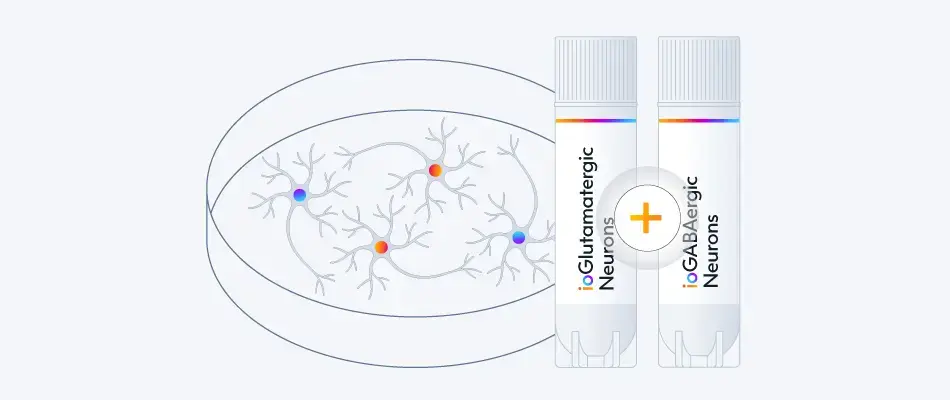
Get started with the tri-culture protocol of Glutamatergic Neurons, GABAergic Neurons and astrocytes for MEA assay

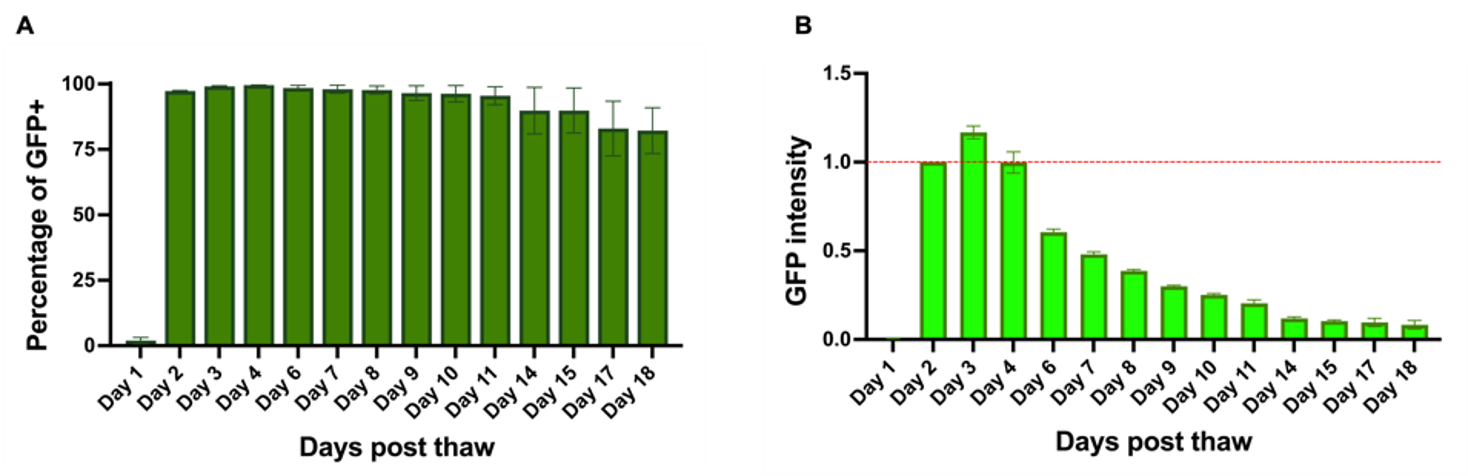
GFP-quantification-lipid-based-delivery-synthetic-mRNA-glutamatergic-neurons

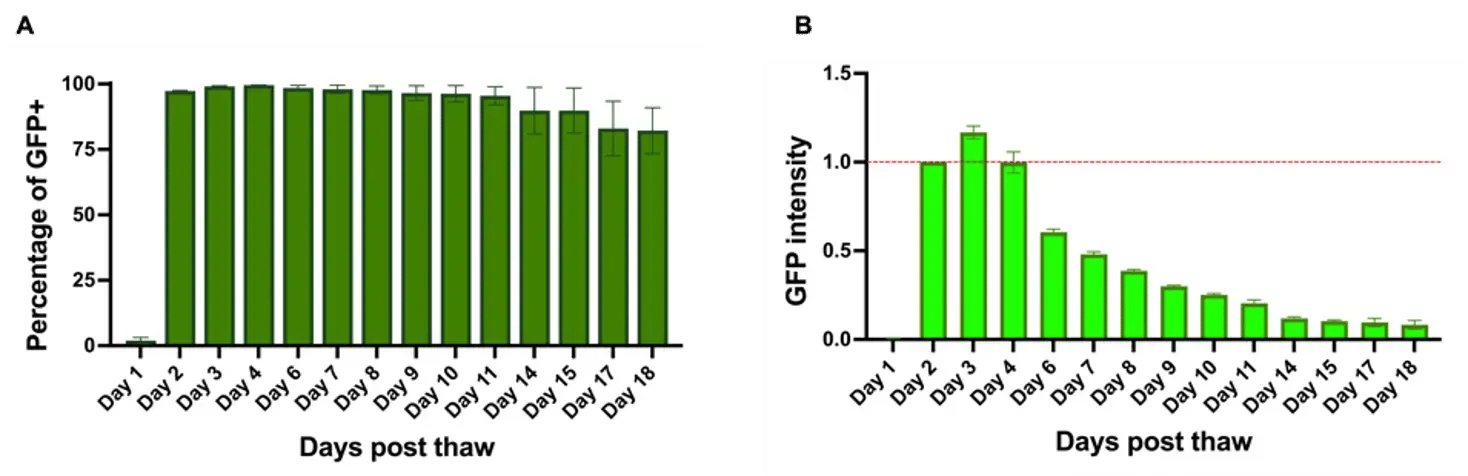
Lipid-based delivery of synthetic mRNA into ioGlutamatergic Neurons

ioGlutamatergic Neurons were transfected 24 hours post-thaw using Lipofectamine™ Stem Transfection Reagent. The transfection efficiency was evaluated by fluorescence imaging over 18 days after mRNA delivery, resulting in high transfection efficiency (close to 100%) and long-term sustained GFP expression.

Quantification of the GFP signal shows a decrease in GFP intensity over time, while the percentage of GFP-positive cells remains largely unchanged over time.

(A) The percentage of GFP-positive cells from two independent experiments.

(B) GFP intensity, quantified in successfully transfected cells from two independent experiments is quantified and normalised to day 2 (24 hours post-transfection).

Explore the full dataset and complete protocol for lipid-based delivery of synthetic mRNA in 96-well plates

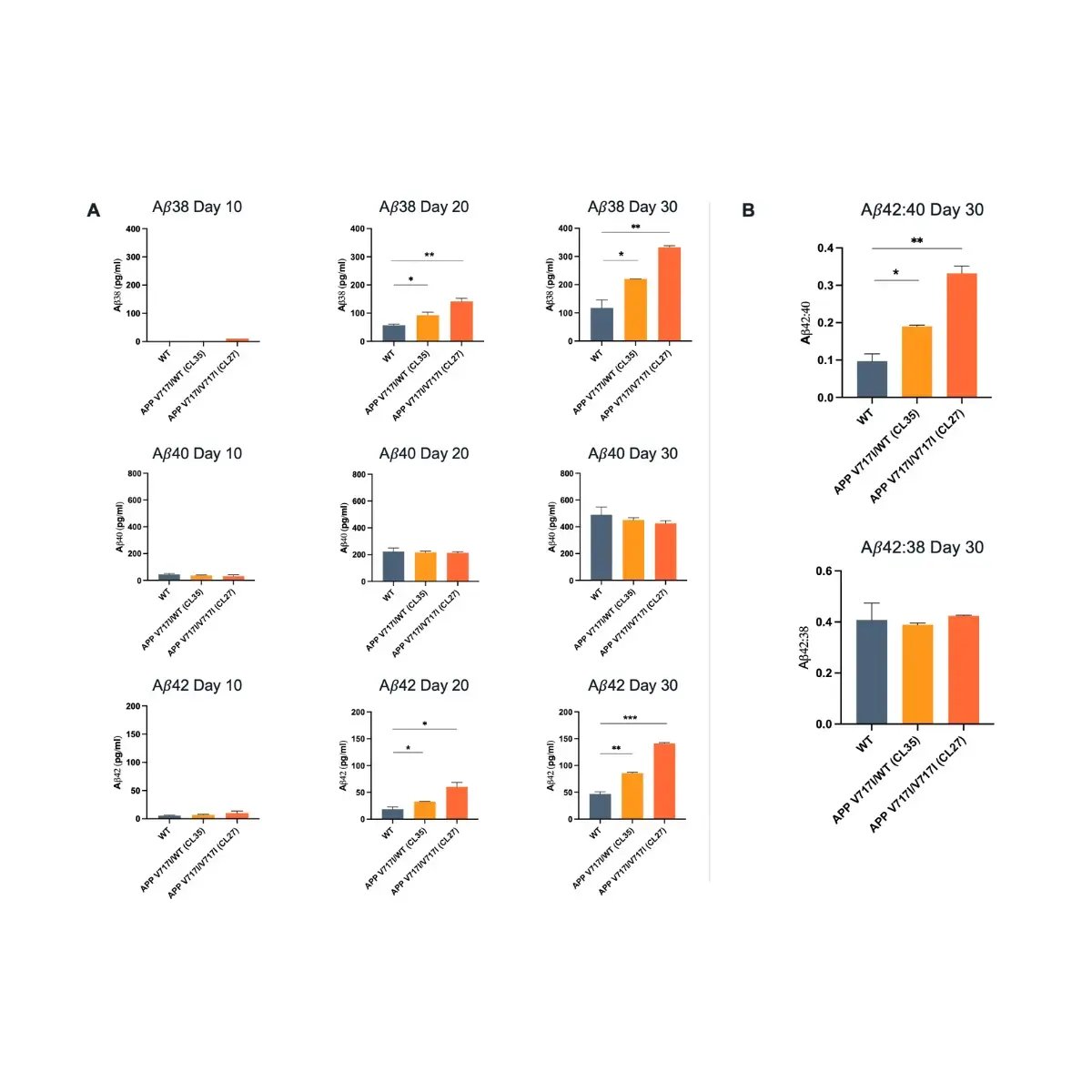
Increased ratio of A𝛽42:40 seen in ioGlutamatergic Neurons APP V717I (London), as observed in Alzheimer’s disease, vs wild-type control

Increased ratio of A𝛽42:40 seen in ioGlutamatergic Neurons APP V717I (London), as observed in Alzheimer’s disease, vs wild-type control

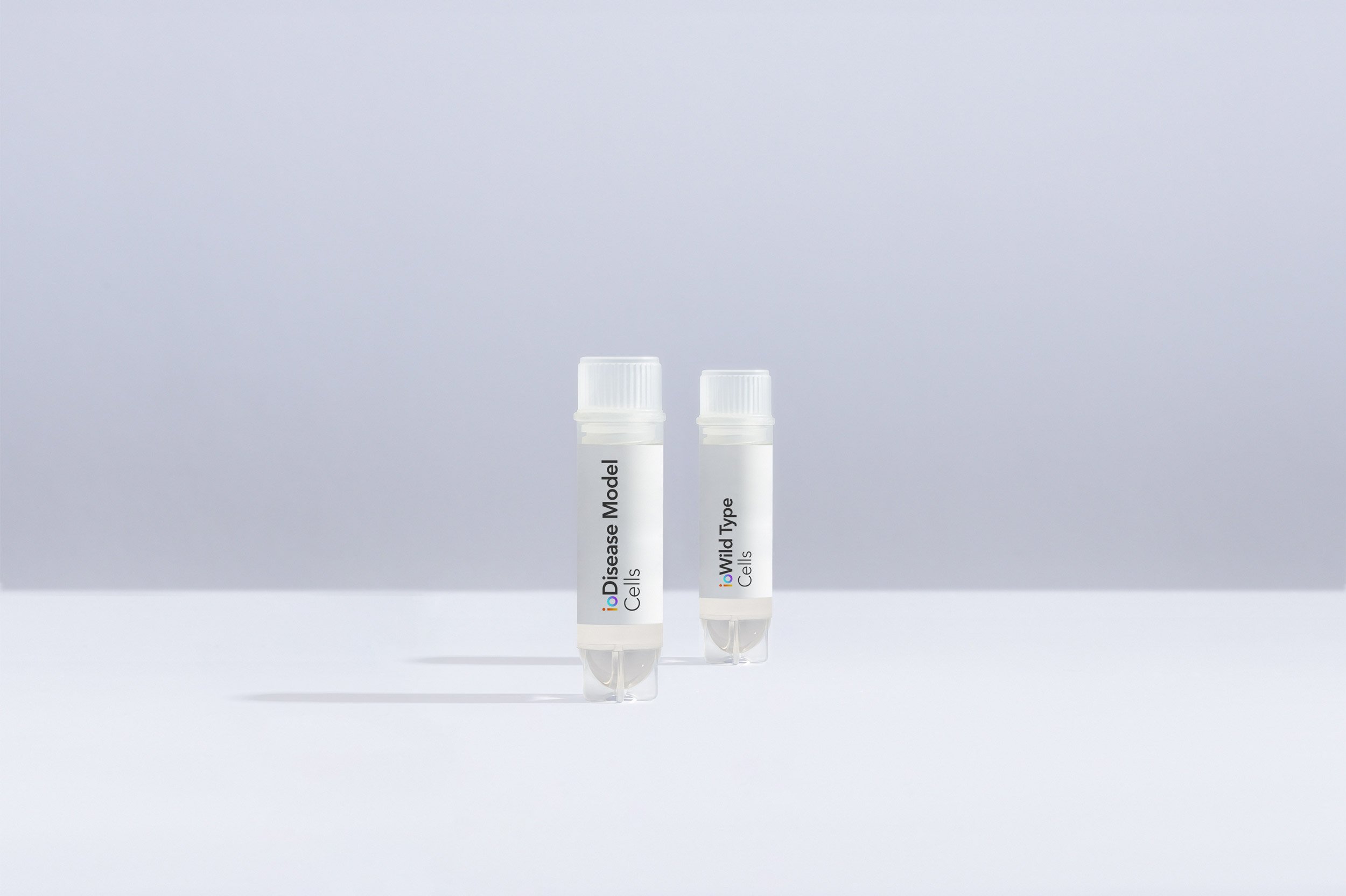
Wild type ioGlutamatergic Neurons can be paired with engineered disease model cells to investigate the impact of disease-related mutations, for example, the APP missense mutation, investigating its role in early-onset Alzheimer's disease.

ioGlutamatergic Neurons APP V717I
disease model cells show increased production of A𝛽38 and A𝛽42 peptides (involved in the amyloidogenic pathway), with no difference seen for A𝛽40 (A). This results in an increased ratio of A𝛽42:40 and no change in the A𝛽42:38 ratio (B).

  • ioGlutamatergic Neurons wild type (WT), APP V717I/WT (CL35, io1067S), and APP V717I/V717I (CL27, io1063S), were seeded at 30,000 cells/cm2 in 24-well plates and cultured for 30 days according to the user manual. Supernatant was collected at days 10, 20, and 30.
  • Levels of A𝛽38, A𝛽40 and A𝛽42 peptides were quantified using the V-PLEX A𝛽 Peptide Panel 1 (6E10) Kit (MSD K15200E-1).
  • Concentrations of A𝛽38, A𝛽40, A𝛽42 were normalised to the calculated total number of cells per well.
  • Data were obtained from two independent experiments and are shown as mean ± SEM. Data were analysed statistically (at days 20 and 30) using Student’s t-tests comparing each clone to the wild type.
    * p<0.05 ** p<0.01 ***p<0.001
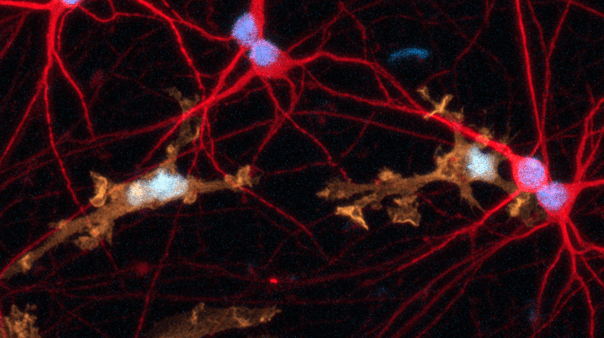
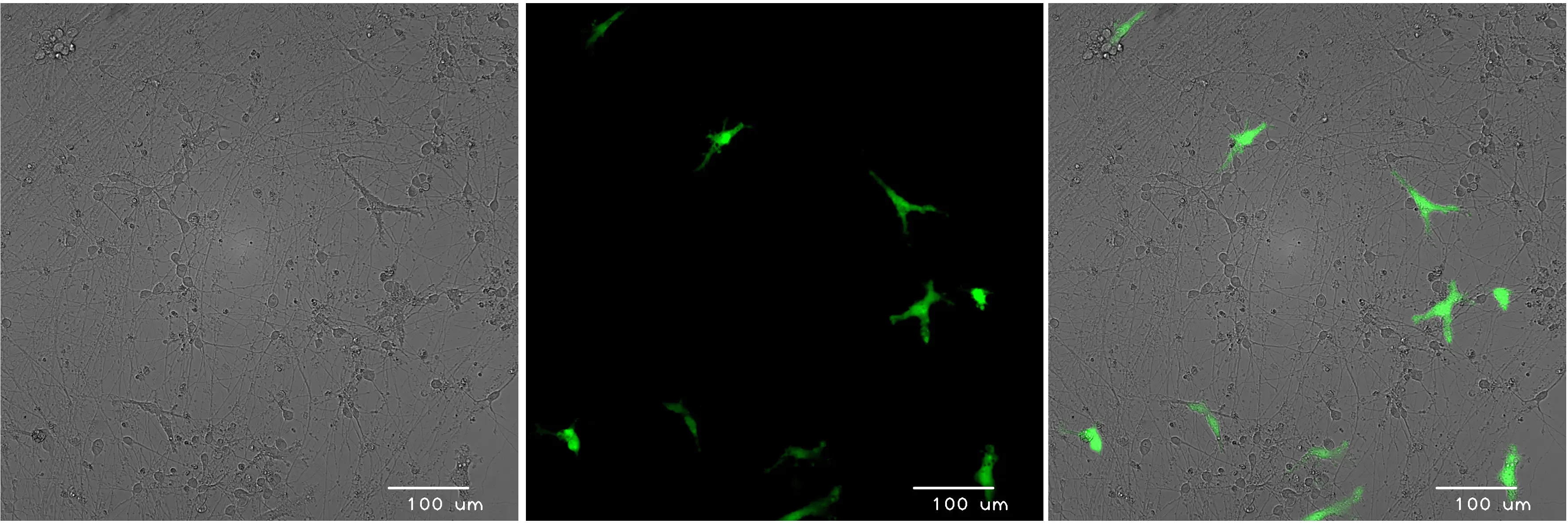
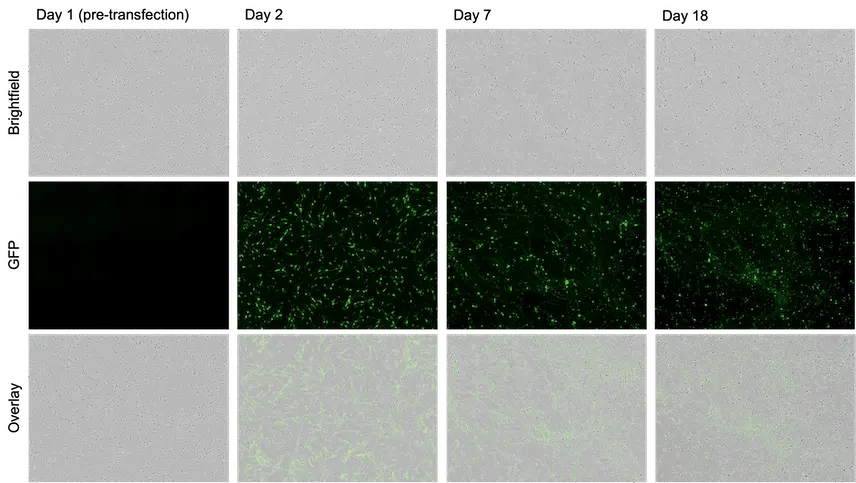
gfp-microglia-live-cell-imaging-overlay NO ZOOM

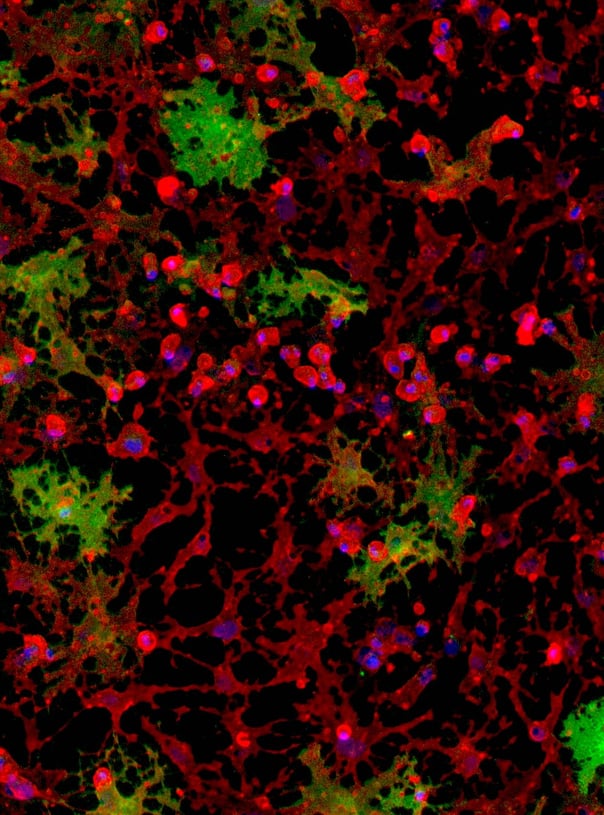
Live-cell imaging reveals clear visualisation of GFP ioMicroglia when co-cultured with ioGlutamatergic Neurons

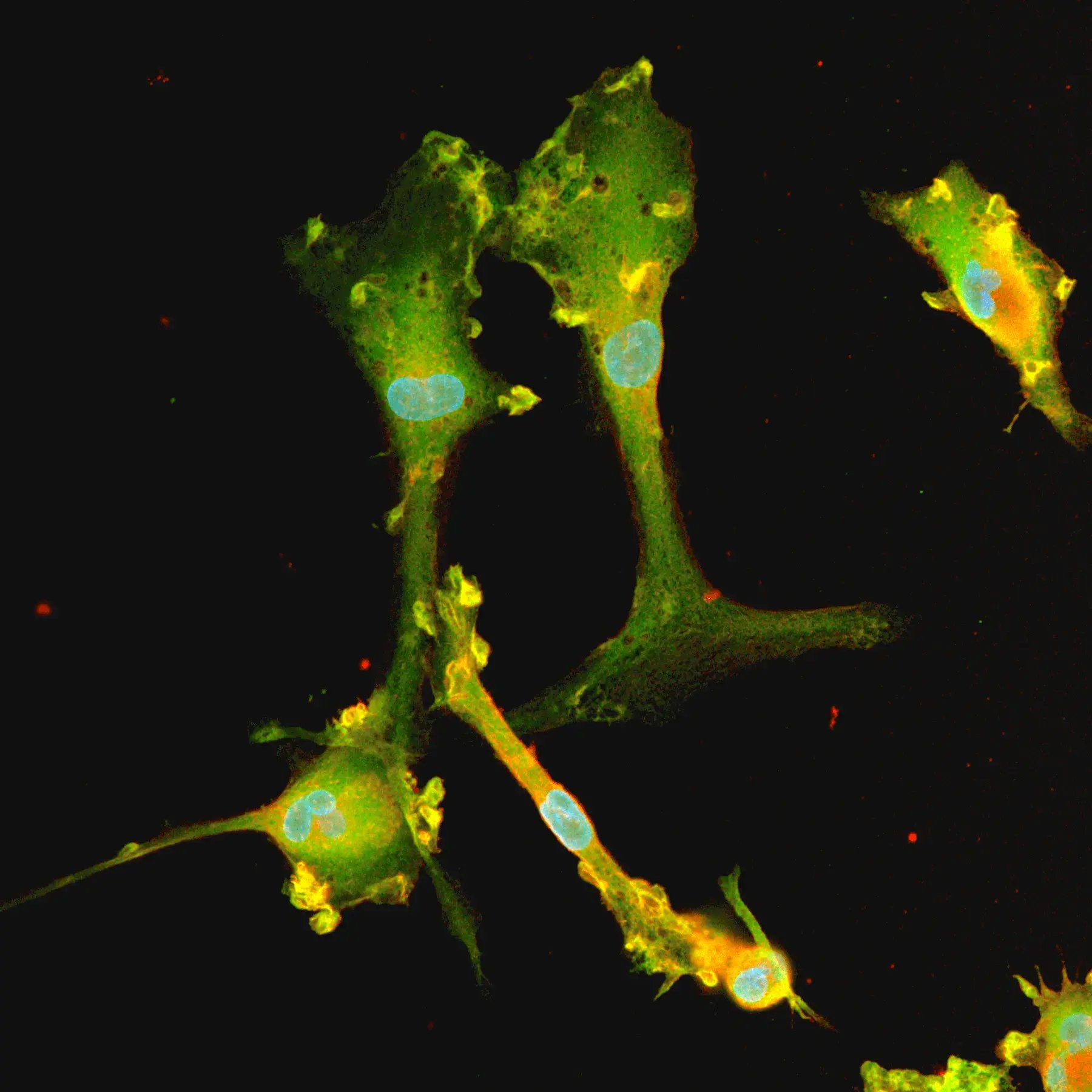
ioGlutamatergic Neurons were cultured to day 10 post-thaw. GFP ioMicroglia (io1096) were cultured to day 10 post-thaw and were directly added to day 11 ioGlutamatergic Neurons. The co-cultures were maintained for a further 3 days before live-cell imaging with Leica DMi8. Brightfield and fluorescence images were taken and merged, easily demonstrating distribution of GFP ioMicroglia within the co-culture.

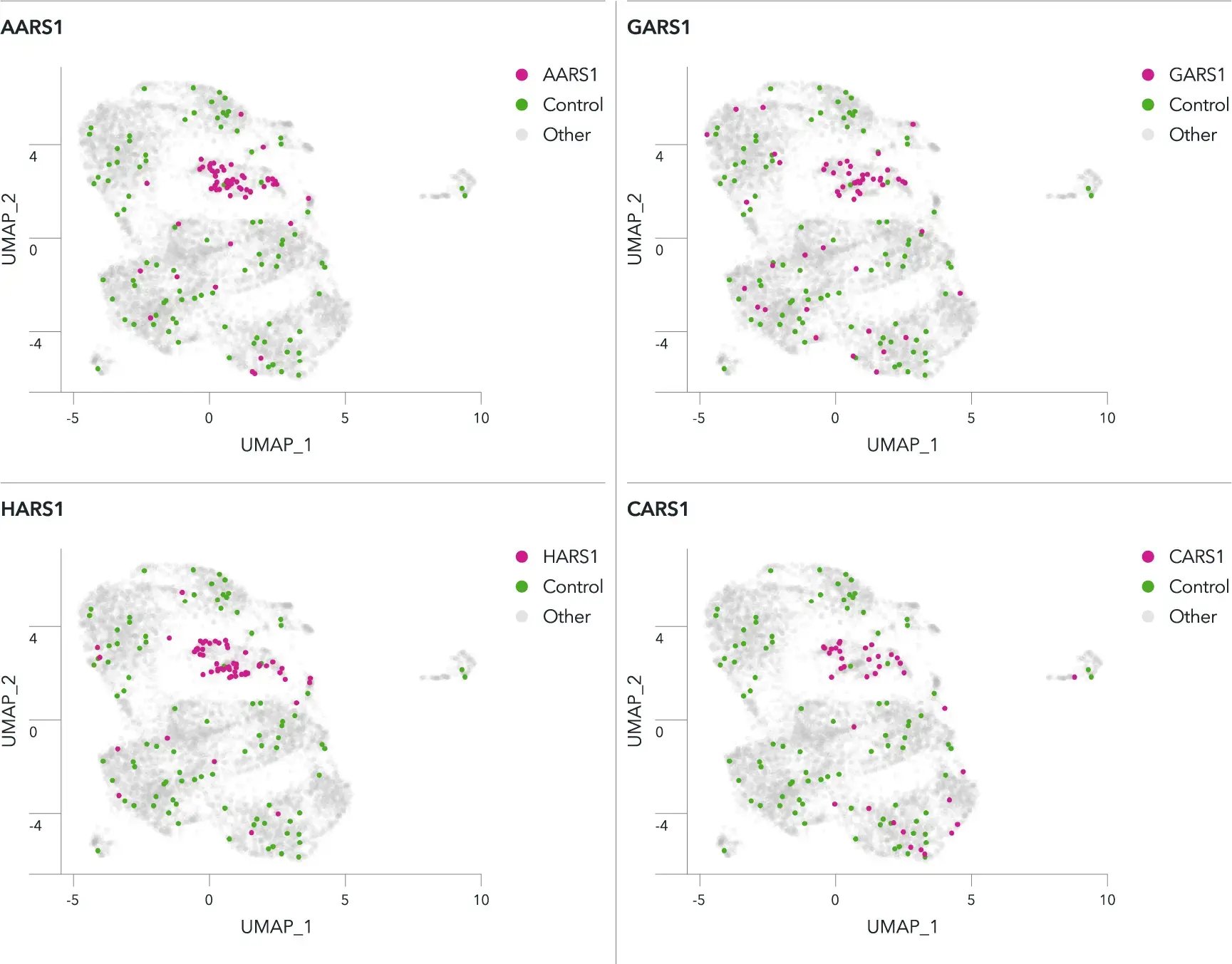
ioGlutamatergic-Neurons-CRISPR-Ready-Pooled-Screen-scRNA-seq2

A pooled knockout screen of neurodegenerative disease-relevant genes in CRISPRko-Ready ioGlutamatergic Neurons shows clustering of aaRS genes in UMAPs

ioGlutamatergic Neurons have been engineered to constitutively express Cas9 nuclease - CRISPRko-Ready ioGlutamatergic Neurons (io1090).

For a pooled knockout screen in CRISPRko-Ready ioGlutamatergic Neurons, 100 known genes involved in neurodegenerative diseases were selected. Lentiviral transduction of the gRNAs was carried out on day 3 and single-cell gene expression analysis was performed on day 12. Single cells were clustered on uniform manifold approximations and projections (UMAPs) based on their shared nearest neighbour’s gene expression. Clustering of aminoacyl-tRNA synthetase (aaRS) knockouts including AARS1, HARS1, CARS1, and GARS1 was observed. In contrast, cells transduced with non-targeting control sgRNAs were evenly distributed among clusters. Pathway analysis showed gRNAs targeting aaRSs activated the unfolded protein response (UPR), the mechanism by which cells control endoplasmic reticulum protein homeostasis. In many neurodegenerative diseases, signs of UPR activation have been reported. The most common aaRS-associated monogenic disorder is the incurable neurodegenerative disease Charcot–Marie–Tooth neuropathy (CMT).

Vial limit exceeded

A maximum number of 20 vials applies. If you would like to order more than 20 vials, please contact us at orders@bit.bio.


Human iPSC-derived glutamatergic neurons

ioGlutamatergic Neurons are deterministically programmed from human induced pluripotent stem cells (iPSC) using opti-ox technology. Within days, cells convert consistently to mature, functional excitatory neurons characterised by >80% expression of glutamate transporter genes VGLUT1 and VGLUT2.

Glutamatergic neurons are highly defined and characterised, and are delivered cryopreserved and ready-to-culture, making them a high-quality, easy-to-use, human model for translational research, disease modelling and drug discovery.

In addition to the wild type, our portfolio includes glutamatergic neurons carrying disease-relevant mutations for studying ALS, FTD, Alzheimer's, Parkinson's, Gaucher and Huntington's diseases, and CRISPR-Ready glutamatergic neurons stably expressing Cas9 nuclease or dCas9 variants for rapid gene knockouts, activations or repressions.

Benchtop benefits

Excitatory neurons ready for use within 2 days

Quick

Experiment ready as early as 2 days post revival and show synchronised network activity by 31 days.

A scalable source of iPSC-derived glutamatergic neurons

Scalable

Industrial scale quantities at a price point that allows the cells to be used from research to screening scale.

Accessible and easy to culture iPSC-derived excitatory neurons

Easy to use

Cells arrive programmed to mature rapidly upon revival. One medium is required in a two-step protocol.

Cells arrive ready to plate


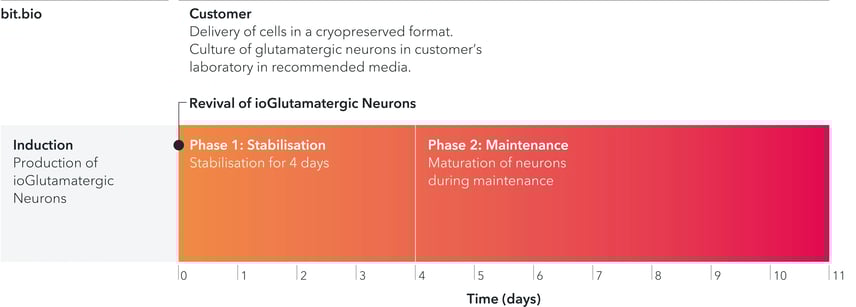
bit.bio Protocol timeline showing easy to culture iPSC-derived excitatory neurons

ioGlutamatergic Neurons are delivered in a cryopreserved format and are programmed to mature rapidly upon revival in the recommended media. The protocol for the generation of these cells is a two-phase process: 1. Stabilisation for 4 days 2. Maintenance during which the neurons mature.

Product specifications

Starting material

Human iPSC line

Karyotype

Normal (46, XY)

Seeding compatibility

6, 12, 24, 48, 96 & 384 well plates

Shipping info

Dry ice

Donor

Caucasian adult male, age 55-60 years old (skin fibroblast),
Genotype APOE 3/4

Vial size

Small: >1 x 10 viable cells, Large: >5 x 10 viable cells, Evaluation pack*: 3 small vials of >1 x 10⁶ viable cells

Quality control

Sterility, protein expression (ICC) and gene expression (RT-qPCR)

Differentiation method

opti-ox deterministic cell programming

Recommended minimum seeding density

30,000 cells/cm²

User storage

LN2 or -150°C

Format

Cryopreserved cells

Product use

ioCells are for research use only

Applications

Drug discovery
Neurotoxicology
Electrophysiology
High throughput screening
CRISPR Screening
3D bioprinting

* Evaluation packs are intended for first-time users, or for existing users testing a new cell type or derivative. A user can request multiple evaluation packs as long as each one is for a different product, with only one pack allowed per product.

What scientists say about ioGlutamatergic Neurons

An image of Dr Shushant Jain

Dr Shushant Jain

Group Leader | In Vitro Biology | Charles River, 2021

"These cells enable us to move rapidly as from the moment of plating within 4-7 days we have mature and functional neurons."

An image of Dr Mariangela Iovino

Dr Mariangela Iovino

Senior Group Leader | Biology Discovery | Charles River

“Our major surprise when we first used the ioGlutamatergic Neurons was that after thawing the cells in 384-well format, we could see immediately after 2 days a nice neuronal network, and there was no well to well variability within the same plate. This made our assay quite robust.”

An image of Dr Koby Baranes

Dr Koby Baranes

Research Associate | University of Cambridge

"These cells provide a reliable and pure source of glutamatergic neurons, resembling primary human ones. They are ready-to-use which makes it much more easy for tissue culture work and for reproducible results.”

An image of Dr Jeremy Anton

Dr Jeremy Anton

Scientist | Charles River

"ioGlutamatergic Neurons are easy to use with a simple application protocol. They recover quickly after thaw and are able to form a mature mesh of neurons ideal for testing within a few days."

An image of Professor Deepak Srivastava

Professor Deepak Srivastava

Professor | Molecular Neuroscience | King’s College London and Group Leader | MRC Centre for Developmental Disorders

"ioGlutamatergic Neurons provide a useful system for studying the effects of IFN-gamma in a pure population of glutamatergic cells"

Technical data

Ready within days

ioGlutamatergic Neurons generated by transcription factor-driven deterministic cell programming of iPSCs using opti-ox technology

Time-lapse video capturing the rapid and homogeneous neuronal phenotype acquisition upon thawing of cryopreserved ioGlutamatergic Neurons. 7 day time course.

Highly characterised and defined

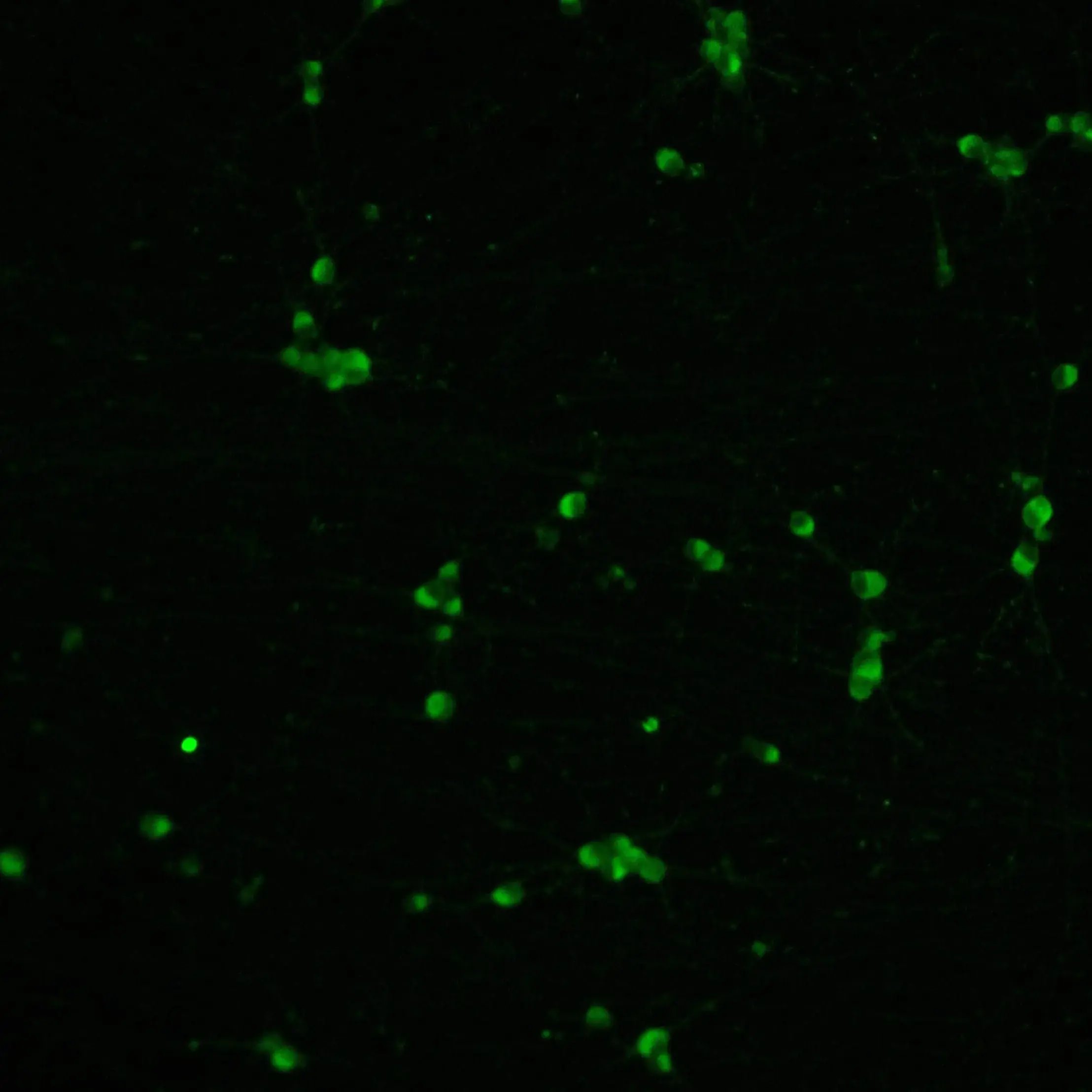
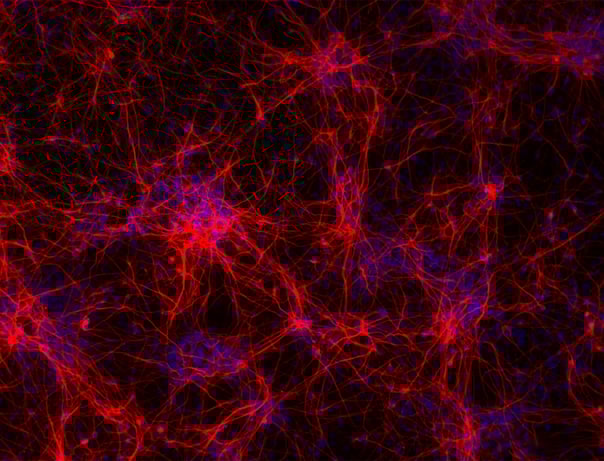
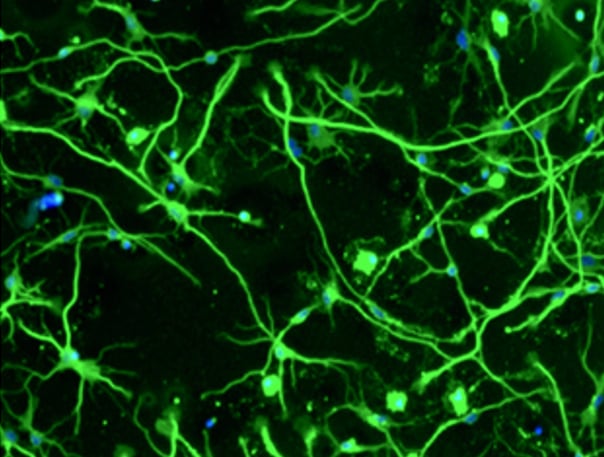
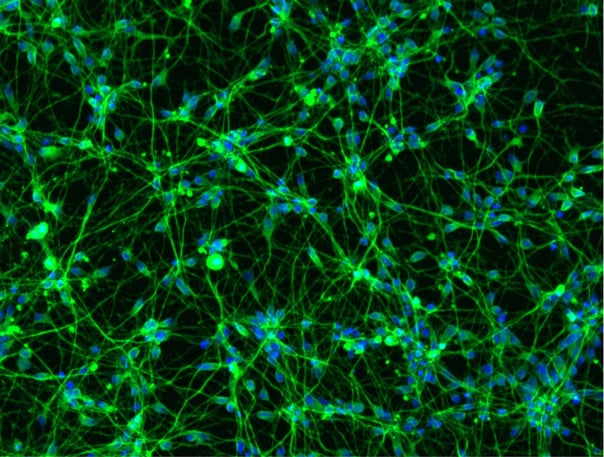
ioGlutamatergic Neurons express glutamatergic neuron-specific markers

bit.bio Glutamatergic Neurons MAP2 ICC at day 11
MAP2
bit.bio Glutamatergic Neurons VGLUT2 ICC at day 11
VGLUT2
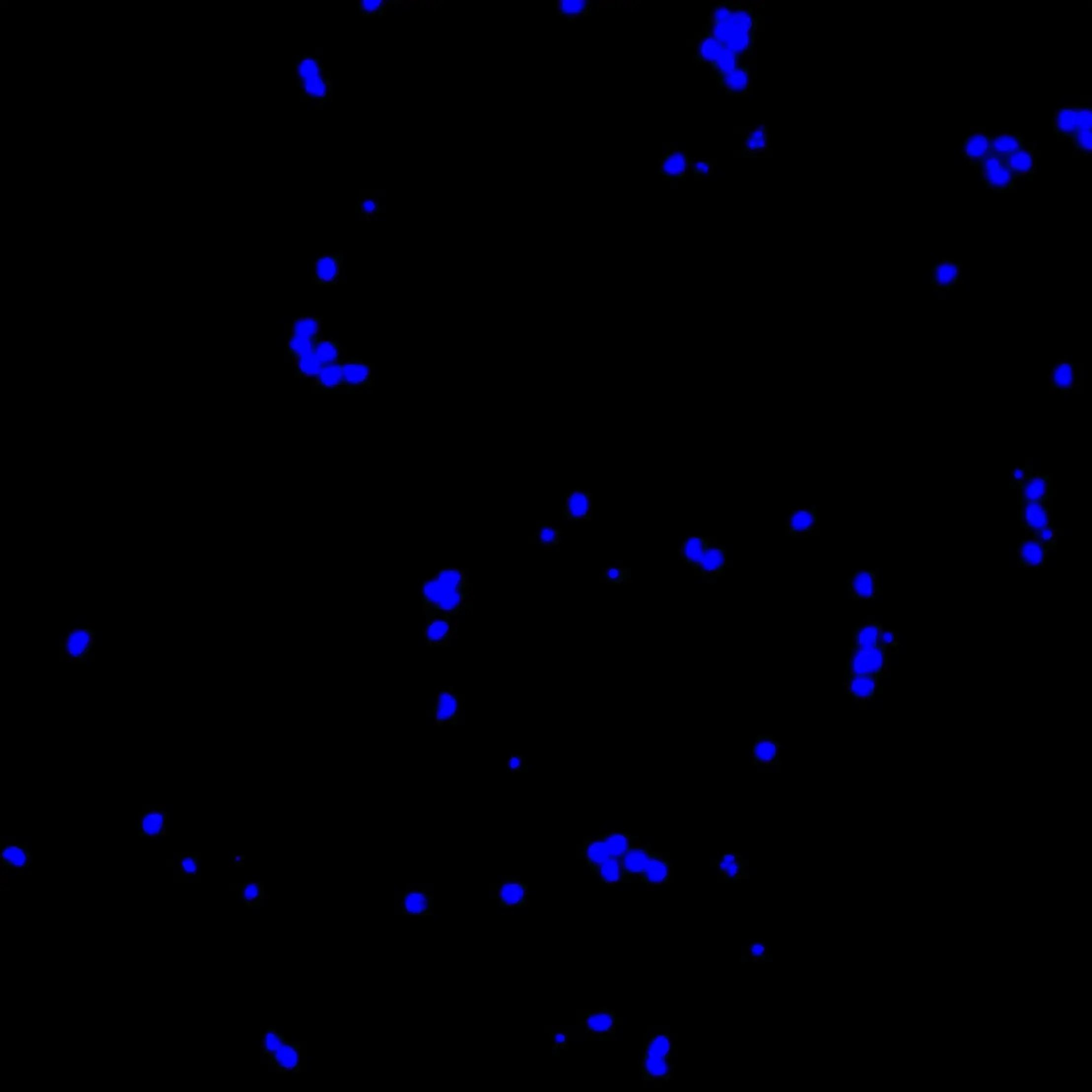
bit.bio Glutamatergic Neurons DAPI ICC at day 11
DAPI
bit.bio Glutamatergic Neurons MAP2, VGLUT2, DAPI ICC at day 11
MERGE

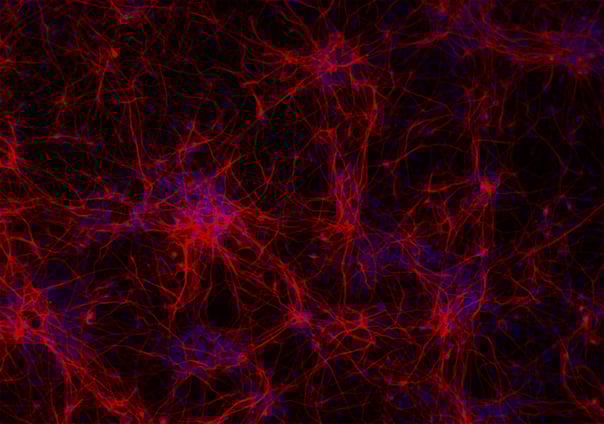
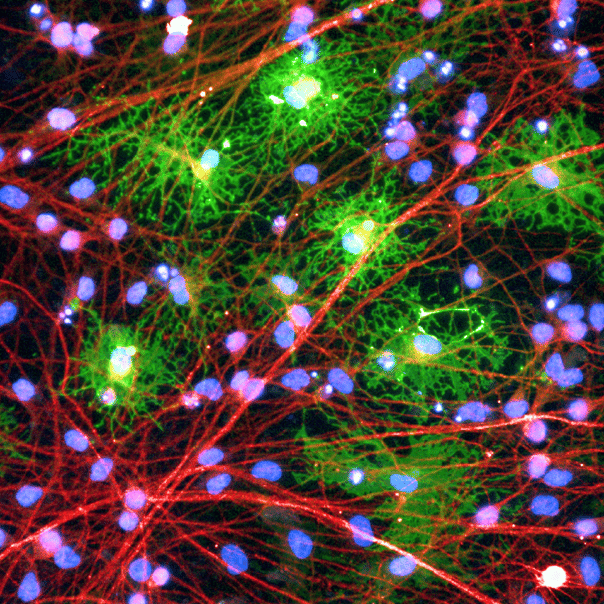
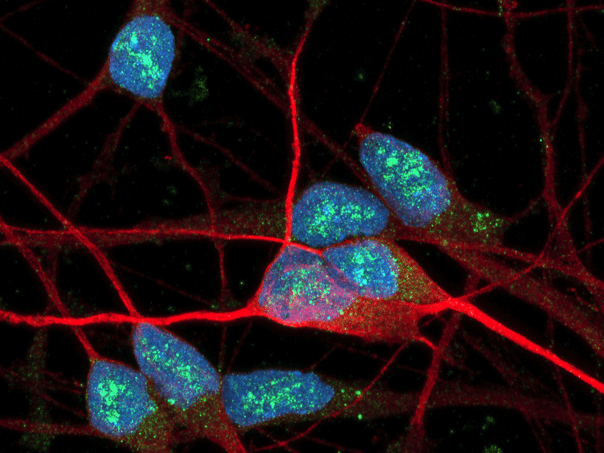
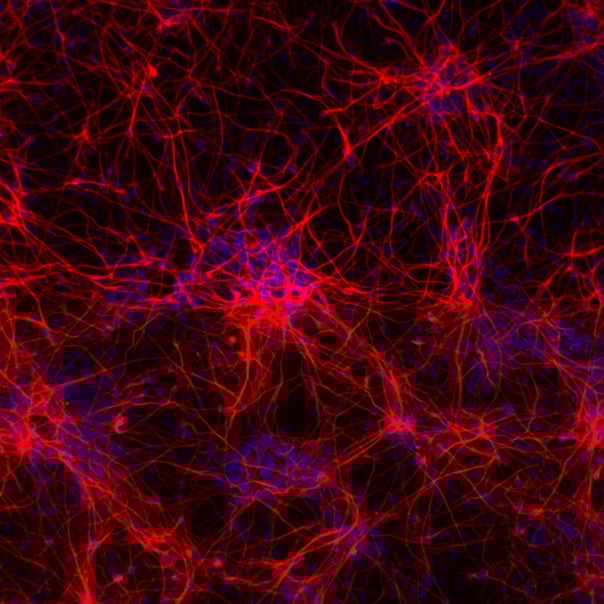
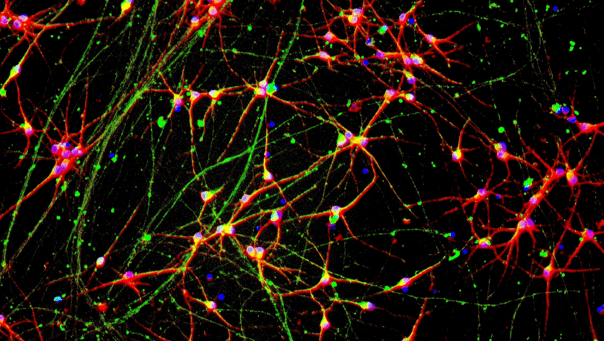
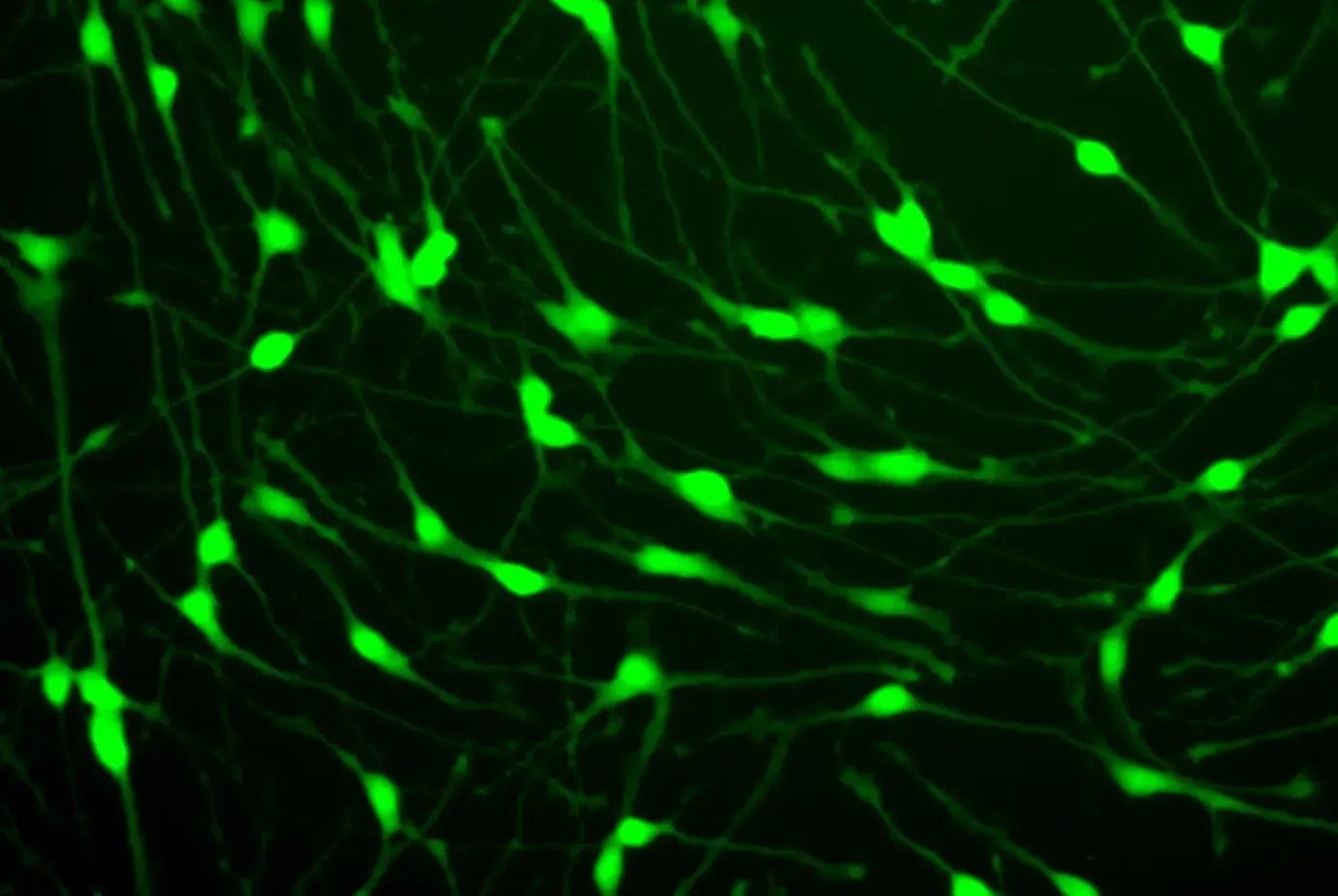
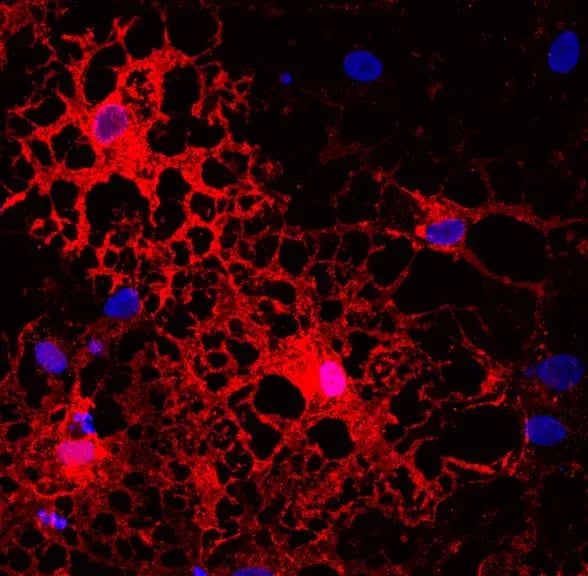
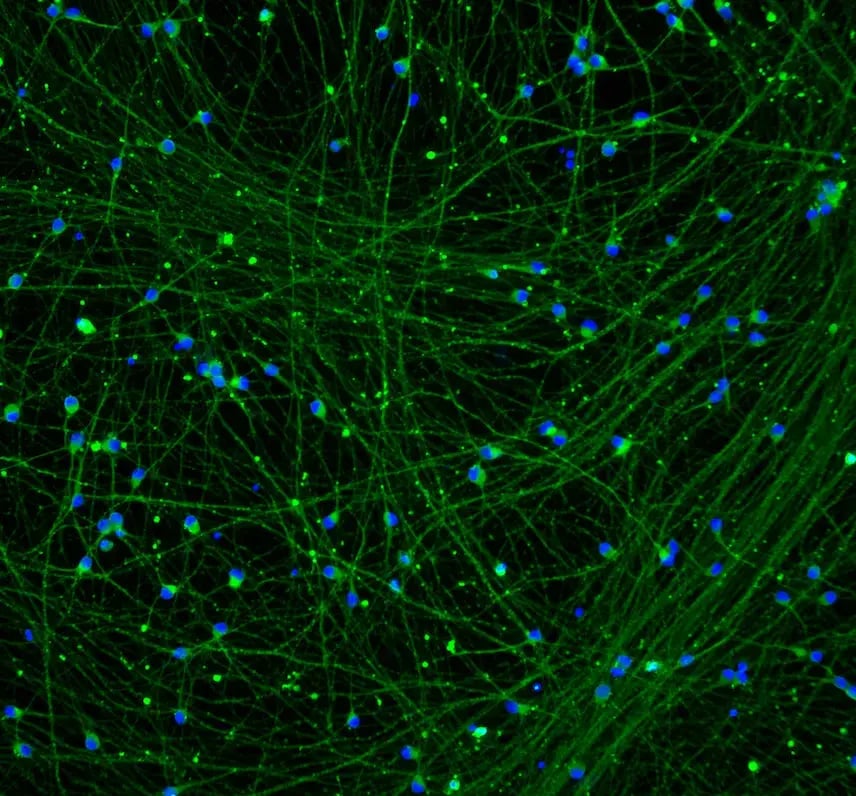
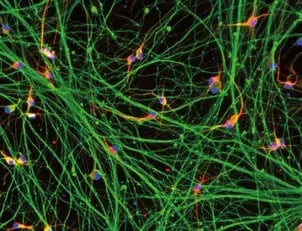
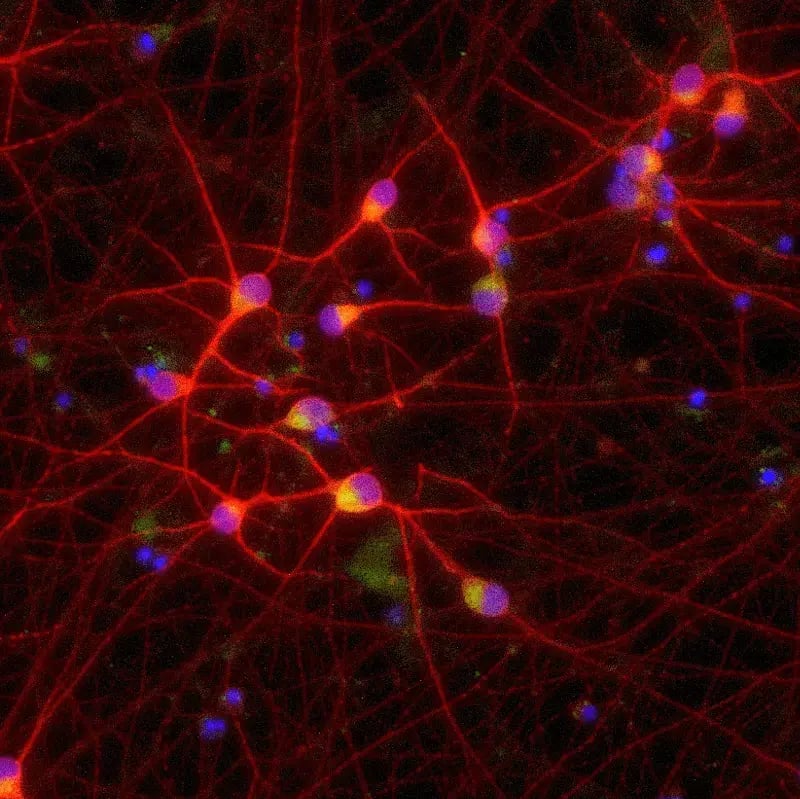
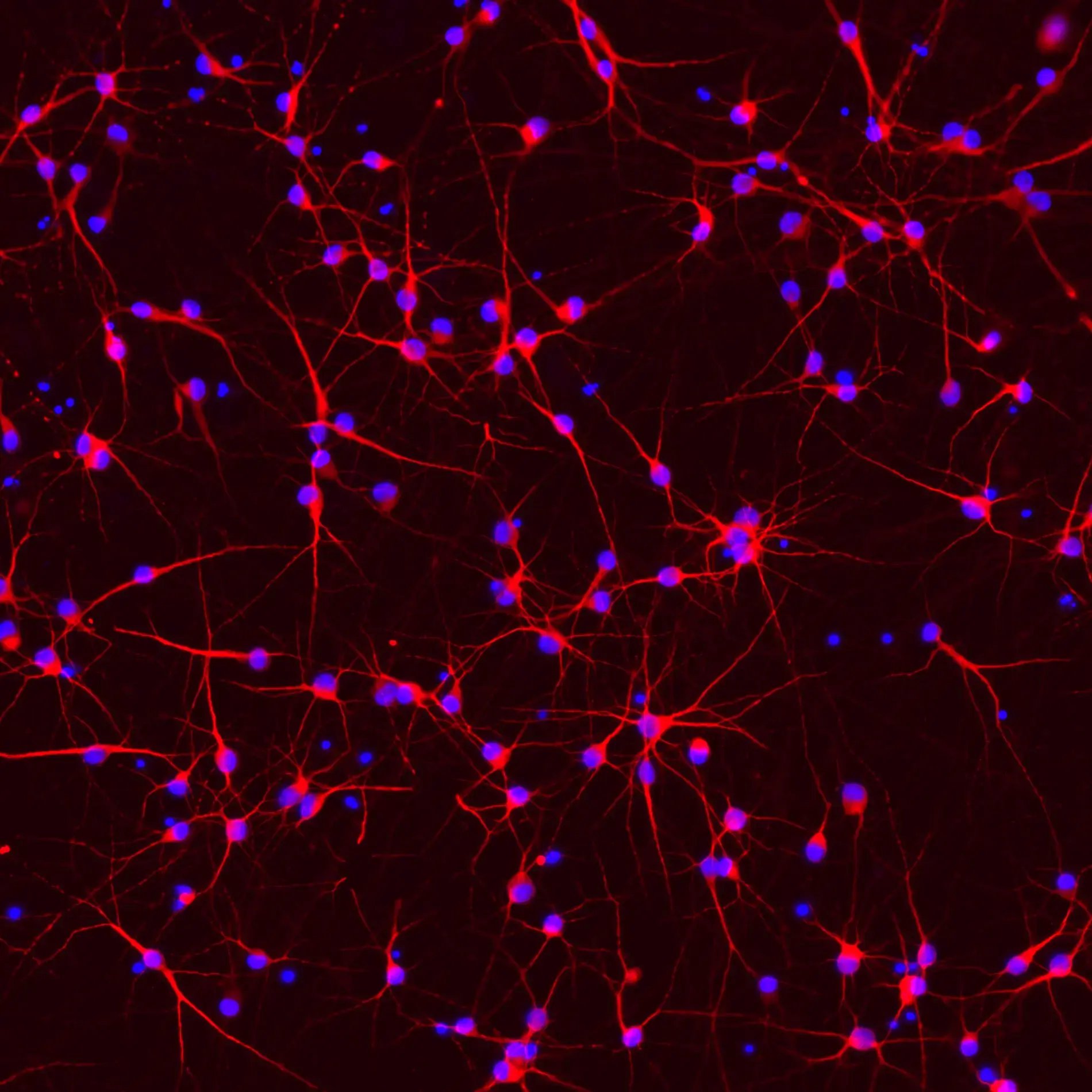
Immunofluorescent staining on day 11 post-revival demonstrates homogenous expression of the pan-neuronal protein, MAP2 and glutamatergic neuron-specific transporter, VGLUT2. 

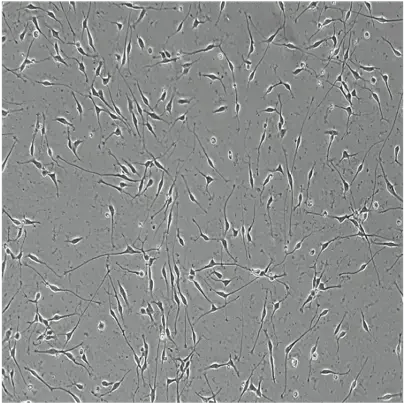
ioGlutamatergic Neurons form structural neuronal networks by day 11

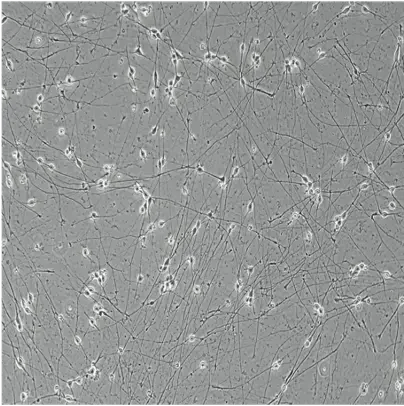
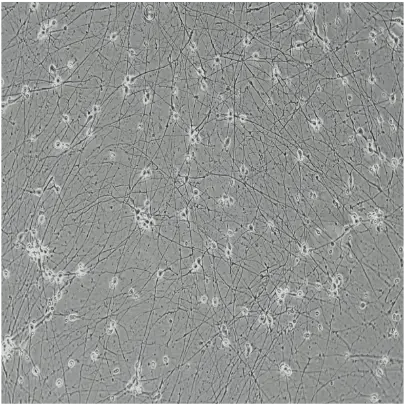
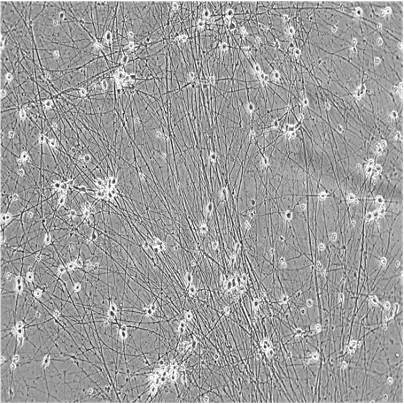
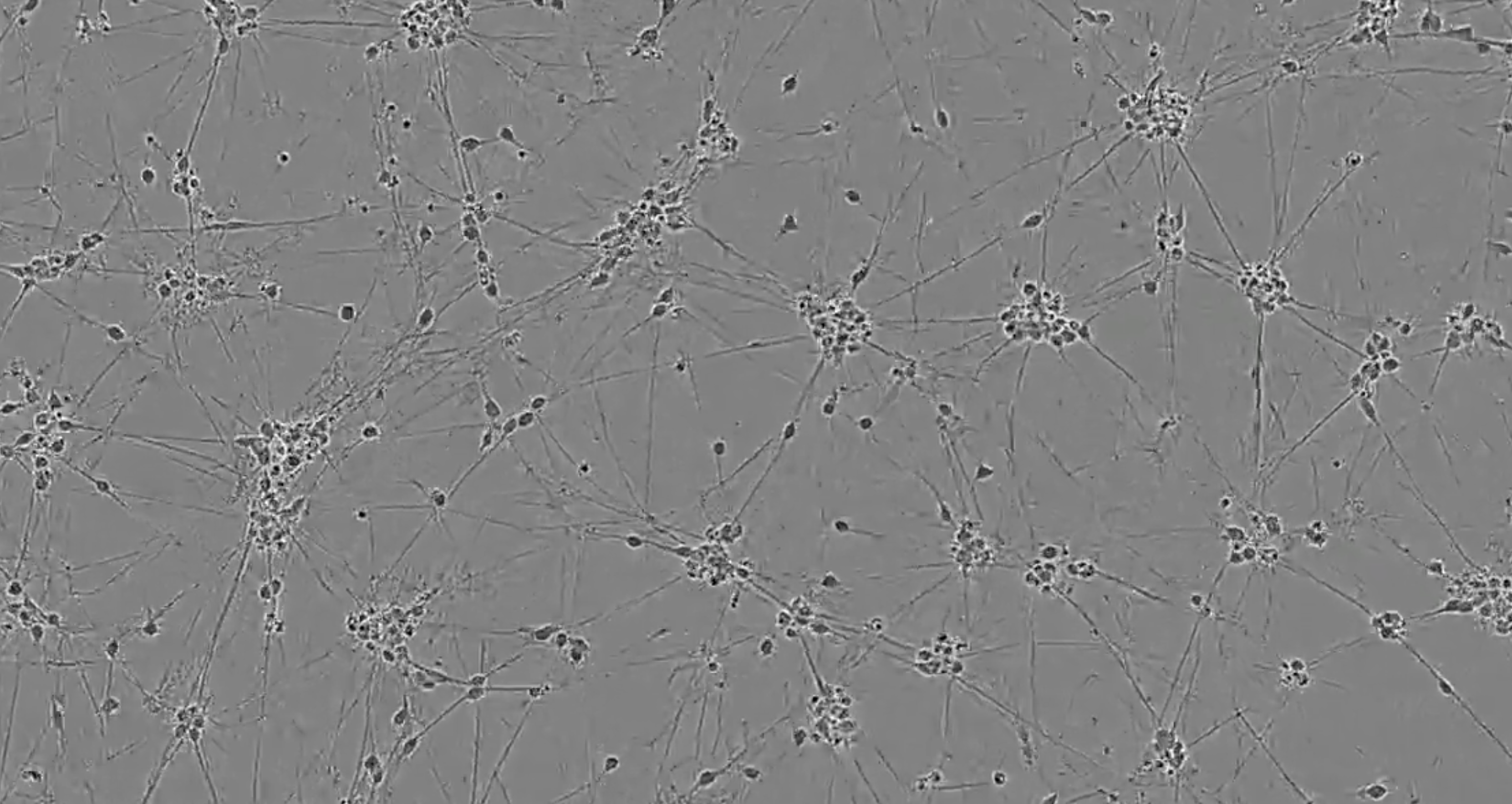
bit.bio iPSC-derived glutamatergic neurons morphology brightfield day 1
Day 1
bit.bio iPSC-derived glutamatergic neurons morphology brightfield day 4
Day 4
bit.bio iPSC-derived glutamatergic neurons morphology brightfield day 7
Day 7
bit.bio iPSC-derived glutamatergic neurons morphology brightfield day 11
Day 11

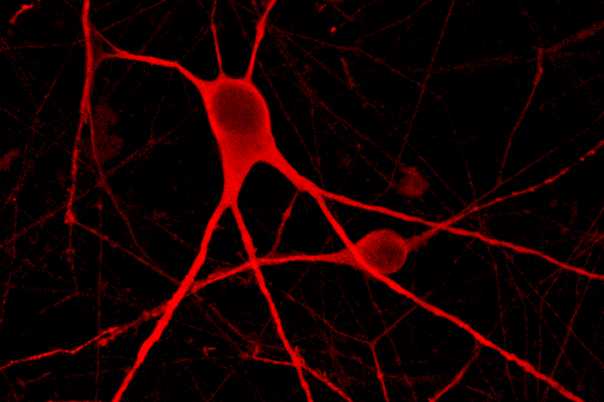
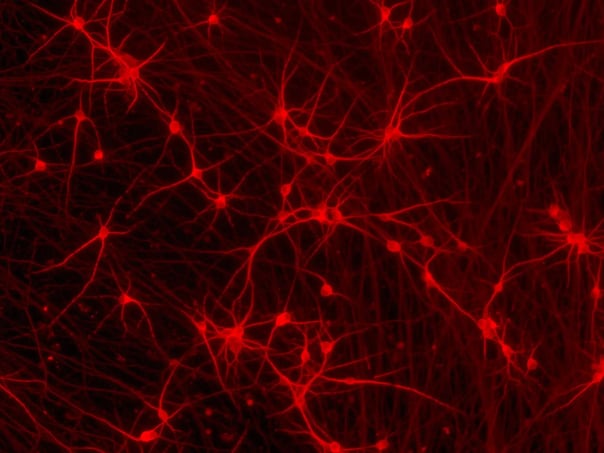
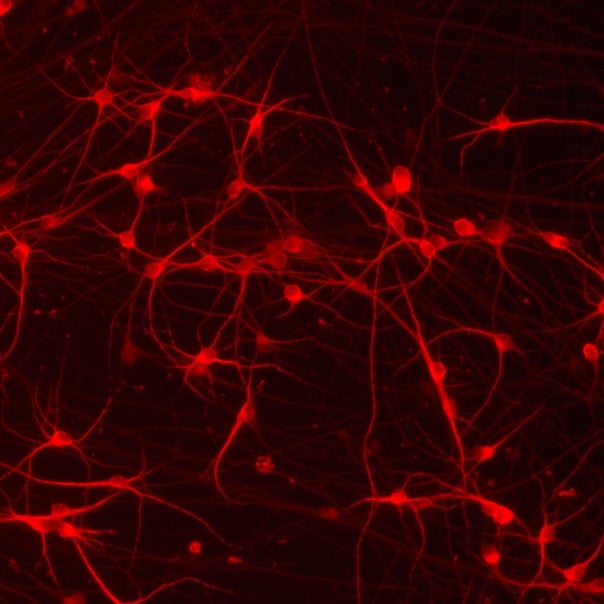
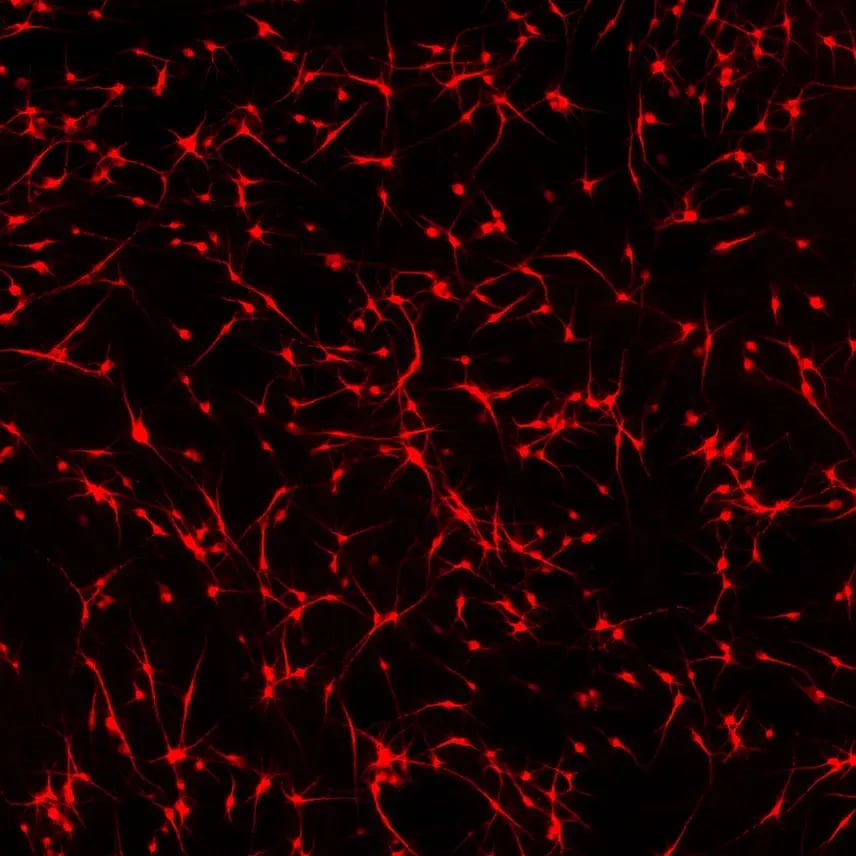
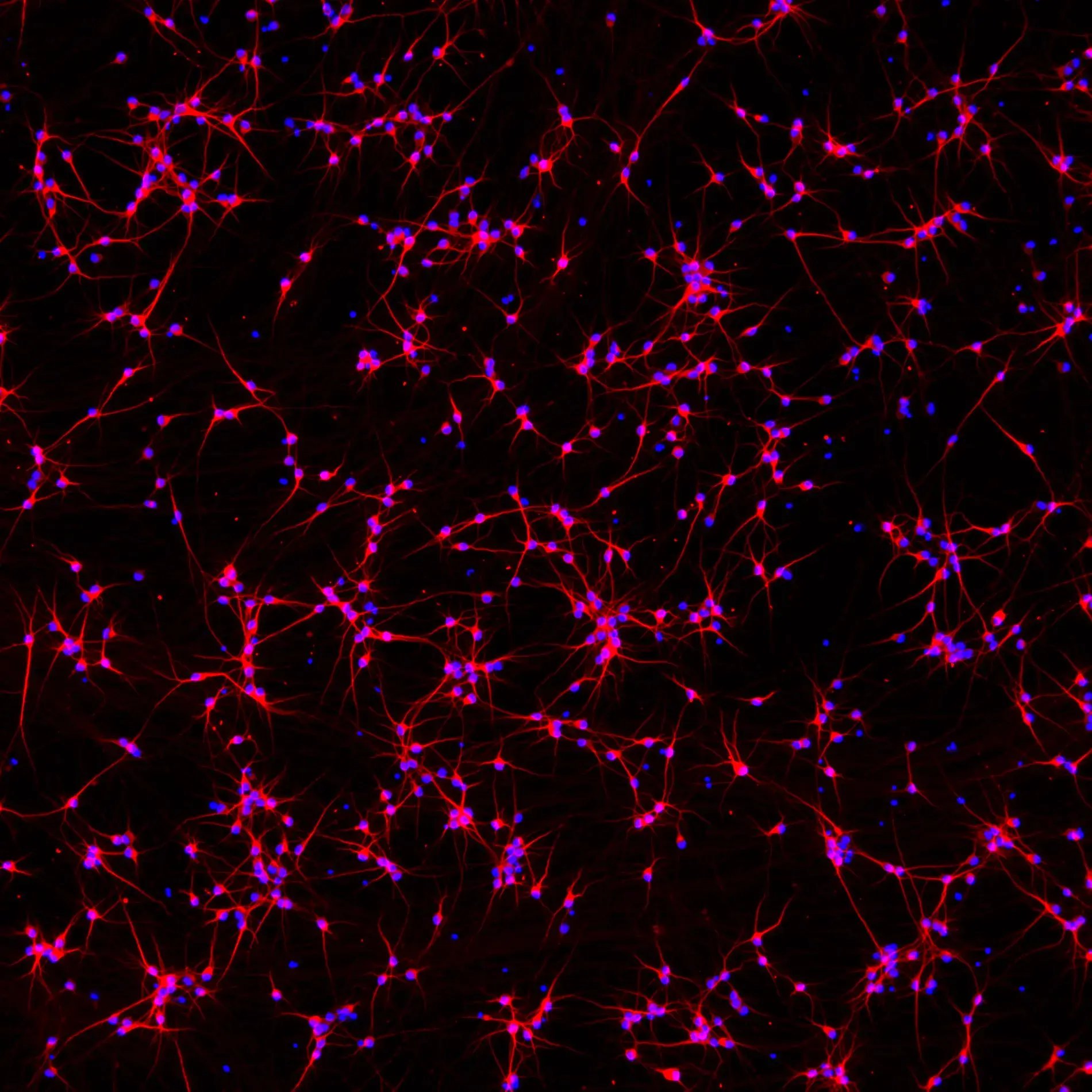
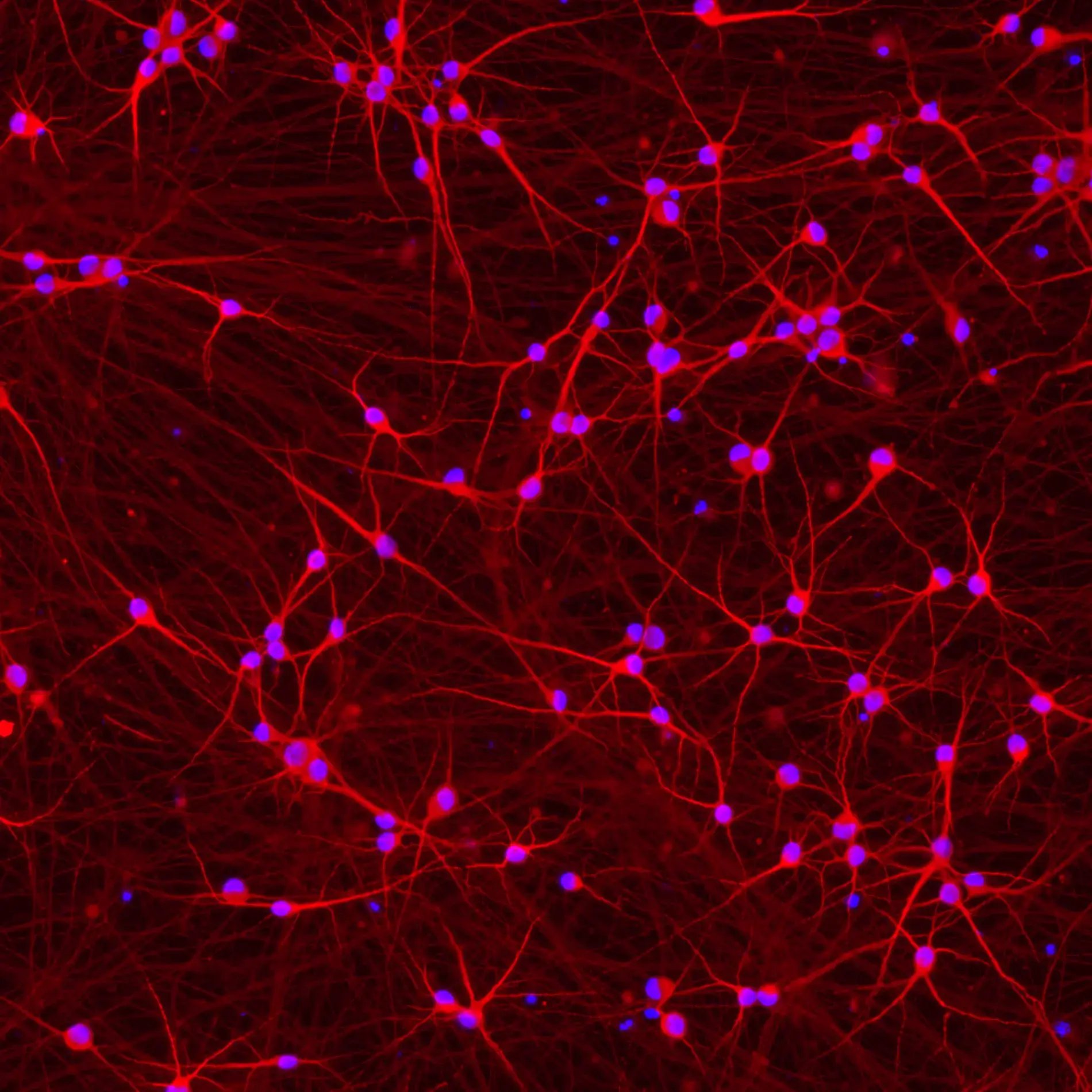
ioGlutamatergic Neurons mature rapidly, show glutamatergic neuron morphology and form structural neuronal networks over 11 days. Day 1 to 11 post thawing; 100X magnification.

Whole transcriptome analysis demonstrates high lot-to-lot consistency across three manufactured lots of ioGlutamatergic Neurons

bit.bio Bulk RNA-sequencing data demonstrates consistency across manufacturing lots of glutamatergic neurons

Bulk RNA-sequencing analysis was performed on three different lots of ioGlutamatergic Neurons on day 0, day 11 and day 18 post-revival. (A) A principal component analysis (PCA) to assess gene expression variance between three different manufactured lots showed a tight clustering of the samples at each timepoint, demonstrating high consistency between these lots. This lot-to-lot consistency of ioGlutamatergic Neurons will help reduce experimental variation and increase the reproducibility of experiments. (B) PCA without the parental non-induced hiPSC samples, highlighting the tight clustering of the day 11 as well as day 18 samples of the three different lots. (C) Differential expression test reveals no statistically significant differentially expressed (DE) genes across the three lots at day 11 (|logFC| > 0.5 and FDR < 0.01).

Colours represent the three lots of products; shapes represent the parental non-induced hiPSC line and different timepoints.

Expression levels for specific genes of interest can be requested by contacting our team at technical@bit.bio.

High lot-to-lot consistency is demonstrated by a consistent transcriptomic fingerprint across manufactured lots of ioGlutamatergic Neurons

bit.bio scRNA-seq data represented in UMAP plots demonstrates lot-to-lot consistency of iPSC-derived glutamatergic neurons

Single cell RNA-sequencing analysis was performed on three different lots of ioGlutamatergic Neurons on day 11. UMAP plots represent the cell-to-cell variation in gene expression profiles of cells, each dot representing an individual cell. Cells from each of the three lots are equally distributed across the body of the plot. Merging the UMAP plots creates a tight overlay, showing a strong transcriptional relationship between cells from three independently manufactured lots of ioGlutamatergic Neurons. Gene expression was assessed by 10x Genomics scRNA-sequencing.

Single cell ATAC-sequencing shows a consistent transcriptomic fingerprint demonstrating high lot-to-lot consistency across manufactured lots of ioGlutamatergic Neurons

bit.bio scATAC-seq data represented in UMAP plots demonstrates lot-to-lot consistency of glutamatergic neurons

Single cell ATAC-sequencing analysis was performed on three different lots of ioGlutamatergic Neurons on day 11. Single cell ATAC-sequencing reveals regions of open chromatin to understand the gene regulatory landscape of individual cells. UMAP plots represent the cell-to-cell variation in chromatin accessibility of the cells, each dot representing a single cell. Cells from each of the three lots are equally distributed across the body of the plot. Merging the UMAP plots creates a tight overlay, showing a strong transcriptional relationship between cells from three independently manufactured lots of ioGlutamatergic Neurons. Gene expression was assessed by 10x Genomics scRNA-sequencing.

Rapid gain of functional activity

ioGlutamatergic Neurons display neuronal activity that matures over time

bit.bio HD-MEA shows an increase in axon length and firing rate as excitatory neurons mature

The function of ioGlutamatergic Neurons was investigated using the MaxTwo HD-MEA System.

The Axon Tracking Assay (left) shows examples of reconstructed axonal paths of travelling action potentials of individual iPSC-derived glutamatergic neurons. The assay reveals the spatial propagation of the neuronal action potential from the soma to distant axonal branches.

Total axon length (middle) and firing rate (right) increase over time, indicating that the cells are maturing. ioGlutamatergic Neurons were cultured with human iPSC-derived astrocytes.

Data courtesy of Charles River Laboratories and MaxWell Biosystems.

Rapid maturation of ioGlutamatergic Neurons leads to synchronised network activity by day 31

bit.bio Raster plots demonstrate spontaneous activity and synchronised bursting of glutamatergic neurons

Raster plots generated using the MaxTwo HD-MEA System show the development of the neuronal network over time.

The plots show the dynamics of the network activity using 1,024 active electrodes. Each row represents an individual electrode and each blue dot indicates a spike detected at that electrode over a period of 300 seconds.

Spontaneous activity is observed at DIV 7. Clear synchronised bursting activity is observed by DIV 31, represented by blue vertical lines, followed by an overall drop in activity, seen as white lines. ioGlutamatergic Neurons were cultured with human iPSC-derived astrocytes.

Download our poster to see additional data that shows how ioGABAergic Neurons form functional neuronal networks with ioGlutamatergic Neurons in the presence of astrocytes, and how the tri-culture responds to bicuculline and diazepam. 

ioGlutamatergic Neurons offer a rapidly maturing functional system that can be used to assess neuronal networks and the impact of a drug treatment or intervention. 

Data courtesy of Charles River Laboratories and MaxWell Biosystems.

Robust and scalable cells for screening applications

ioGlutamatergic Neurons show good suitability for high-throughput screening in 384-well format plates

bit.bio induced excitatory neurons in high throughput screening assays in 384-well plate format

Cytotoxicity CellTiter-Glo®️ (CTG) and TR-FRET (HTRF®️) assays for AKT serine/threonine kinase 1 (AKT) and Huntingtin (HTT) proteins were performed on ioGlutamatergic Neurons in 384-well plates treated with tool compound (cmp) at day 9 post-revival. Compound titration results in a concentration response curve for all three assays (mean±sd of 2 replicates). CTG assay on ioGlutamatergic Neurons shows an excellent average signal-to-background ratio and high suitability for HTS. HTRF assays on ioGlutamatergic Neurons show lower signals but with low variability, and could therefore also provide a suitable platform for HTS.

Data courtesy of Charles River Laboratories.


ioGlutamatergic Neurons offer a robust, physiologically-relevant model for efficacy screening of candidate ASOs

bit.bio Assessment of ASO delivery and gene knockdown in iPSC-derived excitatory neurons

Positive and negative control antisense oligonucleotides (ASOs) with gapmer chemistry were introduced into glutamatergic neurons by gymnosis. RT-qPCR was used to measure ASO-induced gene knockdown.

  • Strong separation of the assay signal for positive control (blue) and negative control (orange) ASOs was observed for all plates tested (A).
  • The positive control ASO induced ~90% knockdown of the target gene, shown by a decrease in the target gene expression (A) and higher Cp (or Ct) values for the target gene, indicating lower initial amount of the target sequence (B).
  • There was no effect of the control ASOs on housekeeping gene expression as compared to vehicle-transfected controls (C).
  • No marked intra- or inter-plate variability was observed between positive and negative control ASOs (A-C).

Data courtesy of Charles River Laboratories.

Compatible with multi-cell cultures

ioMicroglia enhance network activity in co-culture with ioGlutamatergic Neurons
calcium-imaging-microglia-and-glutamatergic-neuron-co-culture

ioGlutamatergic Neurons expressing Incucyte® Neuroburst Orange Lentivirus mono-culture or in co-culture with ioMicroglia Male (io1021) monitored and quantified using Incucyte® Neuronal Activity Analysis software. 

A) Representative calcium traces shown for each culture condition at 15 days post-microglia addition.

B) Bar charts at 15 days post-microglia addition showing network correlation and mean burst duration. Data presented as mean ± SEM, n = 3 – 12 replicates.

This data was generated by Jasmine Trigg and colleagues at Sartorius, taken from the application note: "Advanced in vitro Modeling of Human iPSC-derived Neuronal Mono- and Co-cultures with Microglia: Optimization Using Growth Factors and Live-Cell Analysis".

Live-cell imaging reveals clear visualisation of GFP ioMicroglia when co-cultured with ioGlutamatergic Neurons
gfp-microglia-live-cell-imaging-overlay NO ZOOM

ioGlutamatergic Neurons were cultured to day 10 post-thaw. GFP ioMicroglia (io1096) were cultured to day 10 post-thaw and were directly added to day 11 ioGlutamatergic Neurons. The co-cultures were maintained for a further 3 days before live-cell imaging with Leica DMi8. Brightfield and fluorescence images were taken and merged, easily demonstrating distribution of GFP ioMicroglia within the co-culture.

ioGABAergic Neurons exert an inhibitory effect on the excitatory ioGlutamatergic Neurons within the tri-cultures leading to a higher network burst rate
MEA raster plots showing ioGABAergic Neurons exert an inhibitory effect and modulate network activity within tri-cultures leading to a higher network burst rate

The effect of adding increasing numbers of inhibitory ioGABAergic Neurons (io1003) to the tri-cultures was investigated by MEA analysis at 53 DIV, alongside the control co-cultures. Representative raster plots displaying the activity of 16 electrodes over a time period of 300 seconds are shown. Each horizontal row of the raster plot represents the activity of an electrode, within which each vertical black dash indicates a firing event, a blue dash indicates a single electrode burst, and a pink box indicates a network burst event. The histogram trace on top of the raster plot is a measure of the number of spikes per network burst. The co-culture with ioGlutamatergic Neurons and astrocytes shows the strongest network bursts as indicated by the increased number of spikes per network burst and shows a lower network burst rate (NBR) compared to the tri-cultures. The addition of increasing numbers of inhibitory ioGABAergic Neurons to the tri-cultures reduces the number of spikes per network burst and leads to an increased NBR. This indicates that ioGABAergic Neurons are having an inhibitory effect on the excitatory ioGlutamatergic Neurons. The co-culture of ioGABAergic Neurons and astrocytes shows no network bursts, indicating the absence of excitatory neurons and that the population of ioGABAergic Neurons is highly pure. Analysis was performed on an Axion Maestro Pro MEA platform. This data was generated in partnership with Charles River Laboratories.

Get started with the tri-culture protocol of Glutamatergic Neurons, GABAergic Neurons and astrocytes for MEA assay

Industry leading seeding density

Do more with every vial

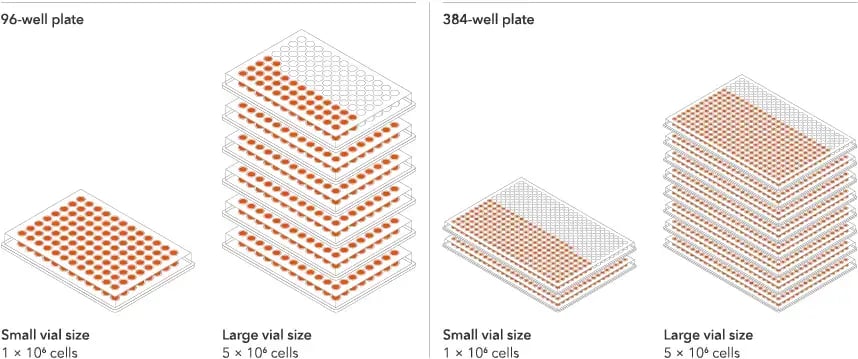
bit.bio Excitatory glutamatergic neurons compatible with 96- and 384-well plates

The recommended minimum seeding density is 30,000 cells/cm2, compared to up to 250,000 cells/cm2 for other similar products on the market. One small vial can plate a minimum of 0.7 x 24-well plate, 1 x 96-well plate, or 1.5 x 384-well plates. One large vial can plate a minimum of 3.6 x 24-well plates, 5.4 x 96-well plates, or 7.75 x 384-well plates. This means every vial goes further, enabling more experimental conditions and more repeats, resulting in more confidence in the data.

Technical data

MEA analysis of network activity

ioGlutamatergic Neurons display neuronal activity that matures over time

bit.bio HD-MEA shows an increase in axon length and firing rate as excitatory neurons mature

The function of ioGlutamatergic Neurons was investigated using the MaxTwo HD-MEA System.

The Axon Tracking Assay (left) shows examples of reconstructed axonal paths of travelling action potentials of individual iPSC-derived glutamatergic neurons. The assay reveals the spatial propagation of the neuronal action potential from the soma to distant axonal branches.

Total axon length (middle) and firing rate (right) increase over time, indicating that the cells are maturing. ioGlutamatergic Neurons were cultured with human iPSC-derived astrocytes.

Data courtesy of Charles River Laboratories and MaxWell Biosystems.

Rapid maturation of ioGlutamatergic Neurons leads to synchronised network activity by day 31

bit.bio Raster plots demonstrate spontaneous activity and synchronised bursting of glutamatergic neurons

Raster plots generated using the MaxTwo HD-MEA System show the development of the neuronal network over time.

The plots show the dynamics of the network activity using 1,024 active electrodes. Each row represents an individual electrode and each blue dot indicates a spike detected at that electrode over a period of 300 seconds.

Spontaneous activity is observed at DIV 7. Clear synchronised bursting activity is observed by DIV 31, represented by blue vertical lines, followed by an overall drop in activity, seen as white lines. ioGlutamatergic Neurons were cultured with human iPSC-derived astrocytes.

Download our poster to see additional data that shows how ioGABAergic Neurons form functional neuronal networks with ioGlutamatergic Neurons in the presence of astrocytes, and how the tri-culture responds to bicuculline and diazepam. 

ioGlutamatergic Neurons offer a rapidly maturing functional system that can be used to assess neuronal networks and the impact of a drug treatment or intervention. 

Data courtesy of Charles River Laboratories and MaxWell Biosystems.

Efficacy screening with ASOs

ioGlutamatergic Neurons offer a robust, physiologically-relevant model for efficacy screening of candidate ASOs

bit.bio Assessment of ASO delivery and gene knockdown in iPSC-derived excitatory neurons

Positive and negative control antisense oligonucleotides (ASOs) with gapmer chemistry were introduced into glutamatergic neurons by gymnosis. RT-qPCR was used to measure ASO-induced gene knockdown.

  • Strong separation of the assay signal for positive control (blue) and negative control (orange) ASOs was observed for all plates tested (A).
  • The positive control ASO induced ~90% knockdown of the target gene, shown by a decrease in the target gene expression (A) and higher Cp (or Ct) values for the target gene, indicating lower initial amount of the target sequence (B).
  • There was no effect of the control ASOs on housekeeping gene expression as compared to vehicle-transfected controls (C).
  • No marked intra- or inter-plate variability was observed between positive and negative control ASOs (A-C).

Data courtesy of Charles River Laboratories.

Cytotoxicity and HTRF for compound screening

ioGlutamatergic Neurons show good suitability for high-throughput screening in 384-well format plates

bit.bio induced excitatory neurons in high throughput screening assays in 384-well plate format

Cytotoxicity CellTiter-Glo®️ (CTG) and TR-FRET (HTRF®️) assays for AKT serine/threonine kinase 1 (AKT) and Huntingtin (HTT) proteins were performed on ioGlutamatergic Neurons in 384-well plates treated with tool compound (cmp) at day 9 post-revival. Compound titration results in a concentration response curve for all three assays (mean±sd of 2 replicates). CTG assay on ioGlutamatergic Neurons shows an excellent average signal-to-background ratio and high suitability for HTS. HTRF assays on ioGlutamatergic Neurons show lower signals but with low variability, and could therefore also provide a suitable platform for HTS.

Data courtesy of Charles River Laboratories.


Multi-cell cultures

ioMicroglia enhance network activity in co-culture with ioGlutamatergic Neurons
calcium-imaging-microglia-and-glutamatergic-neuron-co-culture

ioGlutamatergic Neurons expressing Incucyte® Neuroburst Orange Lentivirus mono-culture or in co-culture with ioMicroglia Male (io1021) monitored and quantified using Incucyte® Neuronal Activity Analysis software. 

A) Representative calcium traces shown for each culture condition at 15 days post-microglia addition.

B) Bar charts at 15 days post-microglia addition showing network correlation and mean burst duration. Data presented as mean ± SEM, n = 3 – 12 replicates.

This data was generated by Jasmine Trigg and colleagues at Sartorius, taken from the application note: "Advanced in vitro Modeling of Human iPSC-derived Neuronal Mono- and Co-cultures with Microglia: Optimization Using Growth Factors and Live-Cell Analysis".

Live-cell imaging reveals clear visualisation of GFP ioMicroglia when co-cultured with ioGlutamatergic Neurons
gfp-microglia-live-cell-imaging-overlay NO ZOOM

ioGlutamatergic Neurons were cultured to day 10 post-thaw. GFP ioMicroglia (io1096) were cultured to day 10 post-thaw and were directly added to day 11 ioGlutamatergic Neurons. The co-cultures were maintained for a further 3 days before live-cell imaging with Leica DMi8. Brightfield and fluorescence images were taken and merged, easily demonstrating distribution of GFP ioMicroglia within the co-culture.

ioGABAergic Neurons exert an inhibitory effect on the excitatory ioGlutamatergic Neurons within the tri-cultures leading to a higher network burst rate
MEA raster plots showing ioGABAergic Neurons exert an inhibitory effect and modulate network activity within tri-cultures leading to a higher network burst rate

The effect of adding increasing numbers of inhibitory ioGABAergic Neurons (io1003) to the tri-cultures was investigated by MEA analysis at 53 DIV, alongside the control co-cultures. Representative raster plots displaying the activity of 16 electrodes over a time period of 300 seconds are shown. Each horizontal row of the raster plot represents the activity of an electrode, within which each vertical black dash indicates a firing event, a blue dash indicates a single electrode burst, and a pink box indicates a network burst event. The histogram trace on top of the raster plot is a measure of the number of spikes per network burst. The co-culture with ioGlutamatergic Neurons and astrocytes shows the strongest network bursts as indicated by the increased number of spikes per network burst and shows a lower network burst rate (NBR) compared to the tri-cultures. The addition of increasing numbers of inhibitory ioGABAergic Neurons to the tri-cultures reduces the number of spikes per network burst and leads to an increased NBR. This indicates that ioGABAergic Neurons are having an inhibitory effect on the excitatory ioGlutamatergic Neurons. The co-culture of ioGABAergic Neurons and astrocytes shows no network bursts, indicating the absence of excitatory neurons and that the population of ioGABAergic Neurons is highly pure. Analysis was performed on an Axion Maestro Pro MEA platform. This data was generated in partnership with Charles River Laboratories.

Get started with the tri-culture protocol of Glutamatergic Neurons, GABAergic Neurons and astrocytes for MEA assays

How to culture ioGlutamatergic Neurons

In this video, our scientist will take you through the step-by-step process of how to thaw, seed and culture ioGlutamatergic Neurons.

Resources in slider (flattened): 144 (max displayed: 200)

Product resources

Developing next-generation in vitro phenotypic assays for Huntington’s disease by combining a precision reprogrammed hiPSC-derived disease model with high-density microelectrode arrays Application & Technical note
Developing next-generation in vitro phenotypic assays for Huntington’s disease by combining a precision reprogrammed hiPSC-derived disease model with high-density microelectrode arrays

bit.bio | MaxWell Biosystems | Charles River Laboratories

2022

Download
Phenotypic characterisation of iPSC-derived ALS disease models by high-throughput MEA Application & Technical note
Phenotypic characterisation of iPSC-derived ALS disease models by high-throughput MEA

V1

2023

bit.bio | Axion BioSystems | Charles River Laboratories

Download
Quantifying C5a-mediated chemotaxis in precision reprogrammed hiPSC-derived ioMicroglia Application & Technical note
Quantifying C5a-mediated chemotaxis in precision reprogrammed hiPSC-derived ioMicroglia

bit.bio | Medicines Discovery Catapult

2024

Download
Sartorius application note - Advanced in vitro Modeling of Human iPSC-derived Neuronal Mono- and Co-cultures with Microglia Application & Technical note
Sartorius application note - Advanced in vitro Modeling of Human iPSC-derived Neuronal Mono- and Co-cultures with Microglia
Trigg et al.,
Sartorius
2024
Download
Producing 3D Neuronal Microtissues for Preclinical Drug Screening using ioGlutamatergic Neurons Application & Technical note
Producing 3D Neuronal Microtissues for Preclinical Drug Screening using ioGlutamatergic Neurons
V1
2024
bit.bio
Inventia
Download
Characterisation of ioSensory Neurons on the Patchliner Application & Technical note
Characterisation of ioSensory Neurons on the Patchliner

V1
A Obergrussberger et al, 2024.
Nanion

Download
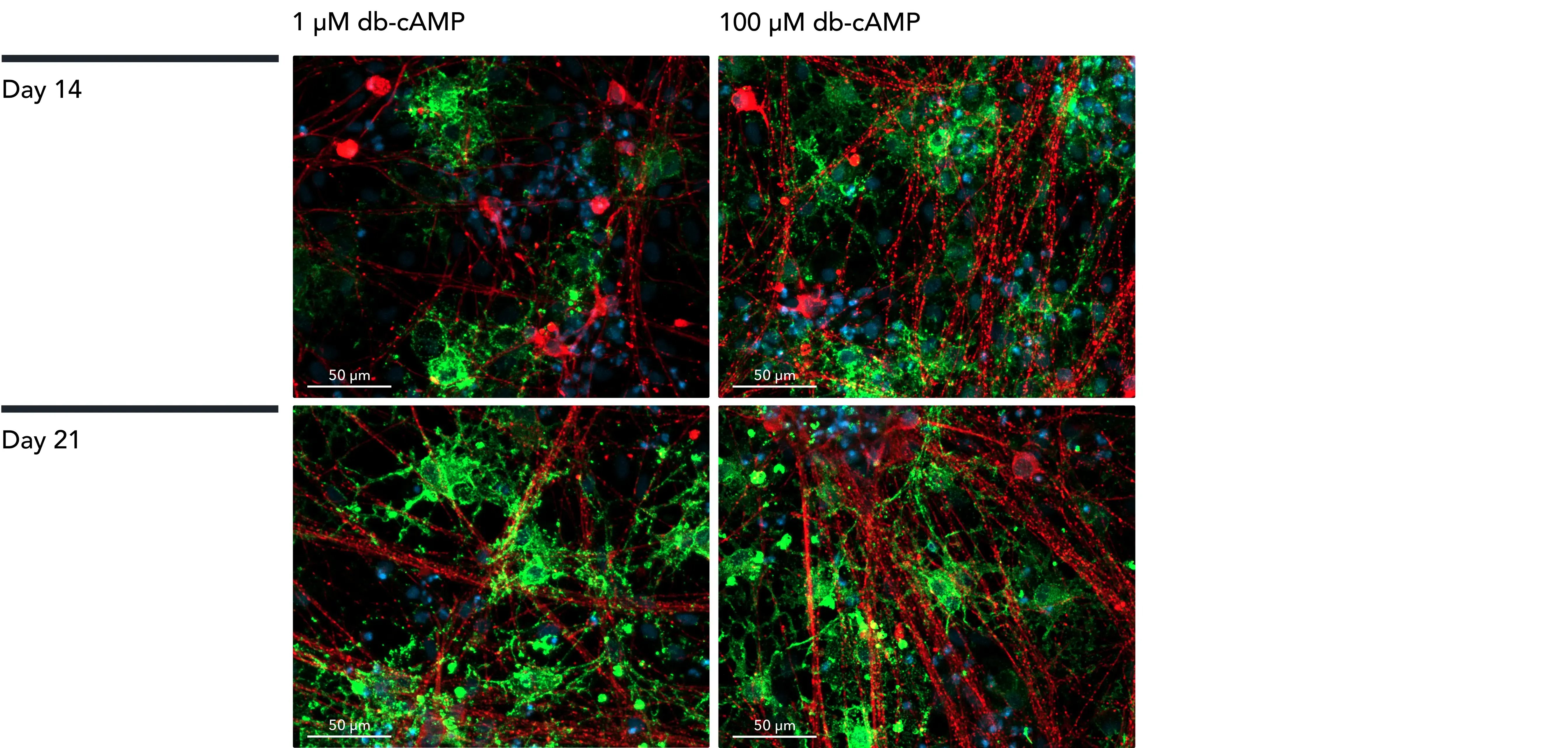
Enhancement of MBP expression in human iPSC-derived oligodendrocyte-like cells by optimising db-cAMP concentration in media Application & Technical note
Enhancement of MBP expression in human iPSC-derived oligodendrocyte-like cells by optimising db-cAMP concentration in media
Download technical note
The developmental capacity of nuclei transplanted from keratinized skin cells of adult frogs bits of bio
The developmental capacity of nuclei transplanted from keratinized skin cells of adult frogs

Dr Daniel Ortmann | Head of Discovery | bit.bio

Read more
Induction of pluripotent stem cells from adult human fibroblasts by defined factors bits of bio
Induction of pluripotent stem cells from adult human fibroblasts by defined factors

Dr Anne-Claire Guénantin | Senior Scientist | bit.bio

Read more
In vivo reprogramming of murine cardiac fibroblasts into induced cardiomyocytes bits of bio
In vivo reprogramming of murine cardiac fibroblasts into induced cardiomyocytes

Dr Will Bernard | Senior Scientist | bit.bio

Read more
Direct conversion of fibroblasts to functional neurons by defined factors bits of bio
Direct conversion of fibroblasts to functional neurons by defined factors

Dr Tony Oosterveen | Senior Scientist | bit.bio

Read more
Genetic content of adult somatic cells tested by nuclear transplantation from cultured cells bits of bio
Genetic content of adult somatic cells tested by nuclear transplantation from cultured cells

Dr Kaiser Karim | Senior Scientist | bit.bio

Read more
Stepwise reprogramming of B cells into macrophages bits of bio
Stepwise reprogramming of B cells into macrophages

Dr Thomas Moreau | Head of Research | bit.bio

Read more
Haematopoietic stem and progenitor cells from human pluripotent stem cellsfo bits of bio
Haematopoietic stem and progenitor cells from human pluripotent stem cellsfo

Dr Thomas Moreau | Head of Research | bit.bio

Read more
Generating publishable neuroscience research in 12 weeks with ioGlutamatergic Neurons Case study
Generating publishable neuroscience research in 12 weeks with ioGlutamatergic Neurons

Professor Deepak Srivastava

Professor of Molecular Neuroscience and Group Leader, MRC Centre for Developmental Disorders

King’s College London 

Download
Improving physiological relevance in neurological disease drug development Case study
Improving physiological relevance in neurological disease drug development

Elise Malavasi, PhD
Principal Scientist
Concept Life Sciences

Download
Advancing rare disease drug discovery using consistent, defined human cells Case study
Advancing rare disease drug discovery using consistent, defined human cells
Rodney A. Bowling Jr., PhD,
Founder and Chief Scientific Officer
To Cure a Rose
Download
ioGlutamatergic Neurons Brochure
ioGlutamatergic Neurons

bit.bio

Download
ioSkeletal Myocytes Brochure
ioSkeletal Myocytes

bit.bio

Download
ioOligodendrocyte-like cells Brochure
ioOligodendrocyte-like cells
bit.bio
Download
ioMicroglia product family Brochure
ioMicroglia product family
bit.bio
Download
ioSensory Neurons Brochure
ioSensory Neurons
bit.bio
Download
ioMotor Neurons Brochure
ioMotor Neurons
bit.bio
Download
ioGABAergic Neurons Brochure
ioGABAergic Neurons
bit.bio
Download
Comparing Stem Cells Differentiation Methods | Infographic Infographic
Comparing Stem Cells Differentiation Methods | Infographic

bit.bio

View
High Content Analysis of 2D and 3D cellular models for target and phenotypic drug discovery Poster
High Content Analysis of 2D and 3D cellular models for target and phenotypic drug discovery

Lachize, et al

Courtesy of Charles River Laboratories

2020

View
Development and characterisation of a robust in vitro disease model to study tauopathies Poster
Development and characterisation of a robust in vitro disease model to study tauopathies

Ritsma, et al

Charles River Laboratories & bit.bio

2022

View
Genotype and phenotype validation of an isogenic human iPSC-derived neuronal model of Huntington’s Disease Poster
Genotype and phenotype validation of an isogenic human iPSC-derived neuronal model of Huntington’s Disease

Oosterveen, et al

bit.bio

2022

View
Rapid and consistent generation of functional microglia from reprogrammed hiPSCs to study neurodegeneration and neuroinflammation Poster
Rapid and consistent generation of functional microglia from reprogrammed hiPSCs to study neurodegeneration and neuroinflammation

Raman, et al

bit.bio

2022

View
Generation of 3D skeletal muscle microtissues using ioSkeletal Myocytes Poster
Generation of 3D skeletal muscle microtissues using ioSkeletal Myocytes

Dr Mitchell Han

Bi/ond

2023

View
Consistent and rapid generation of functional motor neurons from reprogrammed human iPSCs using opti-ox technology Poster
Consistent and rapid generation of functional motor neurons from reprogrammed human iPSCs using opti-ox technology

Vaquero, et al

bit.bio

2023

Download
Generation and characterisation of a panel of human iPSC-derived neurons and microglia carrying early and late onset relevant mutations for Alzheimer’s disease Poster
Generation and characterisation of a panel of human iPSC-derived neurons and microglia carrying early and late onset relevant mutations for Alzheimer’s disease
Smith, et al. 
bit.bio
2024
Download
Rapid and consistent generation of functional motor neurons from reprogrammed human iPSCs using opti-ox technology Poster
Rapid and consistent generation of functional motor neurons from reprogrammed human iPSCs using opti-ox technology
Foulser, et al 
bit.bio
2024
Download
CRISPR knockout screening for drug target identification and validation using CRISPR-Ready ioMicroglia Poster
CRISPR knockout screening for drug target identification and validation using CRISPR-Ready ioMicroglia
Schmidt, et al
bit.bio
2024
Download
Human iPSC-derived DMD skeletal myocytes for 3D functional studies and dystrophin restoration Poster
Human iPSC-derived DMD skeletal myocytes for 3D functional studies and dystrophin restoration

Bernard, et al

bit.bio

2024

Download
Advancing drug discovery: leveraging CRISPR-Ready ioMicroglia for functional genomics studies Poster
Advancing drug discovery: leveraging CRISPR-Ready ioMicroglia for functional genomics studies
Schmidt et al.,
bit.bio
2024
Download
Lipid-Bilayer-Supported 3D Printing of Human Cerebral Cortex Cells Reveals Developmental Interactions Publication
Lipid-Bilayer-Supported 3D Printing of Human Cerebral Cortex Cells Reveals Developmental Interactions

Zhou L, et al 

Advanced Science News

2020

Using ioGlutamatergic Neurons

Read more
Reprogramming the stem cell for a new generation of cures Publication
Reprogramming the stem cell for a new generation of cures

Davenport A, Frolov T & Kotter M

Drug Discovery World

2020


Read more
Inducible and Deterministic Forward Programming of Human Pluripotent Stem Cells into Neurons, Skeletal Myocytes, and Oligodendrocytes Publication
Inducible and Deterministic Forward Programming of Human Pluripotent Stem Cells into Neurons, Skeletal Myocytes, and Oligodendrocytes

Pawlowski M et al
Stem Cell Reports

2017

Read more
Compounds co-targeting kinases in axon regulatory pathways promote regeneration and behavioral recovery after spinal cord injury in mice Publication
Compounds co-targeting kinases in axon regulatory pathways promote regeneration and behavioral recovery after spinal cord injury in mice

Mah, et al

Experimental Neurology

2022

Using ioGlutamatergic Neurons

Read more
Glutamatergic Neurons and Brain Cyst Formation Publication
Glutamatergic Neurons and Brain Cyst Formation

Bando, et al

Frontiers in Cellular and Infection Microbiology

2022

Using ioGlutamatergic Neurons


Read more
Interferon-γ exposure of human iPSC-derived neurons alters major histocompatibility complex I and synapsin protein expression Publication
Interferon-γ exposure of human iPSC-derived neurons alters major histocompatibility complex I and synapsin protein expression

Pavinlek, et al

Frontiers in Psychiatry

2022

Using ioGlutamatergic Neurons


Read more
Functional neurological restoration of amputated peripheral nerve using biohybrid regenerative bioelectronics | Publication Publication
Functional neurological restoration of amputated peripheral nerve using biohybrid regenerative bioelectronics | Publication

Rochford and Carnicer-Lombarte et al.

Science Advances

2023

Featuring opti-ox enabled skeletal myocytes iPS cell line

Read more
3D bioprinting of iPSC neuron-astrocyte coculture Publication
3D bioprinting of iPSC neuron-astrocyte coculture

Whitehouse, et al
JoVE Journal of Visualized Experiments 
2023

Using ioGlutamatergic Neurons

Read more
CRISPR-Cas9 knockout screen in iPSC-derived Neurons identifies new Alzheimer’s disease druggable target Publication
CRISPR-Cas9 knockout screen in iPSC-derived Neurons identifies new Alzheimer’s disease druggable target

Pavlou, et al
Nature Scientific Reports
2023

Using CRISPR-Ready ioGlutamatergic Neurons

Read more
Rewiring of the promoter-enhancer interactome and regulatory landscape in glioblastoma orchestrates gene expression underlying neurogliomal synaptic communication Publication
Rewiring of the promoter-enhancer interactome and regulatory landscape in glioblastoma orchestrates gene expression underlying neurogliomal synaptic communication

Chakraborty et al
Nature Communications
2023

Featuring ioGlutamatergic Neurons

Read more
HNRNPH1 regulates the neuroprotective cold‐shock protein RBM3 expression through poison exon exclusion Publication
HNRNPH1 regulates the neuroprotective cold‐shock protein RBM3 expression through poison exon exclusion

Qiaojin Lin et al

The EMBO Journal

2023

Featuring opti-ox powered hiPSC-derived glutamatergic neurons with constitutive expression of Cas9

Read more
Schizophrenia risk gene ZNF804A controls ribosome localization and synaptogenesis in developing human neurons Publication
Schizophrenia risk gene ZNF804A controls ribosome localization and synaptogenesis in developing human neurons

Sichlinger, et al

bioRxiv

2024

Featuring opti-ox enabled glutamatergic neurons iPS cell line

Read more
Circadian clocks in human cerebral organoids Publication
Circadian clocks in human cerebral organoids

Rzechorzek, et al

bioRxiv

2024

Featuring opti-ox enabled microglia male iPS cell line and opti-ox enabled glutamatergic neurons iPS cell line

Read more
Dynein and dynactin move long-range but are delivered separately to the axon tip Publication
Dynein and dynactin move long-range but are delivered separately to the axon tip

Fellows, et al

Journal of Cell Biology

2024

Featuring opti-ox enabled glutamatergic neurons iPS cell line

Read more
Drug treatment alters performance in a neural microphysiological system of information processing Publication
Drug treatment alters performance in a neural microphysiological system of information processing

Watmuff, et al

Communications Biology

2025

Featuring opti-ox enabled glutamatergic neurons iPS cell line

Read more
A triple serine motif in the intracellular domain of SorCS2 impacts its cellular signaling Publication
A triple serine motif in the intracellular domain of SorCS2 impacts its cellular signaling

Dalby, et al

iScience

2025

Featuring ioGlutamatergic Neurons powered by opti-ox 

Read more
Cellular reprogramming to enable the precise and scalable manufacturing of human cells for therapeutic applications Talk
Cellular reprogramming to enable the precise and scalable manufacturing of human cells for therapeutic applications

Dr Alex Davenport | Senior Scientist | bit.bio

Talk at ELRIG Cell & Gene Therapy

2021

Watch now
CRISPR and the Art of Perturbation Screening: Unbiased functional genomic screening meets the best human cellular models Talk
CRISPR and the Art of Perturbation Screening: Unbiased functional genomic screening meets the best human cellular models

Kam Dhaliwal | SVP Strategic Alliances | bit.bio


Talk at ELRIG CRISPR in Drug Discovery

Watch now
Consistent and scalable human iPSC-derived cells for in vitro disease modelling and drug discovery Talk
Consistent and scalable human iPSC-derived cells for in vitro disease modelling and drug discovery

Kam Dhaliwal SVP Strategic Alliances | bit.bio
Dr Thomas Moreau | Head of Research | bit.bio


Talk at ELRIG Drug Discovery Digital

Watch now
Solving the R&D efficiency conundrum within Drug Discovery: Thoughts, Insights and Solutions Talk
Solving the R&D efficiency conundrum within Drug Discovery: Thoughts, Insights and Solutions

bit.bio (chair) |  AstraZeneca | PhoreMost Ltd | Aelian Biotechnology GmbH | Charles River


Panel discussion at ELRIG Drug Discovery Digital

Watch now
Addressing current challenges of in vitro cell models Talk
Addressing current challenges of in vitro cell models

Kings College London & bit.bio

Panel discussion at Oxford Global Discovery UK

Watch now
Precision Cellular Reprogramming for Scalable and Consistent Human Neurodegenerative Disease Models Talk
Precision Cellular Reprogramming for Scalable and Consistent Human Neurodegenerative Disease Models

Madeleine Garrett | Field Application Specialist | bit.bio

Watch now
Industrialising Cellular Reprogramming: Leveraging opti-ox Technology to Manufacture Human Cells with Unprecedented Consistency Talk
Industrialising Cellular Reprogramming: Leveraging opti-ox Technology to Manufacture Human Cells with Unprecedented Consistency

Innovation showcase talk at ISSCR

Marius Wernig MD, PhD | Stanford 

Mark Kotter, MD, PhD | bit.bio

Watch now
Ameliorating cellular stress in neurodegeneration Talk
Ameliorating cellular stress in neurodegeneration

Dr Emmanouil Metzakopian | Visiting researcher | University of Cambridge


Human Cell Forum 2025
Session 1 Track 1 | Modelling neurodegeneration in vitro with human  iPSC-derived cells

Watch now
In Vitro Approaches to Neurodegeneration: Characterisation of ioGlutamatergic Neurons as PD models Talk
In Vitro Approaches to Neurodegeneration: Characterisation of ioGlutamatergic Neurons as PD models

Dr Irantzu Perez Ruiz | Study Director | Scantox Neuro


Human Cell Forum 2025
Session 1 Track 1 | Modelling neurodegeneration in vitro with human iPSC-derived cells

Watch now
Characterising disease relevant signatures in iPSC-derived motor neurons to test the therapeutic potential of homeoprotein EN1 Talk
Characterising disease relevant signatures in iPSC-derived motor neurons to test the therapeutic potential of homeoprotein EN1

Dr Elizabeth Di Lullo | Associate Scientific Director | BrainEver

Human Cell Forum 2025
Session 1 Track 1 | Modelling neurodegeneration in vitro with human iPSC-derived cells

Watch now
Using ioSensory Neurons to model pain in osteoarthritis Talk
Using ioSensory Neurons to model pain in osteoarthritis

Dr Ryan Jones | Research Associate | Cardiff University


Human Cell Forum 2025
Session 1 Track 2 | From cells to systems: Building human iPSC-derived models of pain, neuromuscular junctions, and glial dynamics

Watch now
Astrocytic calcium imaging – from mouse to human systems Talk
Astrocytic calcium imaging – from mouse to human systems

Jeremy Krohn | PhD Candidate | DZNE / Charité University of Medicine


Human Cell Forum 2025
Session 1 Track 2 | From cells to systems: Building human iPSC-derived models of pain, neuromuscular junctions, and glial dynamics

Watch now
Using human iPSC-derived ioSkeletal Myocytes and ioMotor Neurons to model complex neuromuscular systems in vitro Talk
Using human iPSC-derived ioSkeletal Myocytes and ioMotor Neurons to model complex neuromuscular systems in vitro

Dr Grace Cooper | Senior Scientist | bit.bio


Human Cell Forum 2025
Session 1 Track 2 | From cells to systems: Building human iPSC-derived models of pain, neuromuscular junctions, and glial dynamics

Watch now
Unlocking success with ioCells: Overcoming challenges and maximising outcomes Talk
Unlocking success with ioCells: Overcoming challenges and maximising outcomes

Luke Foulser | Field Applications Scientist | bit.bio


Human Cell Forum 2025
Session 2 | bit.bio insider: Tools, tips, and what’s coming next

Watch now
Comparing human iPSC-derived ioMicroglia to immortalised HMC3 cell line: A case study Talk
Comparing human iPSC-derived ioMicroglia to immortalised HMC3 cell line: A case study

Euan Yates | Scientist | bit.bio


Human Cell Forum 2025
Session 2 | bit.bio insider: Tools, tips, and what’s coming next

Watch now
Development of human iPSC-derived hepatocytes for drug discovery, translational research and toxicity testing Talk
Development of human iPSC-derived hepatocytes for drug discovery, translational research and toxicity testing

Dr Gianmarco Mastrogiovanni | Principal Scientist - Cell Type Development | bit.bio


Human Cell Forum 2025
Session 2 | bit.bio insider: Tools, tips, and what’s coming next

Watch now
CRISPR meets opti-ox™  - Harnessing CRISPR-Ready ioCells for drug discovery in neurodegenerative diseases Talk
CRISPR meets opti-ox™ - Harnessing CRISPR-Ready ioCells for drug discovery in neurodegenerative diseases

Sejla Salic-Hainzl | Vice President of R&D | bit.bio discovery


Human Cell Forum 2025
Session 2 | bit.bio insider: Tools, tips, and what’s coming next

Watch now
rAAV meets ioNeurons: Pioneering the future of translational neurotherapies Talk
rAAV meets ioNeurons: Pioneering the future of translational neurotherapies

Dr Martina Esposito Soccoio | Senior Research Associate | AviadoBio


Human Cell Forum 2025
Session 3 | Making complex human biology compatible with modern drug discovery workflows

Watch now
Toward clinical trial in a dish: harnessing iPSC models in drug discovery Talk
Toward clinical trial in a dish: harnessing iPSC models in drug discovery

Dr Sara Martin | Scientist | Axxam


Human Cell Forum 2025 
Session 3 | Making complex human biology compatible with modern drug discovery workflows

Watch now
Targeting Neurodegeneration: An AI-guided Visual Biology Approach to discover drug targets for neurodegenerative disease Talk
Targeting Neurodegeneration: An AI-guided Visual Biology Approach to discover drug targets for neurodegenerative disease

Dr Ben Bar-Sadeh | Senior Scientist | Anima Biotech


Human Cell Forum 2025 
Session 3 | Making complex human biology compatible with modern drug discovery workflows

Watch now
ioGlutamatergic Neurons Wild Type and related disease models | User Manual User manual
ioGlutamatergic Neurons Wild Type and related disease models | User Manual

DOC-1289 4.0

bit.bio

2025

Download
ioSkeletal Myocytes and related disease models | User Manual User manual
ioSkeletal Myocytes and related disease models | User Manual

DOC-2849 2.0
bit.bio
2025

Download
ioMicroglia | User manual User manual
ioMicroglia | User manual

V9

bit.bio

2025

Download
ioOligodendrocyte-like cells | User Manual User manual
ioOligodendrocyte-like cells | User Manual

V2

bit.bio

2024

Download
ioGABAergic Neurons and related disease models | User Manual User manual
ioGABAergic Neurons and related disease models | User Manual

V6

bit.bio

2023

Download
CRISPRko-Ready ioGlutamatergic Neurons | User Manual User manual
CRISPRko-Ready ioGlutamatergic Neurons | User Manual

DOC-3012 2.0

bit.bio

2025

Download
ioMotor Neurons and related disease models | User Manual User manual
ioMotor Neurons and related disease models | User Manual
V6
2025
bit.bio
Download
ioSensory Neurons | User Manual User manual
ioSensory Neurons | User Manual
V2
2024
bit.bio
Download
ioAstrocytes | User Manual User manual
ioAstrocytes | User Manual

V6

2024

bit.bio

Download
CRISPR-Ready ioMicroglia | User manual User manual
CRISPR-Ready ioMicroglia | User manual

V1

bit.bio

2024

Download
CRISPRa-Ready ioGlutamatergic Neurons | User Manual User manual
CRISPRa-Ready ioGlutamatergic Neurons | User Manual
V1
2025
bit.bio
Download
CRISPRi-Ready ioGlutamatergic Neurons | User Manual User manual
CRISPRi-Ready ioGlutamatergic Neurons | User Manual
V1
2025
bit.bio
Download
CRISPRko-Ready ioMotor Neurons | User Manual User manual
CRISPRko-Ready ioMotor Neurons | User Manual

V2

2025

bit.bio

Download
CRISPRko-Ready ioOligodendrocyte-like cells | User Manaul User manual
CRISPRko-Ready ioOligodendrocyte-like cells | User Manaul
V1
2025
bit.bio
Download
Partnering with Charles River to advance CNS drug discovery with ioGlutamatergic Neurons Video
Partnering with Charles River to advance CNS drug discovery with ioGlutamatergic Neurons

Dr Marijn Vlaming | Head of Biology, et al.

Charles River & bit.bio

Watch
In Conversation with Charles River Video
In Conversation with Charles River

Dr Marijn Vlaming | Head of Biology
Charles River

Watch
Accelerating in vitro target and drug discovery using reprogrammed glutamatergic neurons Video
Accelerating in vitro target and drug discovery using reprogrammed glutamatergic neurons

Dr Shushant Jain | Group Leader In Vitro Biology | Charles River

Interview at SLAS

Watch
Introducing ioSkeletal Myocytes | Developing the next generation of human muscle cells Video
Introducing ioSkeletal Myocytes | Developing the next generation of human muscle cells

Dr Will Bernard | Director of Cell Type Development | bit.bio

Watch
Introducing ioGlutamatergic Neurons HTT 50CAG/WT | A next-generation approach to study Huntington's disease Video
Introducing ioGlutamatergic Neurons HTT 50CAG/WT | A next-generation approach to study Huntington's disease

bit.bio

Watch
opti-ox by bit.bio Video
opti-ox by bit.bio

V2

bit.bio

2023

Watch
SynBio + Pharma: Revolutionizing the Future of Medicine Main Stage at SynBioBeta 2023 Video
SynBio + Pharma: Revolutionizing the Future of Medicine Main Stage at SynBioBeta 2023
SynBioBeta 2023 Main stage
Watch
MaxWell Summit 2024 Poster Presentation with Luke Foulser ioMotor Neurons Video
MaxWell Summit 2024 Poster Presentation with Luke Foulser ioMotor Neurons

Luke Foulser | Scientist | bit.bio

Watch
Preparing Culture Vessels for Glutamatergic Neurons | How-to Video Video tutorial
Preparing Culture Vessels for Glutamatergic Neurons | How-to Video

Dr Kaiser Karim | Scientist
bit.bio

Watch now
How to culture ioGlutamatergic Neurons Video tutorial
How to culture ioGlutamatergic Neurons

Prachi Bhagwatwar​​​​ | ​Research Assistant | bit.bio

Watch now
How to culture ioGABAergic Neurons Video tutorial
How to culture ioGABAergic Neurons
Prachi Bhagwatwar​​​​ | ​Research Assistant | bit.bio
Watch now
How to culture ioAstrocytes Video tutorial
How to culture ioAstrocytes
Prachi Bhagwatwar​​​​ | ​Research Assistant | bit.bio
Watch now
How to culture ioMicroglia Video tutorial
How to culture ioMicroglia
Prachi Bhagwatwar​​​​ | ​Research Assistant | bit.bio
Watch now
How to culture ioMotor Neurons Video tutorial
How to culture ioMotor Neurons
Prachi Bhagwatwar​​​​ | ​Research Assistant | bit.bio
Watch now
How to culture ioSkeletal Myocytes Video tutorial
How to culture ioSkeletal Myocytes
Prachi Bhagwatwar​​​​ | ​Research Assistant | bit.bio
Watch now
How to culture ioSensory Neurons Video tutorial
How to culture ioSensory Neurons
Prachi Bhagwatwar​​​​ | ​Research Assistant | bit.bio
Watch now
How to culture ioOligodendrocyte-like cells Video tutorial
How to culture ioOligodendrocyte-like cells
Prachi Bhagwatwar​​​​ | ​Research Assistant | bit.bio
Watch now
Advances in cellular reprogramming: from stem cells to printed tissues Webinar
Advances in cellular reprogramming: from stem cells to printed tissues

Prof Hagan Bayley | University of Oxford
Dr Mark Kotter | Founder and CEO | bit.bio

Watch now
Research in Motion with ioSkeletal Myocytes Webinar
Research in Motion with ioSkeletal Myocytes

Dr Luke Flatt | Senior Scientist | Charles River Laboratories

Dr Will Bernard | Senior Scientist | bit.bio


Watch now
Modelling neurodevelopment | Investigating the impact of maternal immune activation on neurodevelopment using human iPSC-derived cells Webinar
Modelling neurodevelopment | Investigating the impact of maternal immune activation on neurodevelopment using human iPSC-derived cells

Dr Deepak Srivastava | King’s College London

Watch now
Modelling human neurodegenerative diseases in research & drug discovery Webinar
Modelling human neurodegenerative diseases in research & drug discovery

Dr Mariangela Iovino | Group Leader | Charles River

Dr Tony Oosterveen | Senior Scientist | bit.bio

Watch now
Improving Huntington’s disease drug discovery with new reproducible disease models Webinar
Improving Huntington’s disease drug discovery with new reproducible disease models

Dr Emma V Jones | Senior Scientist | Medicines Discovery Catapult

Dr Tony Oosterveen | Senior Scientist | bit.bio

Watch now
Alzheimer’s Disease Pathogenesis: Emerging Role of Microglia Webinar
Alzheimer’s Disease Pathogenesis: Emerging Role of Microglia

Dr Matthias Pawlowski | Head, Dementia-Sensitive Hospital | University of Münster

Dr Malathi Raman | Senior Product Manager | bit.bio

Watch now
Unlocking the Potential of RNA Therapies in Autism Spectrum Disorder How Definitive Human iPSC-derived Cells are Paving the Way Webinar
Unlocking the Potential of RNA Therapies in Autism Spectrum Disorder How Definitive Human iPSC-derived Cells are Paving the Way

Rodney A. Bowling Jr., Ph.D. | Chief Scientific Officer |  Everlum Bio

Malathi Raman Ph.D. | Senior Product Manager | bit.bio

Watch now
Rethinking Developmental Biology With Cellular Reprogramming Webinar
Rethinking Developmental Biology With Cellular Reprogramming

Mark Kotter | CEO and founder | bit.bio

Marius Wernig | Professor Departments of Pathology and Chemical and Systems Biology |  Stanford University

Watch now
Addressing the Reproducibility Crisis | Driving Genome-Wide Consistency in Cellular Reprogramming Webinar
Addressing the Reproducibility Crisis | Driving Genome-Wide Consistency in Cellular Reprogramming

Dr Ania Wilczynska | Head of Computational Genomics | Non-Clinical | bit.bio

Watch now
Mastering Cell Identity In A Dish: The Power Of Cellular Reprogramming Webinar
Mastering Cell Identity In A Dish: The Power Of Cellular Reprogramming

Prof Roger Pedersen | Adjunct Professor and Senior Research Scientist at Stanford University 

Dr Thomas Moreau | Director of Cell Biology Research | bit.bio

Watch now
Advancements in 3D modeling: Building mature, functional 3D skeletal muscle microtissues in vitro Webinar
Advancements in 3D modeling: Building mature, functional 3D skeletal muscle microtissues in vitro

Dr Marieke Aarts | Principal Scientist | Bi/ond

Amanda Turner | Senior Product Manager | bit.bio

Watch now
Running Large-Scale CRISPR Screens in Human Neurons Webinar
Running Large-Scale CRISPR Screens in Human Neurons

Emmanouil Metzakopian | Vice President, Research and Development | bit.bio

Javier Conde-Vancells | Director Product Management | bit.bio

Watch now
Empowering motor neuron disease research and drug discovery with a new class of functional, reproducible hiPSC-derived motor neurons Webinar
Empowering motor neuron disease research and drug discovery with a new class of functional, reproducible hiPSC-derived motor neurons

Tom Brown | Senior Product Manager | bit.bio

Marcos Herrera Vaquero, PhD | Senior Scientist | bit.bio
Watch now
Uncovering the Glioma Microenvironment With In Vitro Neuronal Models Webinar
Uncovering the Glioma Microenvironment With In Vitro Neuronal Models

Dr Brian Gill, MD | Assistant Professor of Neurological Surgery| Columbia University Irving Medical Center

Dr Tony Oosterveen | Principal Scientist and CNS Lead, Neurobiology | bit.bio


Watch now
Exploring the critical roles of astrocytes in health and disease Webinar
Exploring the critical roles of astrocytes in health and disease
Jeremy Krohn | PhD candidate | German Center for Neurodegenerative Diseases (DZNE) Charité Medical Neuroscience Graduate Program

Tom Brown | Senior Product Manager | bit.bio
Watch now
Powering a new generation of physiologically relevant CRISPR screens Webinar
Powering a new generation of physiologically relevant CRISPR screens

Professor Luke Gilbert | Associate Professor | University of California San Francisco

Sejla Salic-Hainzl | Vice President of Research and Development | bit.bio

Watch now
Human iPSC-Based Models of Glial Cells for Studying Neurodegenerative Disease Webinar
Human iPSC-Based Models of Glial Cells for Studying Neurodegenerative Disease
Valentina Fossati, PhD | Senior Research Investigator | The New York Stem Cell Foundation

Inês Ferreira | Senior Product Manager | bit.bio
Watch now
Principles, pitfalls, and progress in modelling human liver toxicity and pharmacology in vitro Webinar
Principles, pitfalls, and progress in modelling human liver toxicity and pharmacology in vitro

Stephen Ferguson, PhD | Investigator, Mechanistic Toxicology | Division of Translational Toxicology (DTT) | National Institute of Environmental Health Sciences


Tom Brown | Senior Product Manager | bit.bio

Watch now
Sex differences in neurological research Webinar
Sex differences in neurological research

Antonella Santuccione Chadha, MD | Founder and CEO | Women’s Brain Foundation

Melanie Einsiedler, PhD | Scientific Contributor | Women’s Brain Foundation


Rebecca Northeast, PhD | Senior Product Manager | bit.bio

Watch now
Progress in applying human iPSC-derived cells to drug discovery Webinar
Progress in applying human iPSC-derived cells to drug discovery

Sebastian Fiedler, PhD | Applications Marketing Manager | bit.bio

Malika Bsibsi, PhD | Research Leader Neuroscience | Charles River Laboratories


Austin Passaro, PhD | Global Product Manager MEA | Axion Biosystems


Cicely Schramm, PhD | Head of Biology Imaging | Sartorius

Watch now
Harnessing AI-guided visual biology to discover drug targets for neurodegenerative disease Webinar
Harnessing AI-guided visual biology to discover drug targets for neurodegenerative disease

Ben Bar-Sadeh, PhD | Senior Scientist | Anima Biotech

Tom Brown | Senior Product Manager | bit.bio

Watch now
Tackling the reproducibility crisis with standardised human cells Webinar
Tackling the reproducibility crisis with standardised human cells

Marius Wernig, Professor | Departments of Pathology and Chemical, and Systems Biology and Co-Director of the Institute for Stem Cell Biology and Regenerative Medicine | Stanford University

Samantha Morris, PhD | Principle Investigator | Brigham and Women’s Hospital and Harvard Medical School, Department of Systems Biology


Thomas Moreau, PhD | Vice President of Cell Programming Research | bit.bio


Watch now
MEA workshop | Tips and tricks for iPSC-derived neurons Webinar
MEA workshop | Tips and tricks for iPSC-derived neurons

Luke Foulser, MSc | Field Applications Scientist | bit.bio


Austin Passaro, PhD | Global Product Manager MEA | Axion Biosystems

Watch now
Cell counting workshop | Top tips for human iPSC-derived cells Webinar
Cell counting workshop | Top tips for human iPSC-derived cells

Jack Gowen, MSc | Scientist, QC and GMP, Analytical Development | bit.bio


Charlotte Durham, BSc | Operational Quality Manager | bit.bio

Watch now
Exploring the application of deterministically programmed hiPSCs to advance early-stage drug discovery  Webinar
Exploring the application of deterministically programmed hiPSCs to advance early-stage drug discovery 

Thomas Moreau, PhD | VP Cell Programming Research | bit.bio


Ann Byrne, MSc | Regional Sales Manager, APAC | bit.bio


Gianmarco Mastrogiovanni, PhD | Principle Scientist - Cell Type Development | bit.bio


Watch now
Immunocytochemistry workshop  Top tips for human iPSC-derived cells Webinar
Immunocytochemistry workshop Top tips for human iPSC-derived cells

Fuad Mosis, PhD | Technical Support Specialist | bit.bio

Watch now
Transfection workshop Top tips for human iPSC-derived cells Webinar
Transfection workshop Top tips for human iPSC-derived cells

Sarah Hussain | Scientist | bit.bio


Tulin Tatar Ozkan, PhD | Senior Scientist II | bit.bio

Watch now
mRNA transfection of ioSensory Neurons Protocols
mRNA transfection of ioSensory Neurons
Download protocol
mRNA transfection of ioMotor Neurons Protocols
mRNA transfection of ioMotor Neurons
Download protocol
mRNA transfection of ioMicroglia Protocols
mRNA transfection of ioMicroglia
Download protocol
mRNA transfection of ioSkeletal Myocytes Protocols
mRNA transfection of ioSkeletal Myocytes
Download protocol
Compound treatment in ioOligodendrocyte-like cells Protocols
Compound treatment in ioOligodendrocyte-like cells
Download protocol
Phagocytosis assessment of ioMicroglia Protocols
Phagocytosis assessment of ioMicroglia
Download protocol
Culturing ioGABAergic Neurons in 96-well plates Protocols
Culturing ioGABAergic Neurons in 96-well plates
Download protocol
Culturing ioMotor Neurons in 96-well plates Protocols
Culturing ioMotor Neurons in 96-well plates
Download protocol
Co-culturing ioSkeletal Myocytes and ioMotor Neurons Protocols
Co-culturing ioSkeletal Myocytes and ioMotor Neurons
Download protocol
Stimulation for cytokine secretion in ioMicroglia Protocols
Stimulation for cytokine secretion in ioMicroglia
Download protocol
Cell detachment protocol for ioMicroglia Protocols
Cell detachment protocol for ioMicroglia
Download protocol
Cell counting protocol for ioCells Protocols
Cell counting protocol for ioCells
Download protocol
mRNA transfection of ioGlutamatergic Neurons Protocols
mRNA transfection of ioGlutamatergic Neurons
Download protocol
Co-culturing ioMicroglia and ioGlutamatergic Neurons Protocols
Co-culturing ioMicroglia and ioGlutamatergic Neurons
Download protocol

Cell culture hacks | human iPSC-derived glutamatergic neurons

Read this blog on glutamatergic neuron cell culture for our top tips on careful handling, cell plating and media changes to achieve success from the outset.

bit.bio iPSC-derived excitatory neurons high resolution confocal microscopy

Wild type and isogenic disease model cells: A true comparison

Be confident in your data by pairing ioDisease Model cells with the genetically matched ioWild Type control


bit.bio Glutamatergic neurons portfolio of iPSC-derived disease model cells with genetically matched wild type control

Expand your research

Click on the icons to find out more

Co-culture human excitatory and inhibitory neurons to model neurodegenerative disease
Build functional excitatory - inhibitory in vitro cultures
Combine defined, consistent glutamatergic and GABAergic neurons
Expand your research
Build functional excitatory - inhibitory in vitro cultures
Combine defined, consistent glutamatergic and GABAergic neurons
Co-culture human excitatory and inhibitory neurons to model neurodegenerative disease
Study network synchrony, functional connectivity, and drug responses using MEA in a more physiologically relevant neuronal network with balanced excitatory and inhibitory activity.

Explore ioGABAergic Neurons
Explore ioGABAergic Neuron Disease Models
CRISPR-ready hiPSC-derived cells ready for CRISPR screens
Simplify functional genomics workflows
Perform gene knockout, activation and interference in iPSC-derived neurons and glia
Expand your research
Simplify functional genomics workflows
Perform gene knockout, activation and interference in iPSC-derived neurons and glia
CRISPR-ready hiPSC-derived cells ready for CRISPR screens
CRISPR-Ready ioCells stably express Cas9 nuclease or dCas9 variants and come with optimised cell culturing and guide delivery protocols.
Start measuring readouts from gene perturbations and CRISPR screens within days

Explore CRISPR-Ready ioCells
Multi-cell model for in vitro studies and disease modelling.
Develop complex multi-cell cultures
Combine ioCells to establish models of inflammation and neurodegeneration
Expand your research
Develop complex multi-cell cultures
Combine ioCells to establish models of inflammation and neurodegeneration
Multi-cell model for in vitro studies and disease modelling.
Access our in vitro neuroscience toolkit to develop complex models for investigating cellular communication and disease mechanisms in the human context.

ioMicroglia
ioOligodendrocyte-like cells
ioAstrocytes
Modelling neurodegenerative diseases with hiPSC-derived cells including an isogenic control
Perform controlled and reproducible disease modelling
Access an extensive panel of disease models across different CNS cell types
Expand your research
Perform controlled and reproducible disease modelling
Access an extensive panel of disease models across different CNS cell types
Modelling neurodegenerative diseases with hiPSC-derived cells including an isogenic control
Study the impact of mutations related to neurodegenerative diseases in consistent, defined and scalable human CNS disease model cells with genetically matched controls.

Alzheimer's disease
Parkinson's disease
Huntington's disease
ALS and FTD

Scientists also searched

ioCells catalogue

Human iPSC-derived cells

powered by opti-ox

Consistent. Defined. Scalable.

bitbio-cell_catalogue_header-with-tracker-Desktop-2500x1664