application note
A human 3D neuroinflammation model using BrainZell organoids with integrated bit.bio ioMicroglia
Developed and published by BrainZell, a CRO specialising in generating high-throughput brain organoids derived from human iPSCs.
Read application note
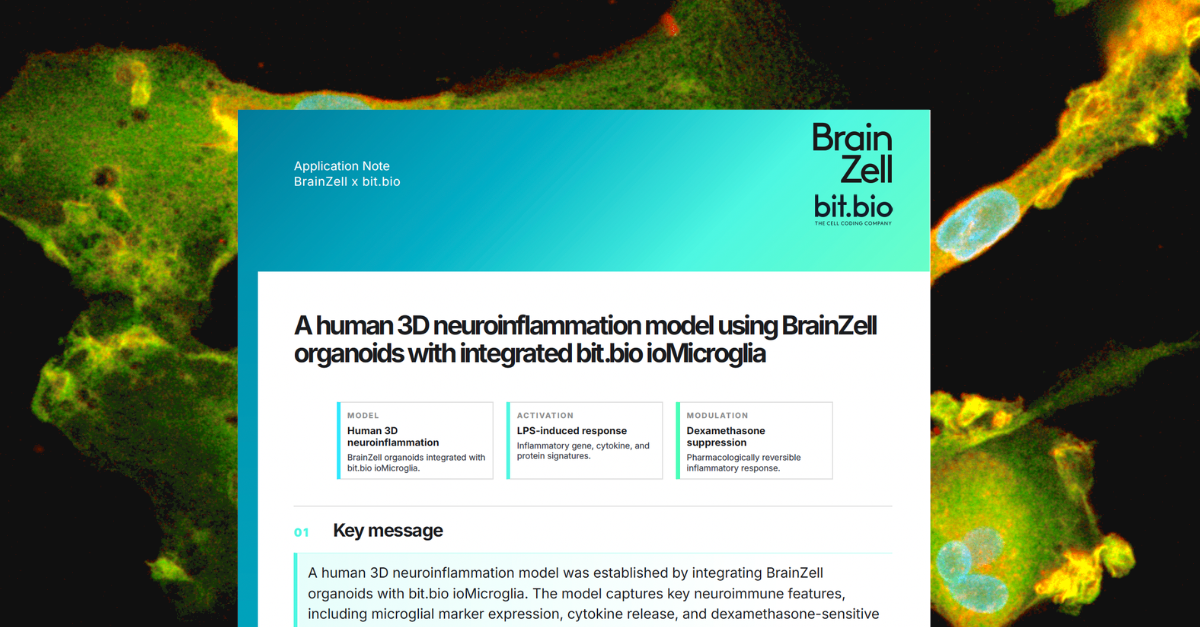
Developed and published by BrainZell, a CRO specialising in generating high-throughput brain organoids derived from human iPSCs.
Human brain organoids often lack a functional immune component, limiting their ability to capture neuroimmune interactions. This application note demonstrates how integrating ioMicroglia enables a more physiologically relevant human 3D model with measurable inflammatory signalling, cytokine release, and pharmacological modulation.
The application note demonstrates:
- Successful integration of ioMicroglia into BrainZell organoids, confirmed by IBA1 expression and microglia-like morphology
- A robust inflammatory response following LPS stimulation, including increased TNF-α and IL-6 expression and secretion
- Pharmacological modulation of inflammation using dexamethasone
- Systems-level profiling of inflammatory pathway activation using Olink panels
Potential applications include:
- Studying neuroinflammatory mechanisms in neurodegenerative and neuropsychiatric disease
- Screening anti-inflammatory and immunomodulatory compounds
- Assessing CNS inflammatory liabilities for advanced therapeutic modalities like gene therapies and biologics.
Originally published by BrainZell.
Authors: Murgoci A.N., Pronk R.J., and Szeszula P.