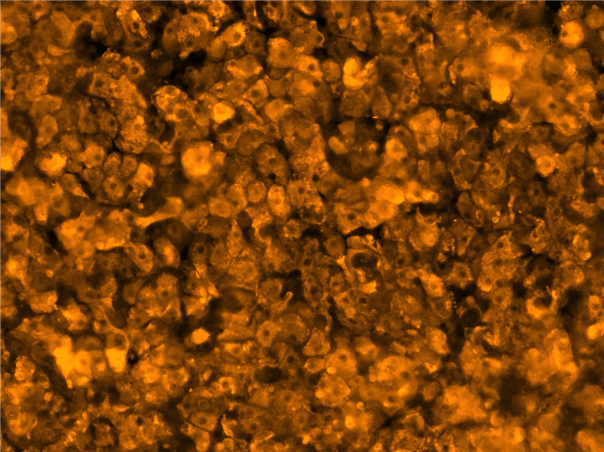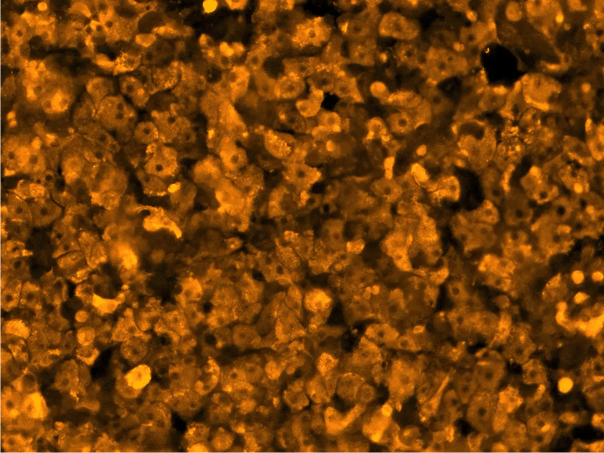
Liver cells

Human iPSC-derived liver cells

Consistent human iPSC-derived liver cells for predictive toxicology, drug metabolism, and disease modelling

The liver is one of the most critical organs in the human body, acting as the primary metabolic regulator.

The liver performs multiple functions, including bile acid formation, protein catabolism, and drug metabolism, through the coordinated activity of parenchymal cells, primarily hepatocytes, and non-parenchymal support cells, like Kupffer and hepatic stellate cells.

This makes in vitro human liver models critical for drug development and toxicology assays, especially as animal models often fail to predict human-specific hepatotoxicity. While primary human hepatocytes (PHHs) are the historical gold standard, applying them into scalable, long-term studies has limitations. In 2D culture, PHHs rapidly de-differentiate and lose metabolic activity within days. In addition to this short functional window, PHHs have inherent donor-to-donor variability, meaning that scientists often compromise and rely on immortalised carcinoma cell lines that fail to capture human metabolic biology.

bit.bio’s opti-ox deterministic cell programming technology enables the generation of functional human iPSC-derived ioHepatocytes with unmatched lot-to-lot consistency at scale that exhibit sustained albumin secretion and mature phenotype for over two weeks. By overcoming the donor variability and the short functional window associated with PHHs, ioHepatocytes provide a physiologically relevant, functional human cell model for in vitro ADME-Tox profiling and drug-induced liver injury (DILI) screening in the drug discovery pipeline.

Browse relevant resources

ioHepatocytes Brochure
ioHepatocytes

 bit.bio 

Download
Development of human iPSC-derived hepatocytes for drug discovery, translational research and toxicity testing Poster
Development of human iPSC-derived hepatocytes for drug discovery, translational research and toxicity testing

Harris-Brown et al.

bit.bio

2026

Download poster
Development of human iPSC-derived hepatocytes for drug discovery, translational research and toxicity testing Talk
Development of human iPSC-derived hepatocytes for drug discovery, translational research and toxicity testing

Dr Gianmarco Mastrogiovanni | Principal Scientist - Cell Type Development | bit.bio


Human Cell Forum 2025
Session 2 | bit.bio insider: Tools, tips, and what’s coming next

Watch now
ioHepatocytes user manual | bit.bio User manual
ioHepatocytes
bit.bio
Download

Frequently Asked Questions (FAQs)

Why are physiologically relevant human liver cell models critical for drug discovery?

The liver acts as the body's primary metabolic engine, meaning in vitro physiologically-relevant human liver cells are essential for assessing drug metabolism and safety. Animal models often fail to accurately predict human-specific hepatotoxicity, so there is demand for highly predictive human hepatic cells in preclinical workflows.


What are the challenges of using primary human hepatic cells in vitro?

While primary human hepatocytes (PHHs) are the historical gold standard, they rapidly de-differentiate and lose function within days in traditional 2D culture. This short functional window, combined with high donor-to-donor variability, limits the use of PHHs in long-term ADME-Tox profiling and DILI screening workflows.


What functional advantages do ioHepatocytes offer for toxicity screening?

ioHepatocytes provide a stable functional experimental window of over 17 days, allowing scientists to accurately assess chronic drug exposure. The cells recapitulate complex human liver cell biology, including robust albumin secretion and critical Phase I, II, III, and CYP activity.


Where do ioHepatocytes fit within the drug development pipeline?

ioHepatocytes are ideal for early-stage hit-to-lead optimisation and in vitro ADME-Tox profiling. By incorporating a highly reproducible human liver cell model earlier in the pipeline, scientists benefit from higher throughput, faster safety decisions, and reduced downstream clinical risk.


References

  1. Godoy P, et al. "Recent advances in 2D and 3D in vitro systems using primary hepatocytes, alternative hepatocyte sources and non-parenchymal liver cells and their use in investigating mechanisms of hepatotoxicity, cell signaling and ADME." Arch Toxicol, 2013; 87(8):1315-1530. doi: 10.1007/s00204-013-1078-5. https://pubmed.ncbi.nlm.nih.gov/23974980/

  2. Zeilinger K, Freyer N, Damm G, Seehofer D, Knöspel F. "Cell sources for in vitro human liver cell culture models." Experimental Biology and Medicine. 2016; 241(15): 1684-1698. doi: 10.1177/1535370216657448.  https://pubmed.ncbi.nlm.nih.gov/27385595/

  3. Khetani SR, et al. "Microengineered liver tissues for drug testing." Journal of Laboratory Automation (Later transitioned/related to work often cited in Drug Discovery contexts). 2015; 20(3): 216-250. doi: 10.1177/2211068214566939.  https://pmc.ncbi.nlm.nih.gov/articles/PMC5253249/


Related pages

Glial cells Explore our range of hiPSC-derived glial cells
Neuronal cells Explore our range of hiPSC-derived neurons
Contact us Talk to us about how our technology could support your cell therapies