TDP-43 loss-of-function in human neurons: molecular and functional insights

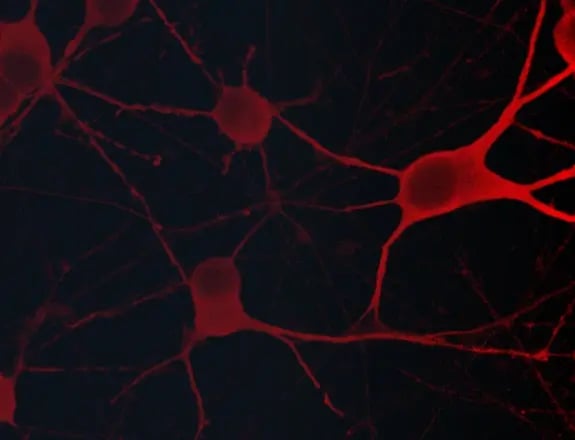
TDP-43 loss-of-function is a central pathological feature in amyotrophic lateral sclerosis (ALS), yet its molecular and functional consequences may differ across the neuronal subtypes most vulnerable in disease.
This webinar presents a research study by Roche’s Pharma Research & Early Development (pRED) department, investigating how reduced TDP-43 function affects human iPSC-derived glutamatergic neurons and cholinergic motor neurons, modelling upper and lower motor neuron populations respectively. Using antisense oligonucleotide-mediated TDP-43 knockdown, the study combines transcriptomic profiling, alternative splicing analysis, and microelectrode array electrophysiology to map cell-type-specific and shared disease-relevant phenotypes.
The session focuses on cryptic splicing of established ALS targets, changes in neuronal network activity, and how neuron–astrocyte co-culture influences the detection of pathological splicing events, providing insight into how human in vitro models capture key aspects of TDP-43–related ALS biology.
The webinar concludes with a live Q&A focused on disease-relevant readouts, interpretation of molecular and electrophysiological phenotypes, and considerations for modelling TDP-43-related mechanisms in human neuron systems.
Key learnings
- How TDP-43 loss-of-function drives both shared and cell-type-specific gene expression and splicing changes in human glutamatergic and motor neuron models
- Which ALS-relevant targets, including STMN2 and UNC13A, show consistent downregulation and cryptic splicing across neuronal subtypes, and what this indicates about conserved disease mechanisms
- How TDP-43 depletion alters neuronal network behaviour, revealing a hyperexcitable phenotype with distinct activity patterns in different neuron types as measured by MEA
- What neuron–astrocyte co-culture adds to disease modelling, including expanded detection of cryptic splicing events linked to patient data
- Why pronounced molecular and electrophysiological alterations can occur without major effects on viability or glutamate-induced excitotoxicity, and what this means for interpreting functional readouts in ALS models