Complex cultures of human iPSC-derived neurons and glia to study the biology underlying myelination and neuroinflammation

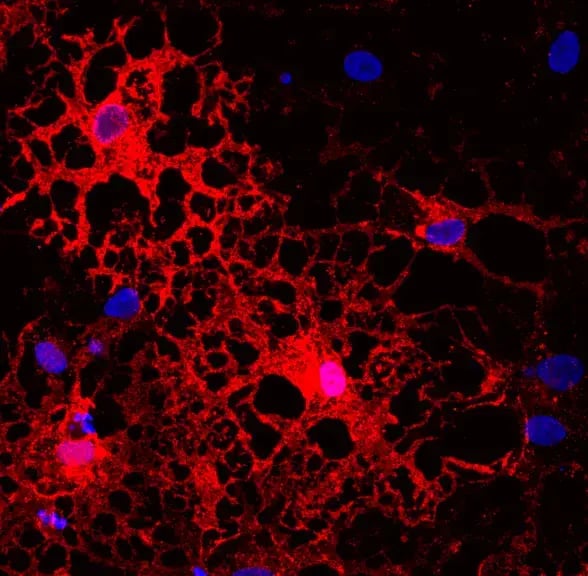
This webinar shows the development of defined human multi-cell in vitro systems that could be used to study neuron–glia interactions, immune activation and myelination in neurodegenerative disease research.
Neurodegenerative diseases are often studied from a neuron-centric perspective. However, glial cells actively shape disease progression, contributing to immune activation, synapse loss and demyelination.
To investigate these complex interactions in a human context, this webinar presents a CNS toolkit comprising human iPSC-derived glutamatergic neurons, astrocytes, microglia and oligodendrocyte-like cells. The session outlines co-culture strategies enabling the modelling of cellular crosstalk during physiological and pathological conditions.
In addition, the webinar highlights strategies to enhance oligodendrocyte maturation in monoculture through media optimisation, increasing the MBP-positive cell populations without requiring a neuron co-culture. A brief introduction to OPC-like cells also outlines their potential use to model OPC biology in vitro and to develop efficient remyelination-promoting therapies.
The webinar concludes with a live Q&A focused on experimental design considerations, selection of relevant cellular combinations, and integration of multi-cell human systems into translational research workflows.
Key learnings
- Why defined, reproducible human in vitro systems are critical for improving translatability in remyelination research and neurodegenerative drug discovery
- How a human CNS toolkit of neurons, astrocytes, microglia and oligodendroglial cells can enable investigation of immune activation, remyelination mechanisms and disease-relevant cellular crosstalk
- How human oligodendrocyte-like cells acquire mature morphology and upregulate MBP within 8 days, and how co-culture with glutamatergic neurons further enhances MBP expression
- How systematic media optimisation can increase the proportion of MBP-positive oligodendrocyte-like cells without reliance on co-culture
- What makes a defined neuron–microglia–astrocyte tri-culture a good starting point for functional, inflammatory and synaptic assay development
- How human OPC-like cells model key progenitor features, including limited proliferation capacity and PDGFRA expression, and how maturation conditions drive transition towards a pre-myelinating oligodendrocyte state